
In This Article
QUICK ANSWER · CAPITAL PLANNING
Aseptic vs Hot-Fill Beverage Production: Which Route Should an Owner Evaluate?
Evaluate aseptic and hot-fill beverage production only after the formulation, intended shelf life, package and distribution conditions have been defined. They are not interchangeable routes for every beverage. Aseptic concepts manage the treated product and packaging system together; a hot-fill concept relies on its own product-and-package process basis. Neither route can be selected safely from a generic investment table.
For commercially and technically viable options, compare the complete installed system, launch workload, packaging supply, operating calendar and saleable demand. A qualified product and process review should establish the allowable routes before a lower equipment price becomes the deciding argument.
A beverage founder may see two finished bottles on a shelf and assume the factories behind them are variations of the same line. For capital planning, the differences can extend through ingredient preparation, thermal processing, packaging, utility systems, room arrangements and operating responsibilities. A decision made from a filler quotation can therefore commit the business to much more than the quoted machine.
This aseptic vs hot-fill beverage production guide is written for owners preparing a new plant or assessing a major new production route. It organizes the information needed to compare credible options. It does not supply a thermal schedule, declare a formulation shelf stable, or establish that a package is suitable for a process. Those conclusions need product-specific evidence and the appropriate technical review.
1. Define the Beverage Before Discussing the Filling Route
Begin with the commercial product specification: ingredients, composition, physical behavior, intended sensory attributes and the pack offered to the customer. Identify the launch formulations and the proposed later variants. A general category such as functional beverage, juice or protein drink is not a complete process specification.
Ask the product team which attributes are already demonstrated and which remain development targets. Product stability, interaction with the package and quality during distribution can affect route selection. Keep microbiological process suitability separate from consumer acceptance: both matter, and success in one area does not establish the other.
The first capital deliverable should be a product-and-process questions register. Assign every unresolved issue to a responsible specialist and state what evidence will close it. An owner can then decide whether to fund trials, narrow the launch portfolio or proceed with a defined engineering basis. Buying equipment while the fundamental product route remains undecided can create commitments that later development work cannot economically support.
2. Understand the Different Product-and-Package Mechanisms
An aseptic concept treats the product and packaging through their respective defined systems and brings them together within a protected sterile boundary. For applicable low-acid systems, FDA guidance describes product treatment, packaging-material treatment, equipment readiness and the maintenance of the required conditions as connected responsibilities. Commercial sterility is a system outcome, not a property supplied by a filler name.
Hot filling uses the hot product as part of the treatment of the package food-contact surfaces under a specified filling, closing and contact sequence. Tetra Pak's Orange Book describes this mechanism for juice, followed by package cooling. The container and closure must suit that process: Sidel's hot-fill material describes heat-resistant PET solutions rather than ordinary packaging being assumed suitable. No temperature, hold time or generic inversion instruction is adopted here.
Those mechanisms create different investment questions. The aseptic concept needs a clearly defined treated-product path, packaging treatment, protected filling boundary and procedures for readiness and restart. The hot-fill concept needs compatible package materials, the specified product-contact and closing path, and the downstream handling and cooling required by the offered system. Compare these packages explicitly instead of assigning one generic filling allowance to both.
Common acidic beverage applications do not make ordinary hot filling interchangeable with an aseptic route for a low-acid shelf-stable formulation. Product composition and the applicable process basis must establish what is suitable. An owner considering a protein drink should not replace a validated low-acid route with an acid-beverage hot-fill concept merely because the latter appears simpler. This guide explains the capital drivers, while qualified product and process work determines the allowed commercial route.
| Decision Area | Aseptic Concept | Hot-Fill Concept |
|---|---|---|
| Product/package mechanism | Defined treatment of product and packaging, then protected filling and sealing | Hot product contributes to treatment of package contact surfaces through the specified sequence |
| Packaging investment | Packaging-treatment and sterile-boundary responsibilities must be assigned | Heat-compatible container/closure and process-specific handling must be specified |
| Facility and integration | Protected product path, filling boundary and connected controls | Filling, closing/contact path and downstream cooling/handling |
| Readiness and interruption | Define establishment and restoration of required aseptic conditions | Define the offered system startup, contact and restart requirements |
| Product gate | Appropriate route for the actual formulation and intended distribution | Appropriate hot-fill route for the actual formulation; not a generic low-acid substitute |
3. Start with the Route the Market Actually Requires
The distribution plan can materially shape the manufacturing brief. Identify whether the product will travel through ambient or refrigerated channels, the expected distance and handling conditions, and the minimum remaining shelf life required by customers. These are business requirements to be tested against an appropriate product and process basis.
Longer shelf-life ambitions should be connected to a commercial purpose. They may support broader distribution or a different inventory strategy, but they do not create sales by themselves. A more complex route can be difficult to justify if the business serves a narrow channel that does not need the additional capability.
Document customer and distributor requirements before the facility concept is frozen. Distinguish a signed requirement from a marketing aspiration. Where the business is still testing its channel, compare how much capital commitment is necessary now and what evidence would justify expanding the route later. The investment should support an achievable route to market rather than the most ambitious shelf-life claim on a planning slide.
4. Test the Whole Launch Portfolio and the Intended Extensions
A plant designed around one favorable formulation may not support the next product the sales team expects to launch. List the differences that could affect the route: ingredients, particle characteristics, viscosity, package, target quality and the nature of any ingredient additions. Ask the relevant specialists to establish the allowable envelope rather than assuming that membership in one beverage category proves compatibility.
Separate mandatory launch products from optional future ideas. Each additional capability should have a commercial rationale and a defined effect on the process and packaging scope. An unbounded promise to support all beverages makes both engineering and supplier comparison unreliable.
In a capital planning study, DPS can translate an agreed product envelope into a conceptual equipment, utility and facility scope. That work should make uncertainty visible: which route assumptions are supported, which need trials and which future products would trigger new work. A concise portfolio boundary protects the owner from paying for speculative flexibility while still preserving options worth considering.
5. Review the Package as a Purchased Supply System
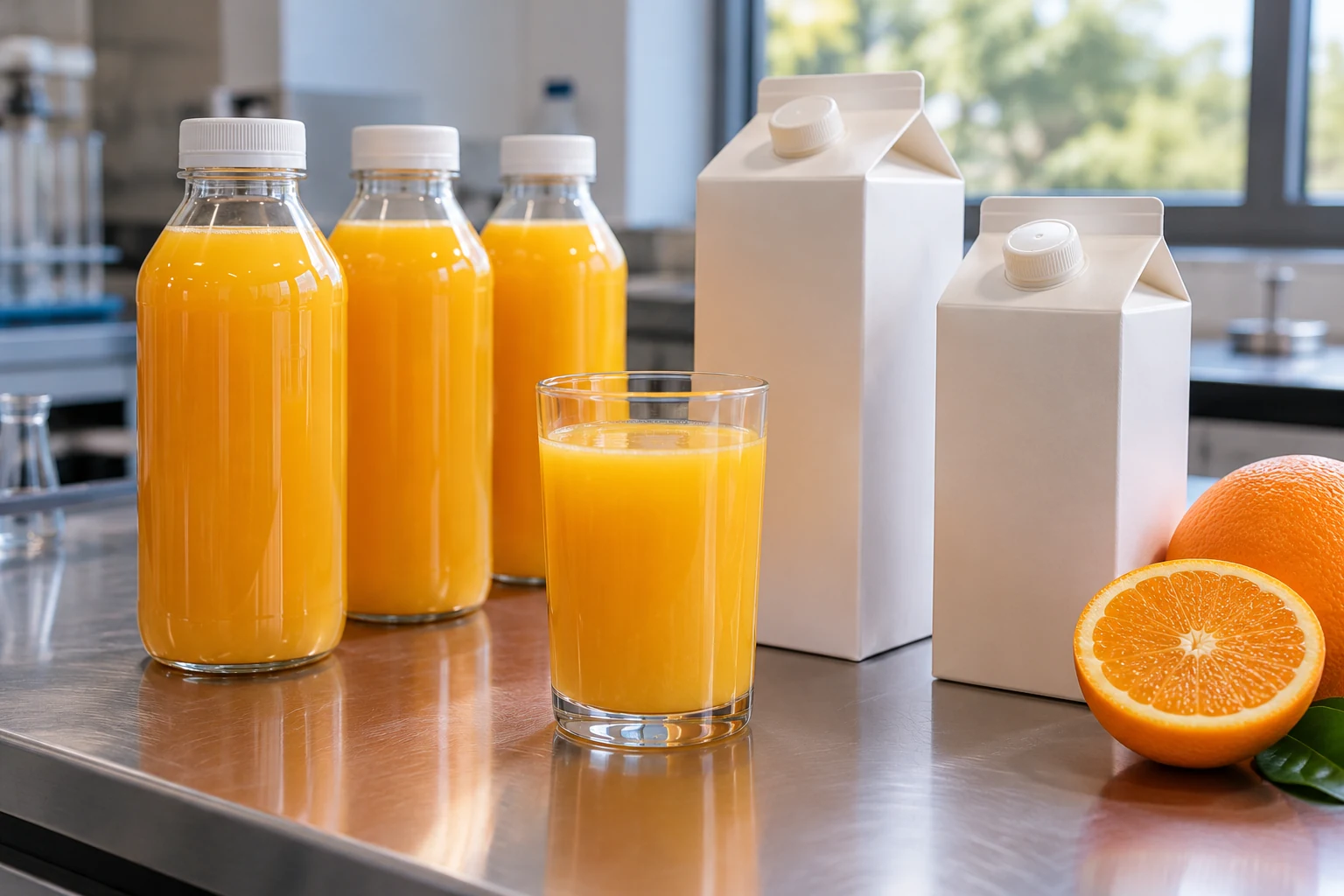
Packaging decisions include more than container shape. Identify the intended formats, materials, closures, secondary packs and commercial supply arrangements. Ask suppliers to confirm the package-and-process compatibility relevant to the actual beverage. A sample container on a desk is useful for discussion, but it is not acceptance evidence.
Consider purchasing constraints alongside technical suitability. Minimum order quantities, artwork changes, lead times, storage conditions and the availability of alternative sources affect the launch plan and working capital. A route that works well technically can still create a difficult commercial commitment if the business has not planned the packaging supply chain.
Put packaging responsibilities into the bid basis. State who supplies trial material, who evaluates acceptable finished packs and which party investigates a problem at an interface. Where a package system involves proprietary arrangements, ask the owner’s commercial team to review those terms as part of the investment decision. Keep this review separate from a generic assumption that one packaging family is always more sustainable or less expensive.

6. Connect Realistic Demand to the Proposed Operating Calendar
Express the sales plan in saleable units by product and package, then translate it into campaigns. Use the expected order pattern, not only annual totals. A route supporting long stable campaigns may operate differently when customer orders are small, promotional or fragmented across formats.
For each concept, develop scheduled days, staffed hours, planned cleaning, changes and the expected path from startup to acceptable production. The aim is not to insert a universal efficiency percentage. It is to identify the tasks and conditions that consume the calendar for the proposed product range.
Review the initial year separately from the mature scenario. An architecture that fits future demand may be underused at launch, and the operating cost per saleable unit may reflect that difference. Compare credible outsourced production or a phased commercial launch where appropriate. The question is how the business will serve customers while demand develops, rather than how quickly it can install its maximum possible capacity.
7. Visualize Capacity Commitment without Turning It into a Safety Claim
The following example is deliberately abstract. Suppose two technically suitable concepts have already been established for an invented product. Concept H has assumed annual saleable capacity of 4 million units; Concept A has assumed capacity of 8 million units. At a common annual sales requirement of 3 million units, modeled utilization is 75% for H and 37.5% for A.
Those percentages do not compare aseptic and hot-fill technology performance. The capacity allowances are invented and could be reversed in another project. They illustrate the size of the capacity commitment relative to demand. No product-treatment condition, equipment rating or price is implied by the labels.
At 6 million units of sales, H would have a 2 million unit shortfall under the stated assumptions, while A would be at 75% utilization. The owner would need an additional supply response for H. This makes demand scenarios useful: the initial choice should include what happens when sales remain below plan and what happens when they grow beyond the first installation.
| Annual Demand | Concept H: 4m Capacity | Concept a: 8m Capacity |
|---|---|---|
| 3 million units | 75% utilization | 37.5% utilization |
| 4 million units | 100% utilization | 50% utilization |
| 6 million units | 2 million unit shortfall | 75% utilization |
8. Price Utilities for Production and Operating Transitions
Develop utility requirements from the actual proposed sequences. Identify normal production demands and the resources required for cleaning, readiness activities and restart. Check simultaneous requirements with ingredient preparation, packaging and the rest of the facility. A utility connection sized from an average operating figure can miss an important event.
Separate central generation from distribution and final connections. Equipment quotations may define conditions at package boundaries while the owner must provide the supply infrastructure. Show those boundaries in both estimates so a lower machine price does not conceal a larger utility project.
DPS’s engineering and utility coordination work is relevant here because route selection affects more than the core treatment equipment. Ask for a concept load schedule and identified supply assumptions before committing to the site. Where actual site capacity is unconfirmed, list the verification task and its possible budget consequence. Treating an unresolved infrastructure issue as zero cost does not make an option more affordable.
9. Test Facility Layout and Operational Separation Early
The facility concept must accommodate ingredient movement, product handling, packaging supply, finished goods, people and waste. Required separation and access arrangements should follow the product and food safety basis. Do not copy a room layout from a different beverage project simply because its packaging route has the same name.
Review spaces needed for staging, component handling, testing and normal operating activity. Check how the proposed system enters the building and how future additions would be installed. A conceptual arrangement should also identify where retained or future operations could constrain the route.
Use a coordinated test fit to compare options at the same site. Record the area and building-service differences attributable to each concept, together with any unresolved requirements. This creates a connection between the process choice and the real estate decision. It also prevents a shell-building estimate from being mistaken for the complete cost of making the route operational.
10. Build an Equivalent Installed-Cost Boundary
Break both options into packages that an owner can understand: preparation, treatment, protected or specified product handling, filling, secondary packaging, utilities, controls, building work and acceptance. Assign each interface once. The scope may be packaged differently by vendors, but the owner still needs one complete register.
Ask whether installation, freight, trial attendance, software integration and owner-provided work are included. Avoid adding a blanket installation factor over quotations already covering installed work. The same caution applies to controls: a package controller and a plant integration scope are related, but they should not both charge for the same function.
Keep acquisition, owner launch activities, escalation and risk allowances visible alongside the installed scope. Foth’s food plant cost guidance identifies project and location differences as meaningful cost variables; it does not support a universal aseptic premium or hot-fill discount. Current supplier evidence and the project’s agreed boundary should determine the estimate used for approval.
| Scope Item | Decision to Record | Typical Comparison Risk |
|---|---|---|
| Product preparation | Required feed condition and who supplies it | A common ingredient-preparation assumption is missing |
| Packaging system | Process-compatible materials and operating scope | Container price compared without the supporting system |
| Utilities and building | Supply, distribution, room and access requirements | Package quote treated as a complete factory price |
| Automation and testing | Machine, line and owner responsibilities | Integration or acceptance work omitted or duplicated |
| Launch and owner work | Training, trials and readiness tasks | Costs hidden outside the construction contract |
11. Agree on Trials and Acceptance Before Placing Orders
Write acceptance requirements in terms of the actual product, package and operating envelope. Define what evidence demonstrates satisfactory product quality, package performance and system operation. A demonstration with a substitute liquid may answer selected mechanical questions without resolving the intended beverage’s behavior.
Distinguish supplier testing, site acceptance, product evaluation and authorization to begin commercial supply. Assign materials, personnel, utilities, records and specialist attendance at each stage. The launch schedule should show dependencies between these tasks rather than assuming commercial readiness begins on equipment delivery.
FDA’s low-acid aseptic guidance and filing instructions illustrate the importance of a defined scheduled-process basis and qualified expertise where those requirements apply. This article does not classify a product or replace that work. Have the relevant product, regulatory and process specialists identify the requirements for the actual operation before treating an engineering concept as an approved manufacturing route.
12. Include People and Operating Readiness in Route Economics
A new manufacturing route requires people who can perform its operating, quality and support responsibilities. Build the staffing plan from the sequence of work, coverage requirements and the skills the installation will need. A more automated concept should not be modeled as unattended simply because it uses fewer routine manual actions.
Plan recruiting, training, procedures and supplier support early enough to influence the launch schedule. Identify who owns the operating records, change decisions, product holds and response to an interrupted run. These responsibilities should be understood by the owner before the first commercial campaign is scheduled.
Compare the cost of reaching readiness as well as the later steady-state labor assumption. Training materials and staffing commitments may occur before revenue begins. Put defined one-time launch activities in the project plan and keep operating ramp losses separate. This makes the investment comparison more realistic without using an unsupported standard startup percentage for every beverage plant.
13. Test Packaging Inventory and Operating Cash Requirements
A route can change when cash is committed to packaging and ingredients, how much finished inventory is practical and how quickly customers pay. The project budget and the operating funding plan therefore answer different questions. A construction estimate that excludes working capital is not necessarily incomplete, provided the operating cash requirement is shown elsewhere and reconciled.
Use order quantities and payment terms to model inventory and receivables. Check whether a packaging commitment creates exposure before demand is proven. Do not count the same initial materials both as a full startup expense and as a working-capital balance unless the underlying cash treatment has been reconciled.
Review a delayed launch and slower sales case alongside the expected plan. A route may remain technically suitable while requiring more funding time than the owner anticipated. Finance should connect the project-payment schedule, operating cash flows and available financing. An attractive equipment payment plan cannot compensate for an unfunded period between producing stock and collecting customer receipts.
14. Evaluate Future Flexibility as a Defined Option
Future flexibility should describe specific products, packages or volumes, with the changes needed to support them. A promise to handle every future beverage cannot be priced or tested meaningfully. Separate capability already included from provisions that preserve a later option and from work that would require another investment.
Check what expansion would interrupt. Additional process capacity may be unhelpful if packaging, storage or utilities remain constrained. A future package format may need a different supply arrangement as well as line changes. The phase plan should identify these connections rather than describing an isolated machine as expandable.
Compare the value of the option with its initial commitment. If a future category has no demand evidence, preserving physical space or a planned interface may deserve more consideration than installing its complete capacity now. The preferred choice depends on what the owner is willing to commit before the commercial case is established, and which later changes would be expensive or disruptive.
15. Use Route Gates Before a Weighted Investment Score
Start with pass-or-resolve questions: product suitability, customer packaging needs, achievable distribution conditions, available site infrastructure and a credible operating plan. These establish whether an option belongs in the economic comparison. A weighted financial score cannot offset an unresolved condition that prevents the plant from supplying acceptable product.
For the options that pass, compare investment, initial utilization, operating costs, launch workload and commercial flexibility. Show uncertainty and the evidence behind each judgment. GAO’s estimating framework is useful methodologically because it emphasizes technical basis, assumptions and sensitivity rather than unsupported precision.
Write a short decision record explaining why the preferred route fits the current business. Include what would make the decision change: a confirmed channel requirement, a revised formulation, different sales volumes or a site constraint. Keeping those triggers visible helps the owner recognize when the original investment basis needs to be revisited.
16. Prepare a Product Trial Brief That Supports the Capital Decision
A useful trial brief states the question to be answered. Examples include whether the intended formulation remains acceptable through the proposed route, whether the preferred package meets the agreed requirements, or whether the operating sequence supports the planned campaign. Avoid asking a supplier for a generic demonstration and expecting it to resolve every issue.
Identify the formulations, pack formats and operating conditions representing the proposed commercial envelope. Agree on sampling, evaluation criteria, required records and who will interpret the findings. Where specialist validation or regulatory assessment is necessary, establish how that work relates to the supplier’s trial; the activities are not automatically interchangeable.
Translate the result into an engineering consequence. A finding may confirm the current concept, narrow the allowable portfolio, require another trial or change the scope. Record the consequence in the capital comparison so the estimate does not continue using an assumption that the evidence has replaced. This is how product development becomes a useful input to an owner’s route decision.
17. Keep Route-Specific Uncertainties in a Decision Register
An owner should be able to distinguish a missing scope item from uncertainty about an already defined item. If a viable concept needs a packaging readiness activity, budget that activity. If its duration or resource requirement is uncertain, describe the uncertainty separately. A general contingency line should not conceal an entire unplanned launch workstream.
For each route, identify the remaining evidence needed, who will obtain it and when the finding could affect a commitment. A formulation trial after a noncancelable equipment order has a different commercial consequence from the same trial during concept planning. Link the investigation schedule to purchase and site decisions so evidence arrives while the owner can still act on it.
Use the register in the approval meeting rather than filing it behind the cost table. The preferred option may still contain uncertainty, but decision makers should understand the exposure and the intended response. That makes a conditional next-stage authorization clearer than describing an early estimate as a fixed complete price.
| Issue | Evidence Owner | Potential Capital Consequence |
|---|---|---|
| Product route suitability | Qualified product/process team | Concept must change or be narrowed |
| Package compatibility | Package and process suppliers | Format or supporting-system scope changes |
| Site utility supply | Engineering team and utility provider | Connection or generation work added |
| Commercial demand | Owner sales and finance teams | Capacity phase or launch timing changes |
18. Ask DPS to Compare the Routes Around Your Actual Decision
For an early-stage project, brief DPS with the product specification, intended shelf life, packaging choices, target channels, sales scenarios and candidate site information. Include the status of process suitability work and the questions already assigned to suppliers or specialists. This prevents the engineering study from treating unresolved product development as a settled design input.
Define the proposed planning outputs: conceptual process and layout options, major package boundaries, utility assumptions, an installed-cost basis and a staged delivery plan. Ask the team to show what can be compared now and what requires further evidence. DPS’s capital planning and feasibility scope provides a relevant framework for connecting these decisions without assuming a generic route winner.
The result should help the owner authorize the next justified step. That may be a product trial, site investigation, refined concept or detailed design. A disciplined comparison makes the manufacturing commitment clearer: what the business needs, what the proposed system includes and what remains to be established before major capital is committed.
19. Aseptic vs Hot Fill Beverage Production FAQ
Can every beverage use either aseptic or hot-fill production?
No. The formulation, intended preservation outcome, package and distribution conditions determine which routes may be suitable. Have the relevant specialists establish the allowable options. A capital comparison cannot make an unsuitable route acceptable.
Does aseptic filling mean the filler alone creates a shelf-stable beverage?
No. The product treatment, handling and packaging system must be considered together. The complete process basis and operating responsibilities matter. Do not purchase a filler on the assumption that its name resolves the requirements for the rest of the plant.
Is hot-fill always the lower-investment route?
There is no universal project-level answer. Compare equivalent installed scope, utilities, building work, packaging supply and launch tasks at the same product and demand basis. Actual proposals and site requirements determine the investment.
What information should be fixed before requesting quotations?
Provide the formulation envelope, package formats, target quality and shelf life, distribution conditions, annual and campaign demand, and available site information. Identify any unresolved process-suitability questions and who is responsible for closing them.
Can the utilization example size a beverage line?
No. The 4 and 8 million unit capacities are invented teaching inputs for concepts assumed already technically suitable. They show utilization arithmetic, not equipment ratings, route performance or safe-process conditions.
Should packaging minimum orders enter the business case?
Yes. Packaging purchasing terms can affect inventory exposure and operating cash. Use actual supplier terms, forecast revisions and customer demand scenarios. Keep the resulting working-capital treatment consistent with the monthly cash forecast.
Who establishes a safe thermal or scheduled process?
Use the appropriately qualified specialists for the actual product and applicable requirements. FDA’s relevant guidance describes qualified expertise for low-acid aseptic processes. This article does not establish a process, classify a product or provide operating settings.
What can DPS contribute before detailed design?
A defined planning engagement can connect production requirements, conceptual layouts, equipment and utility boundaries, installed-cost planning and phased investment evaluation. Agree on deliverables, specialist interfaces and unresolved assumptions before treating the study as a delivery commitment.
20. Sources and Calculation Notes
Research checked October 27, 2026. Numerical planning examples are original illustrative calculations, not supplier quotations, market averages or DPS customer results.
- FDA — Aseptic Processing and Packaging for the Food Industry. System-level processing and packaging responsibilities; no operating parameters adopted.
- FDA — Instructions for Form FDA 2541g. Qualified expertise and scheduled-process context for applicable low-acid aseptic systems.
- Tetra Pak — Long-life dairy products. Technical background on coordinated long-life processing and packaging; not a recipe for this article.
- U.S. GAO — Cost Estimating and Assessment Guide. Technical basis and sensitivity methodology.
- Foth | Food Plant Engineering — FAQ. Project-specific cost scope and location variables.
- DPS — Capital Planning and Feasibility. Company planning scope verified in same-day project evidence.
- Tetra Pak — Orange Book: Processing at the juice packer. Hot-fill product/package mechanism for juice and coordinated downstream considerations; no settings adopted.
- Sidel — Hot-Fill Beverage Line. Heat-resistant PET packaging and complete-line scope; supplier-specific performance and temperatures not adopted.
Editorial draft prepared for DPS. Project-specific product, process, site and financial assumptions require confirmation before investment approval.