Clearer Responsibilities
Identify who owns each decision, equipment interface, and handoff across the project team.

Why DPS
Design · Build · Manage
Disruptive Process Solutions
Engineering decisions carry through to the production floor. Our Design · Build · Manage approach connects the people, interfaces, and responsibilities behind a working operation.
The Project Delivery Challenge
Food and beverage projects bring together engineering teams, equipment suppliers, contractors, and internal stakeholders. When each package moves separately, important decisions can fall between them.
Unresolved scope, late design questions, and unclear ownership can lead to rework or a system that is difficult to bring into production. DPS connects engineering, execution, and operating priorities through its Design · Build · Manage approach.
Identify who owns each decision, equipment interface, and handoff across the project team.
Bring installation and operating constraints into design discussions while there is time to act.
Connect suppliers, contractors, and site activities with the agreed engineering basis.
Carry project knowledge through commissioning, startup, and the next improvement conversation.
A More Connected Model
The difference is how the work connects. Agree on delivery responsibilities with the client, DPS, and specialist partners for the specific project.
Fragmented Delivery Risk
Separate vendors and contractors can work to different priorities.
DPS Design · Build · Manage
A coordinated delivery team works from agreed production goals and responsibilities.
Fragmented Delivery Risk
Gaps between design packages may surface during installation.
DPS Design · Build · Manage
Process, equipment, facility, and operating interfaces are considered together.
Fragmented Delivery Risk
Unclear boundaries can create scope changes and late decisions.
DPS Design · Build · Manage
Scope owners and risks are discussed across the project lifecycle.
Fragmented Delivery Risk
Individual equipment packages may be complete while their connections remain unresolved.
DPS Design · Build · Manage
Utilities, controls, installation, and acceptance responsibilities form part of the delivery discussion.
Fragmented Delivery Risk
Knowledge can be lost as separate project teams finish their packages.
DPS Design · Build · Manage
Engineering decisions carry into startup, training, and operating improvement within the agreed scope.
Design · Build · Manage
The delivery model connects technical definition, site implementation, and operating readiness. The engagement can cover a focused assignment or a broader coordinated scope.
01 · Design
Start with operating goals, production requirements, applicable regulations, and the longer-term business direction. Develop the process concept and the engineering basis before committing to implementation.
02 · Build
Coordinate contractors, equipment suppliers, and installation teams around the design intent. Project oversight and technical guidance keep stakeholders connected as site conditions and implementation decisions develop.
03 · Manage
Support the transition from installation to operation through commissioning, startup preparation, training, and performance review. Agree on the ongoing support needed for stable production and future improvements.
Begin With Alignment
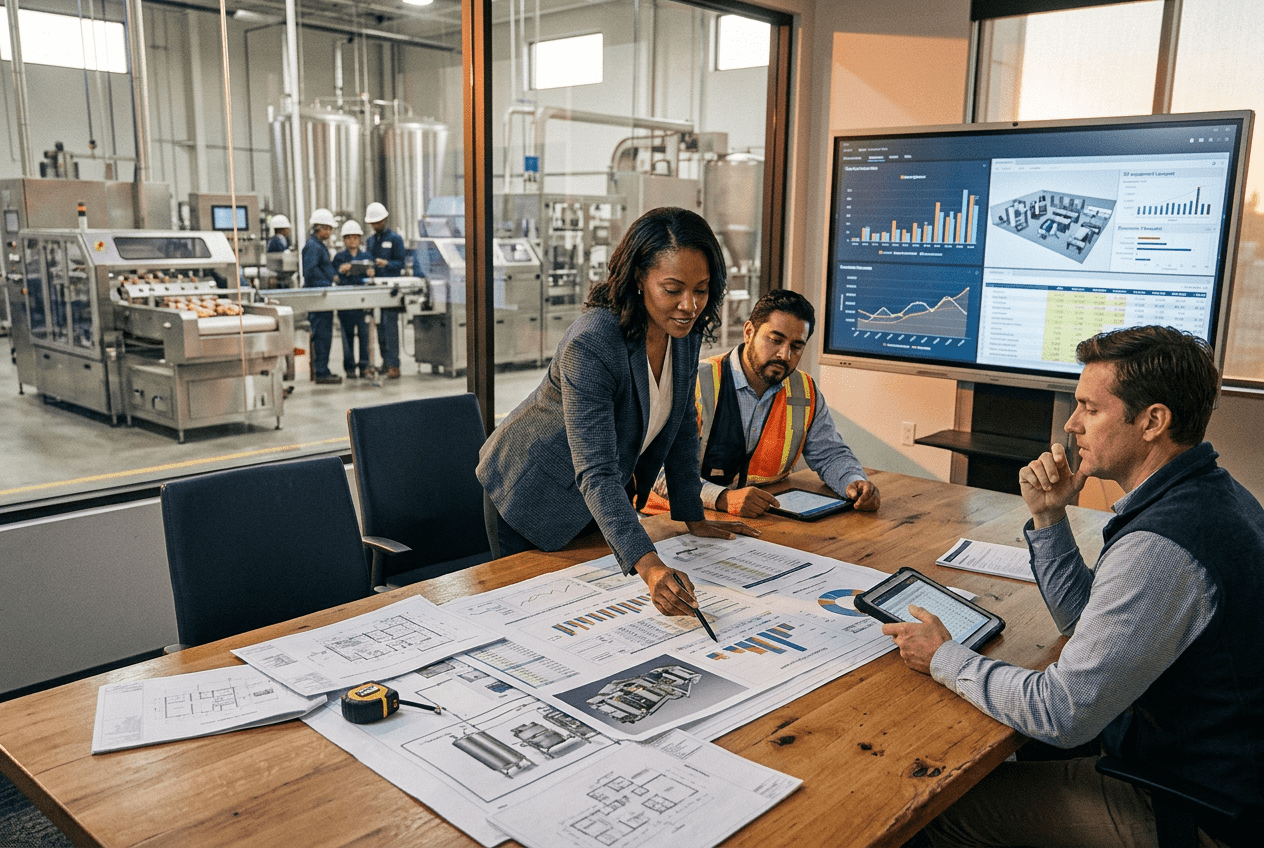
A delivery model works through the people using it. Start with operating goals, technical requirements, and a shared understanding of what success needs to look like.
Then make the interfaces explicit: equipment, utilities, controls, installation, acceptance, and handover. Confirm the responsibilities before work moves forward.
The Next Conversation
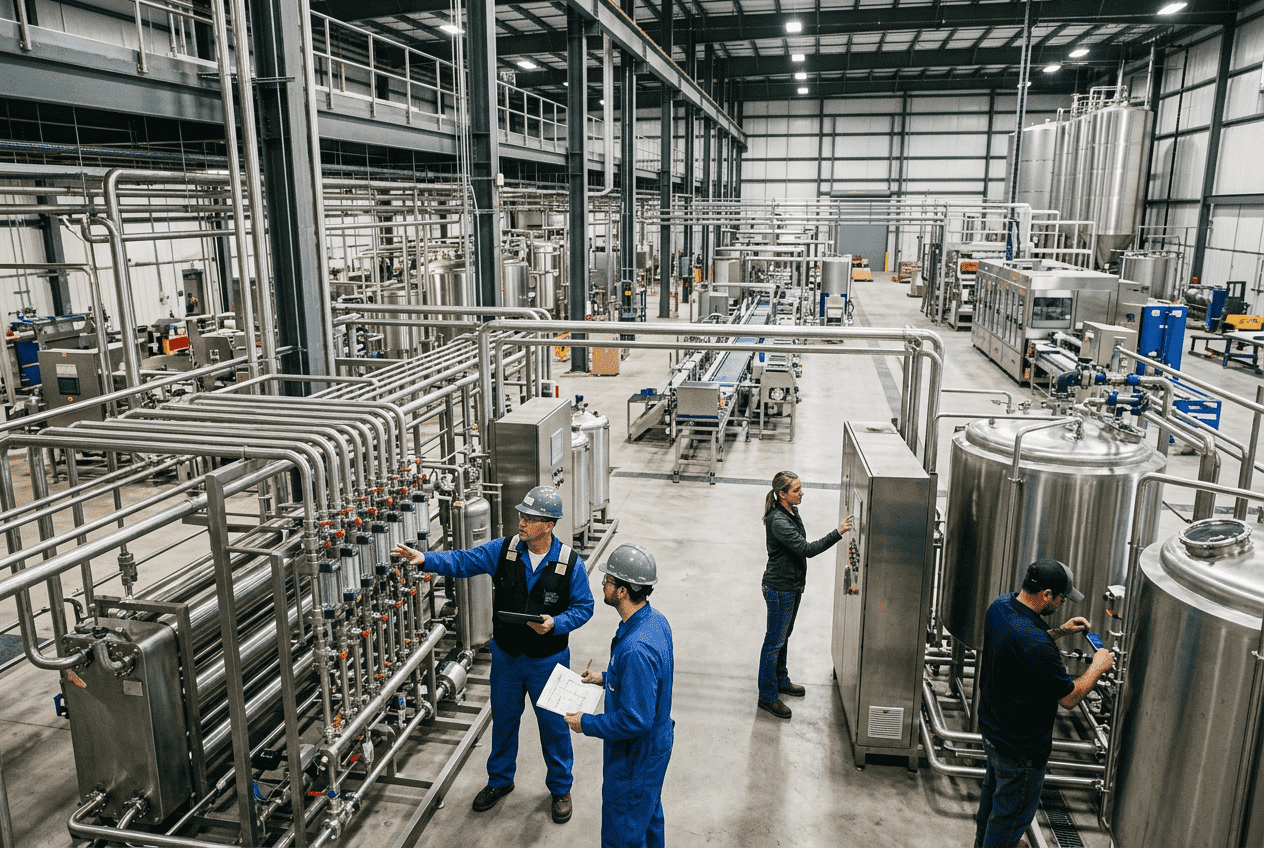
Tell us what you make, what needs to change, and where your project stands. We’ll start with the questions that define the work.
Discuss Your Project