Define the Sanitary Basis
Agree product-contact materials, finishes, drainability, cleaning access, and the applicable NSF, 3-A, and UL electrical requirements within the equipment specification.
DPS Process Equipment
Clean. Cook. Store. Marinate.
Design · Build · Manage
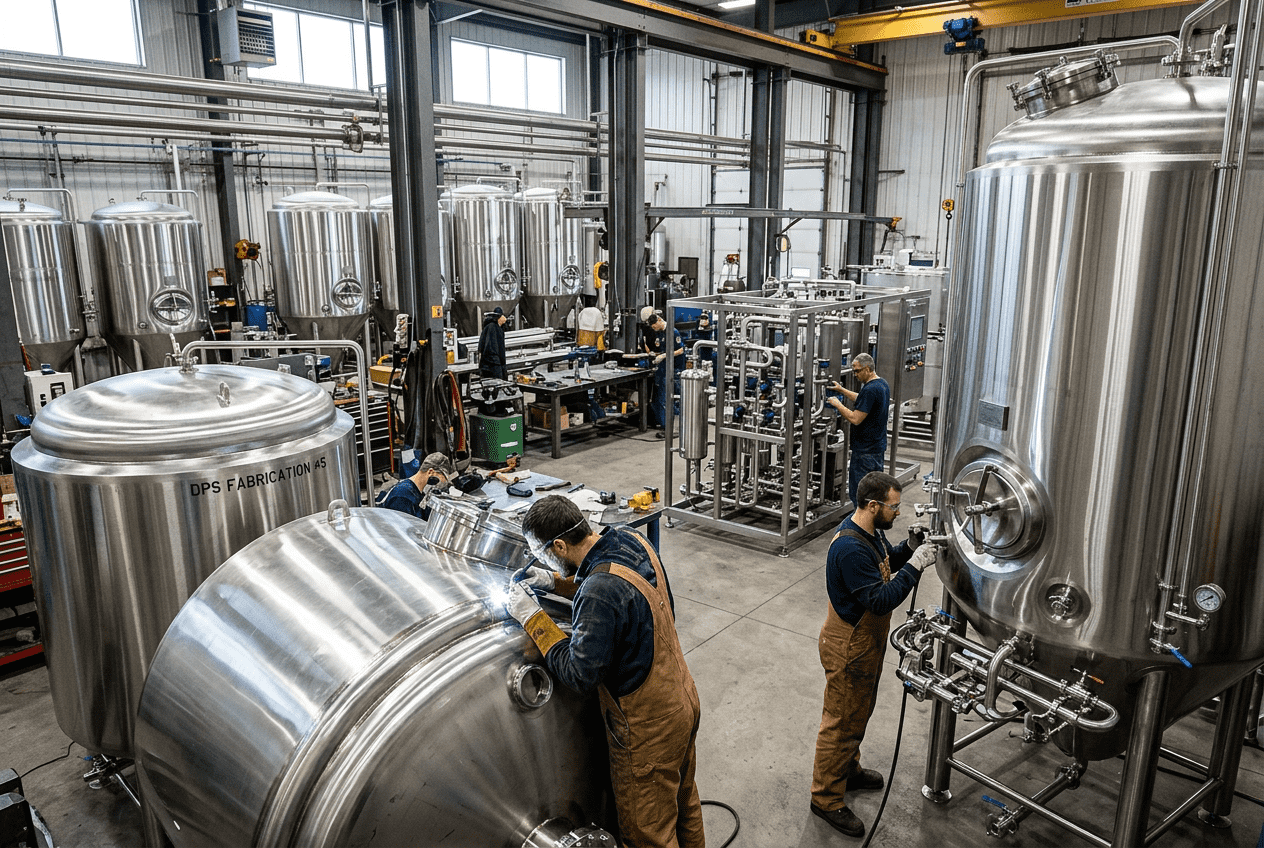
Stainless steel equipment for automated cleaning, batch cooking, storage, mixing, and marination. Start with the product and production duty, then configure the vessel, controls, and connections as one coordinated scope.
The Equipment Program
Explore the equipment family that fits your process. Each page brings together program options, design parameters, applications, and the questions to resolve before procurement.
100–5,000 gal
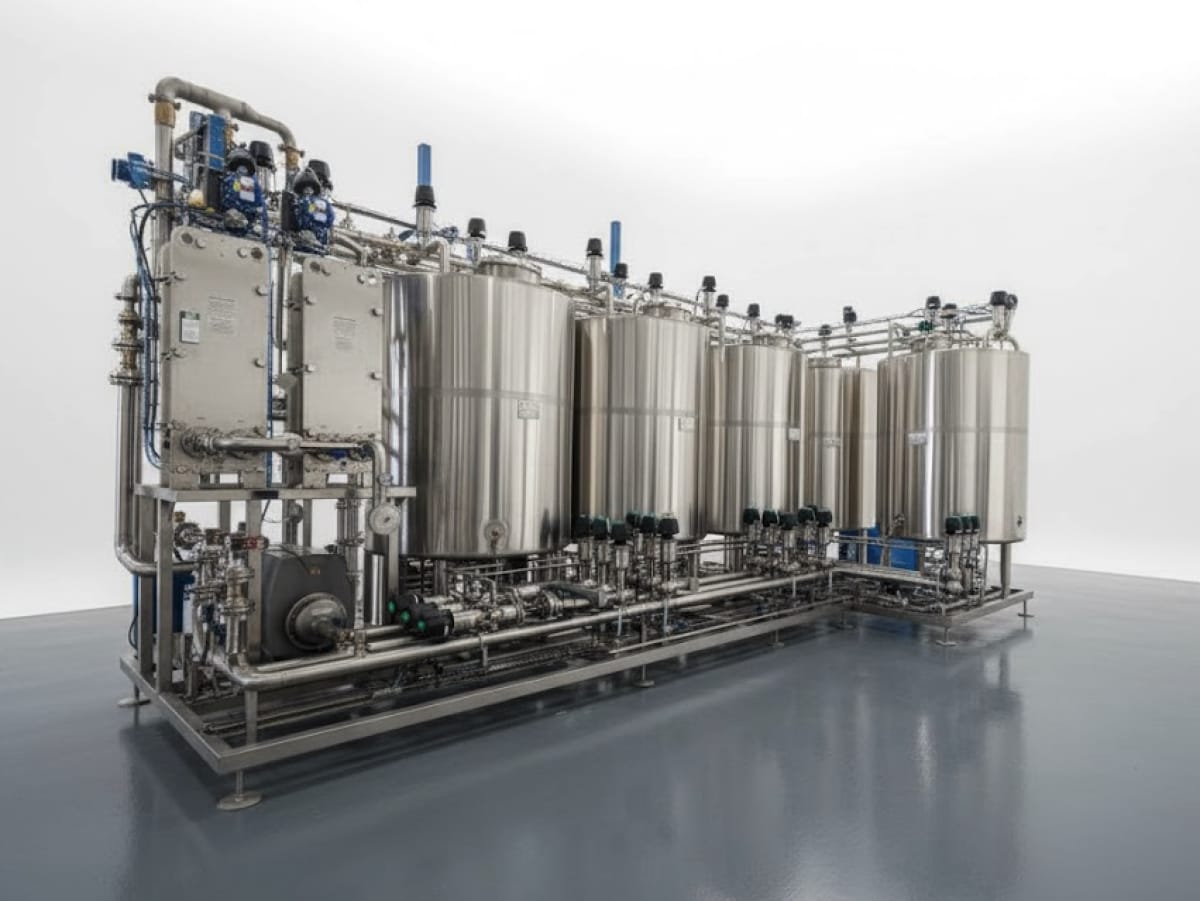
Connect the cleaning skid with the vessels, piping, utilities, and production schedule it serves. Define the circuits, cleaning conditions, controls, and verification records together.
200–1,000 gal
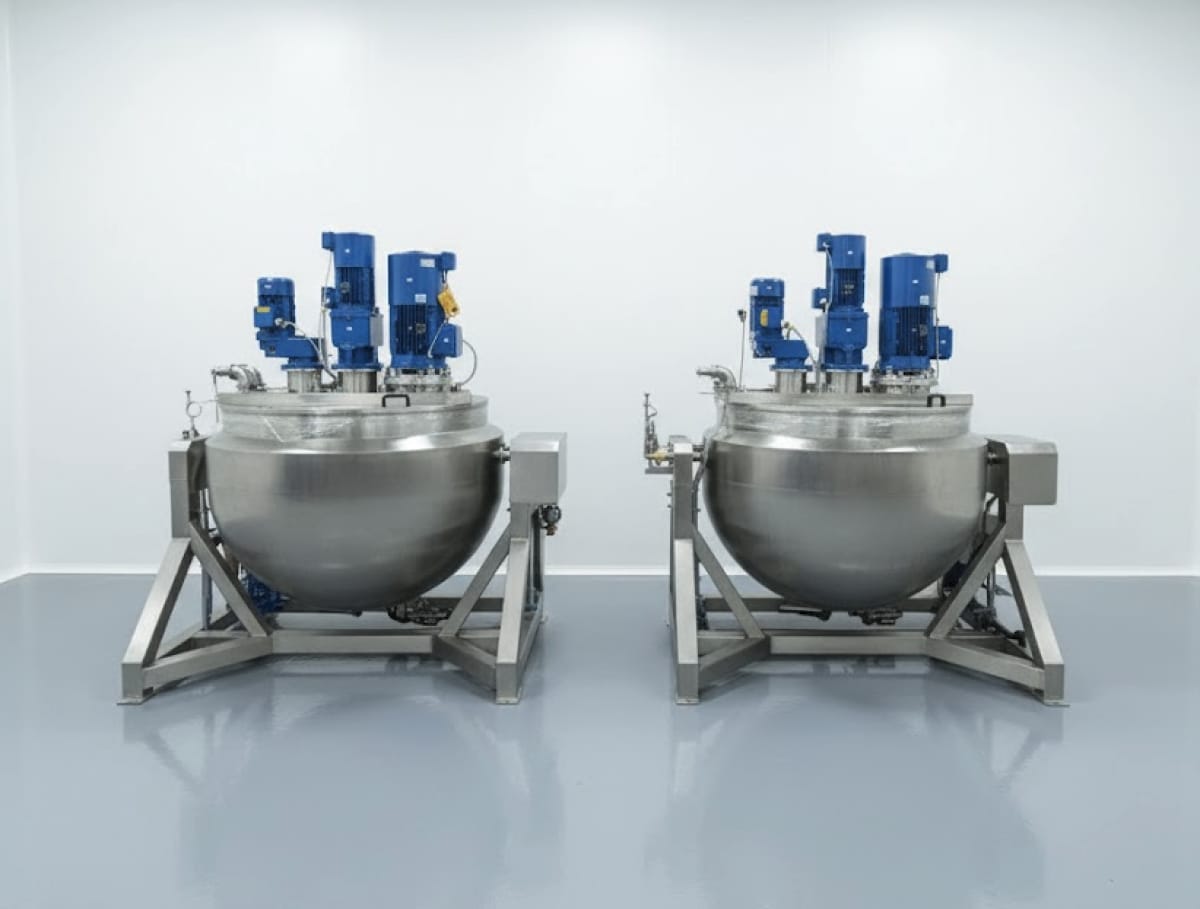
Match the vessel to the recipe and production cycle. Coordinate working volume, jacket duty, agitation, discharge, utilities, cleaning, and batch records before selecting a kettle.
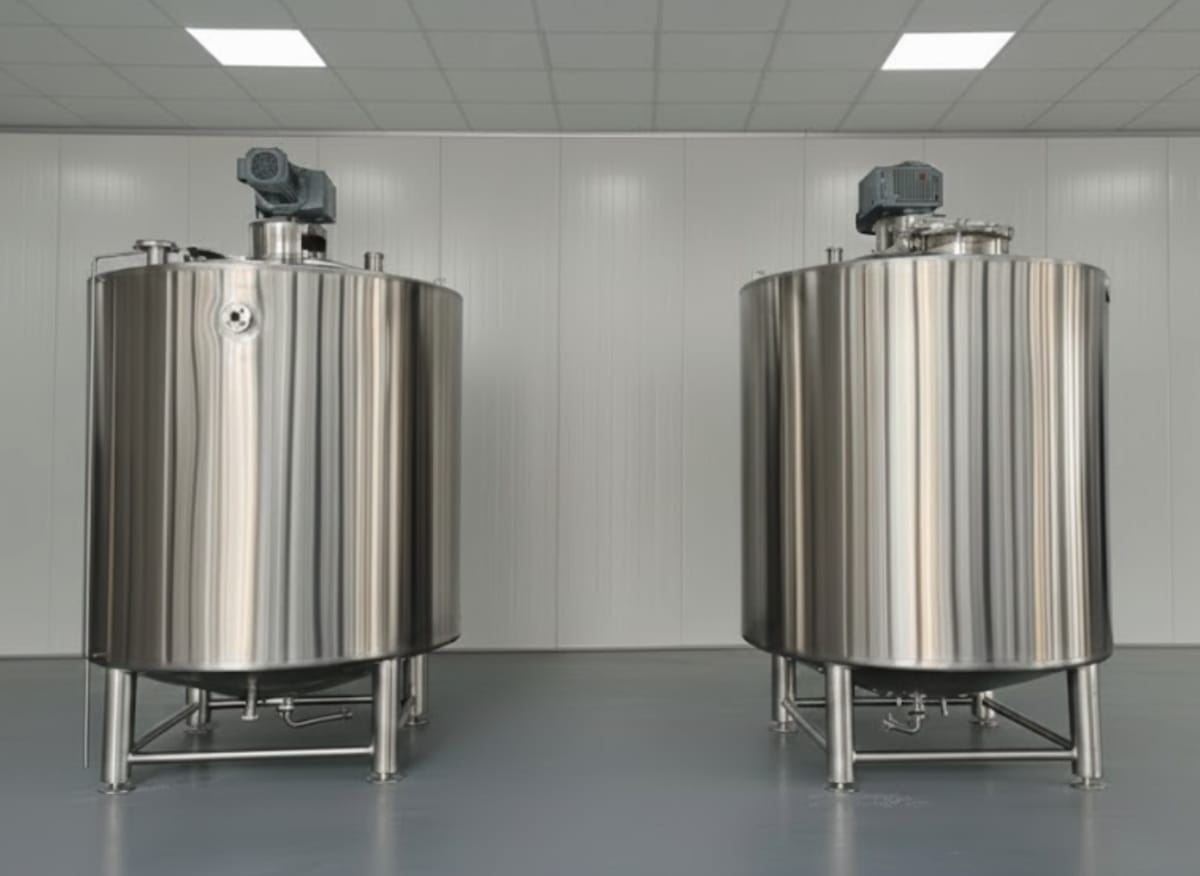
500–25,000 gal
Define the vessel's role in the process before selecting volume or fittings. Coordinate product duty, tank form, agitation, jackets, nozzles, cleaning, instrumentation, and fabrication records.
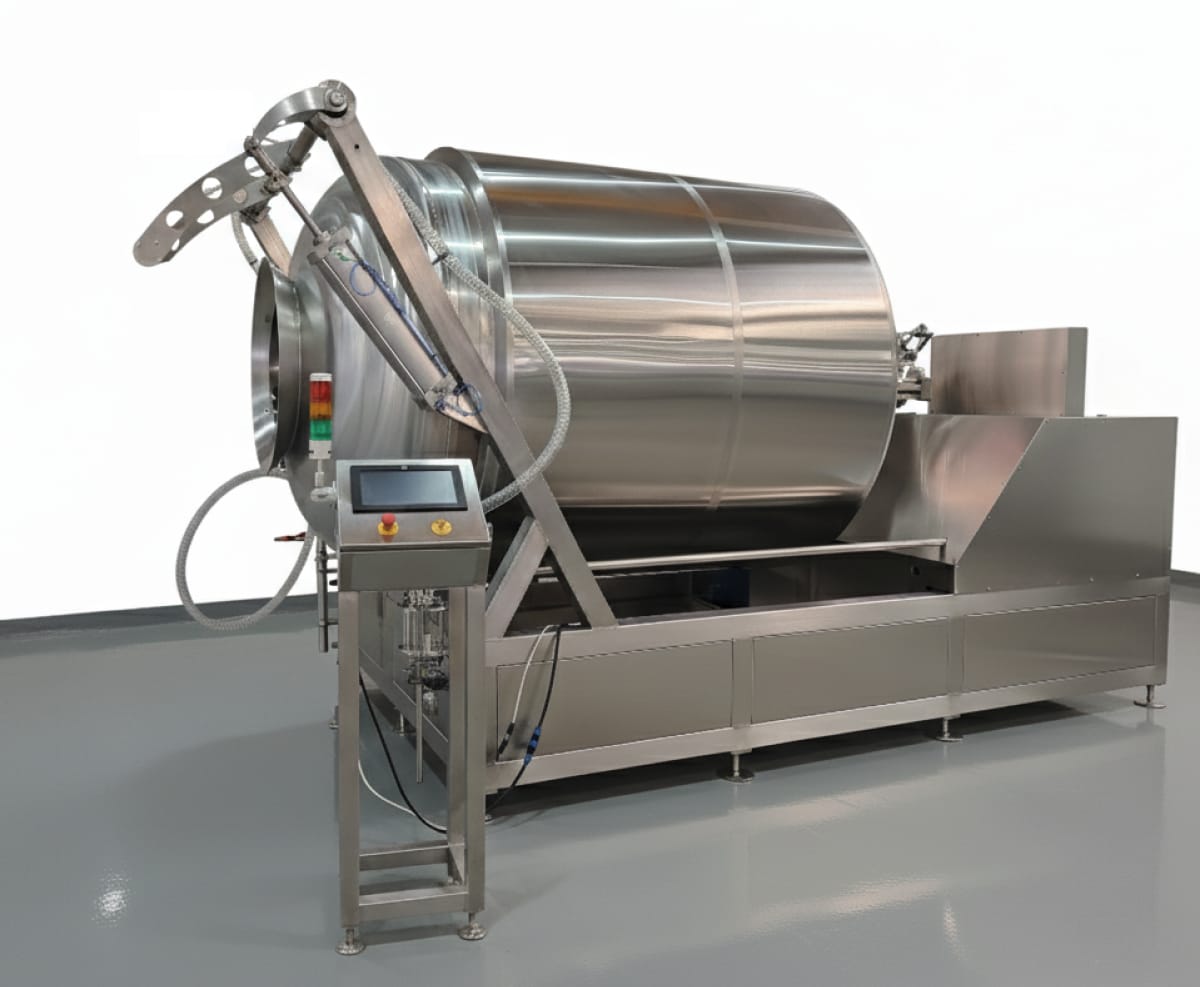
500–5,000 lb
Define the product and effective batch load before selecting a tumbler. Coordinate drum action, vacuum, temperature, handling, cleaning, recipes, and the upstream and downstream line.
Capacities shown describe the selected equipment program. Working volume, loading, materials, and supply scope are confirmed for each application.
Beyond the Vessel
A vessel has to work with the process around it. DPS connects equipment selection with plant layout, utilities, cleaning, automation, installation, and the people who will run the line.
Agree product-contact materials, finishes, drainability, cleaning access, and the applicable NSF, 3-A, and UL electrical requirements within the equipment specification.
Coordinate instrumentation, valve sequences, recipes, cleaning states, and PLC/SCADA interfaces with the wider production line.
FEL-2 engineering support is available on qualifying projects. Confirm drawing approvals, testing, shipping, and site readiness in the agreed scope.
Review vessel sizes, mixing arrangements, cleaning circuits, controls, and accessory options in the DPS equipment information sheet.
Allow 18–20 weeks for program planning, subject to configuration, current availability, approvals, and the delivery schedule agreed in your proposal.
Download Equipment PDF2 Pages · 1.1 MB · Rev. 04/26
Connected Engineering
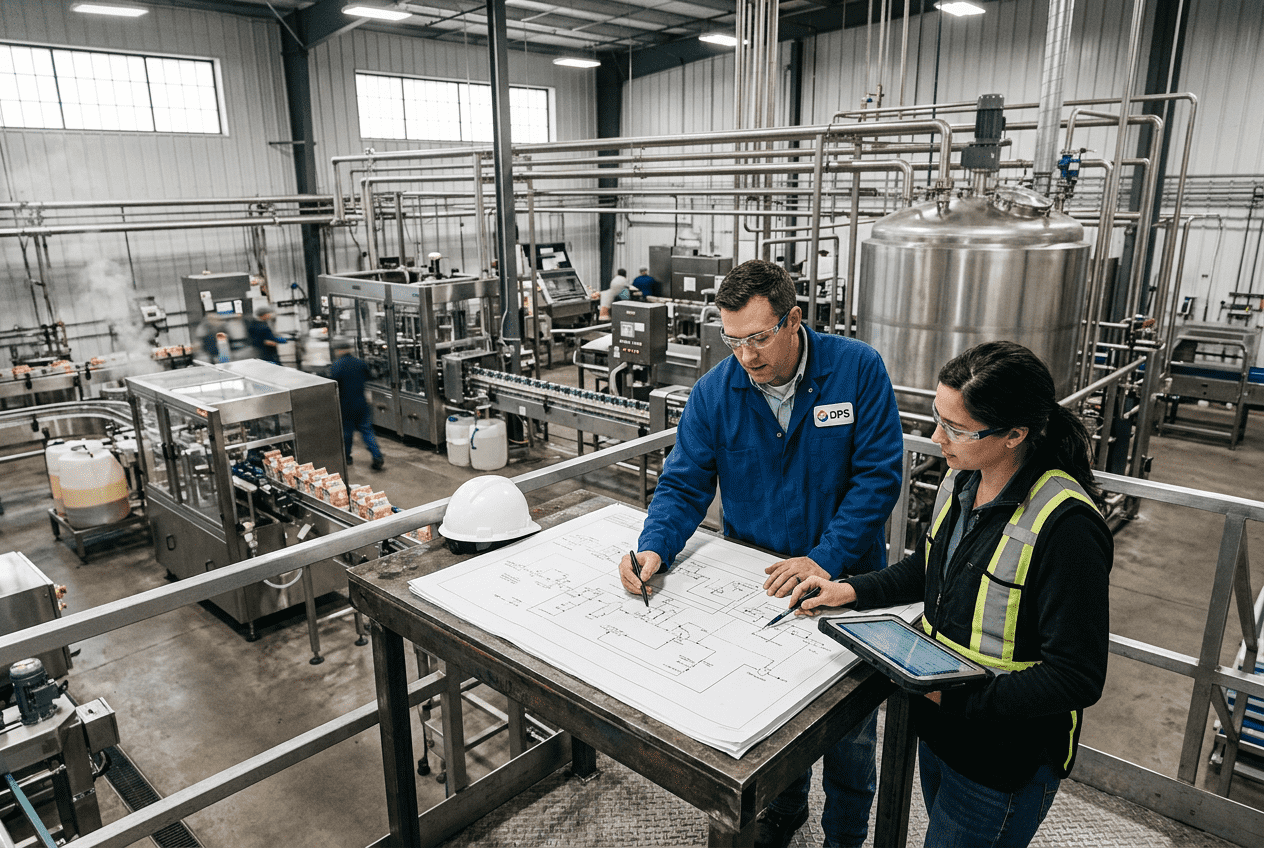
Coordinate process diagrams, facility layouts, utility loads, hygienic requirements, controls specifications, and capital planning for food and beverage facilities.
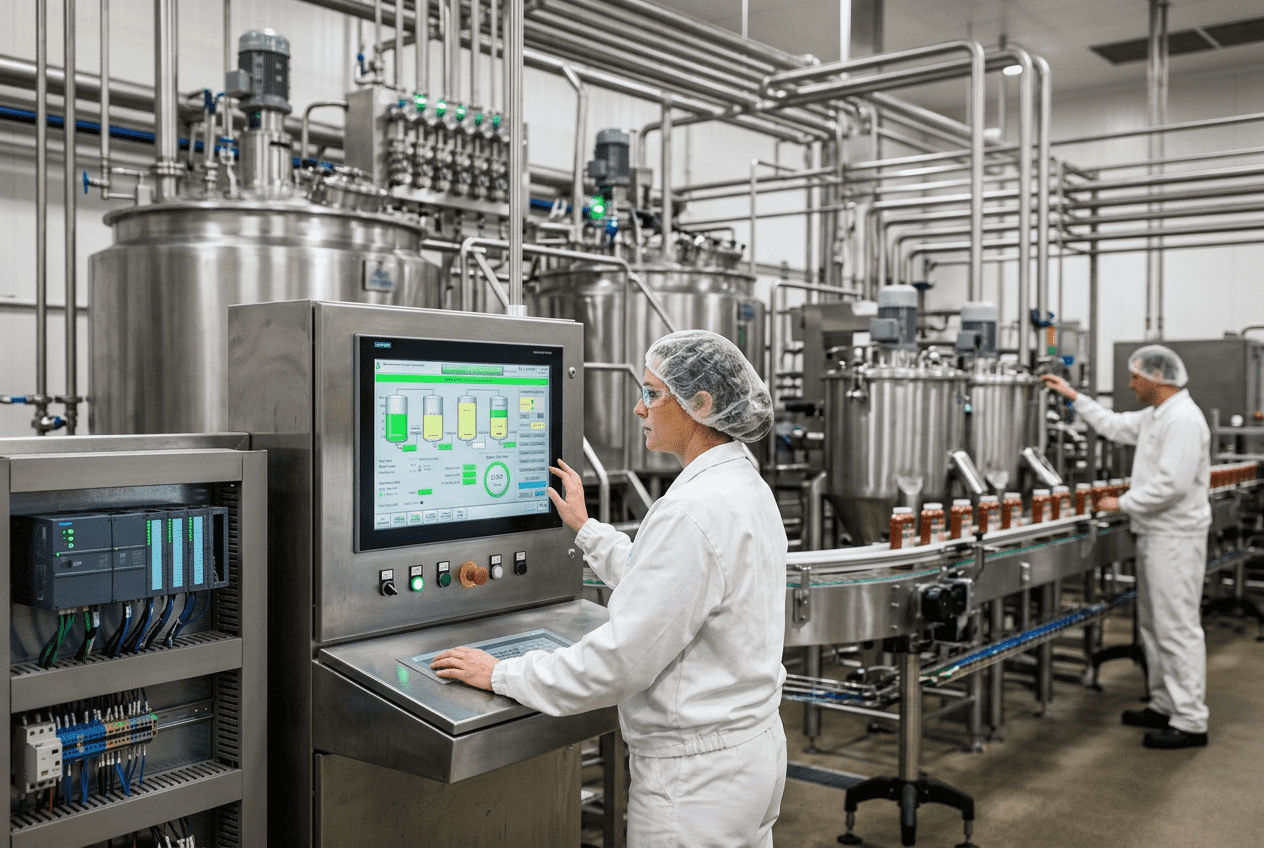
Define PLC logic, SCADA and HMI architecture, batch and recipe control, cleaning sequences, utility monitoring, and automation turnover for food and beverage systems.
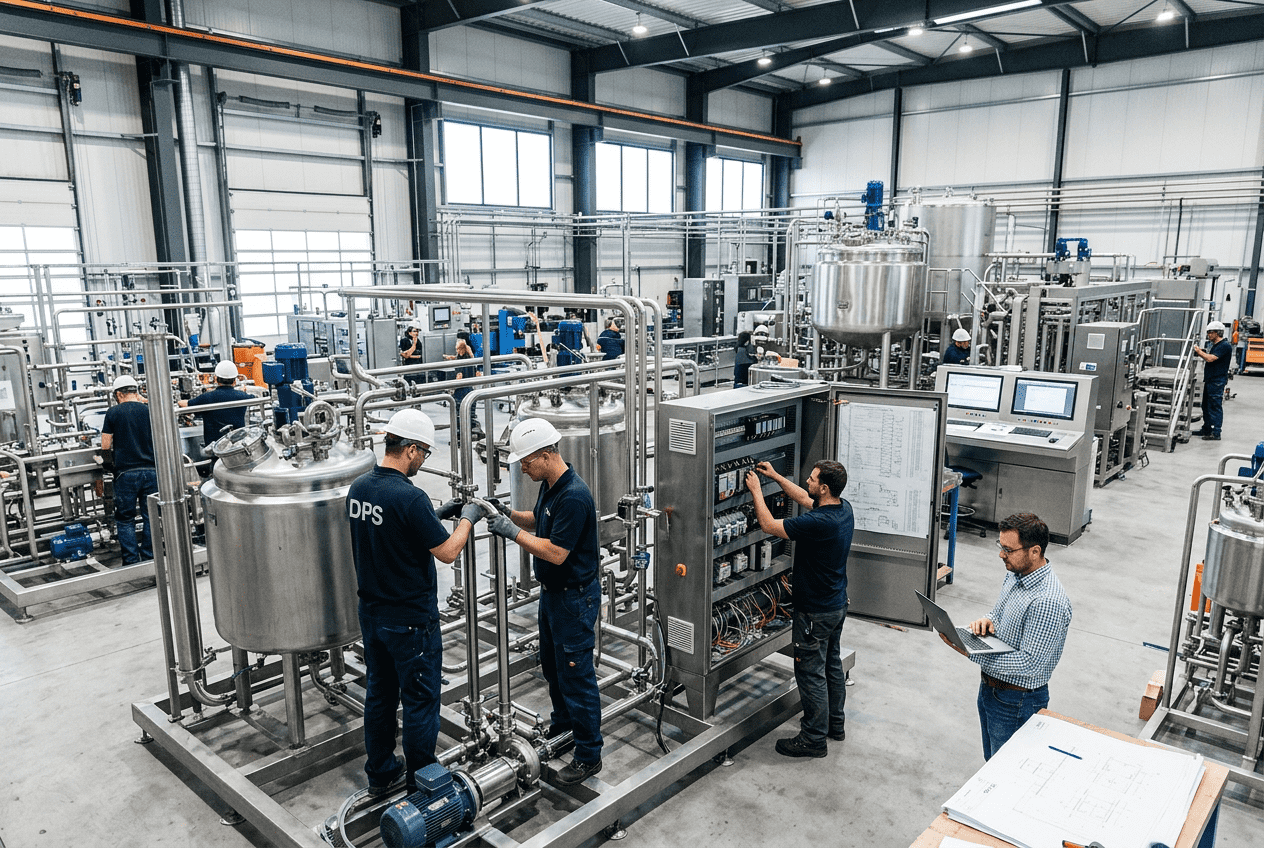
Coordinate process piping, equipment setting, utilities, power, instrumentation, controls, CIP, commissioning, and turnover for food and beverage facilities.
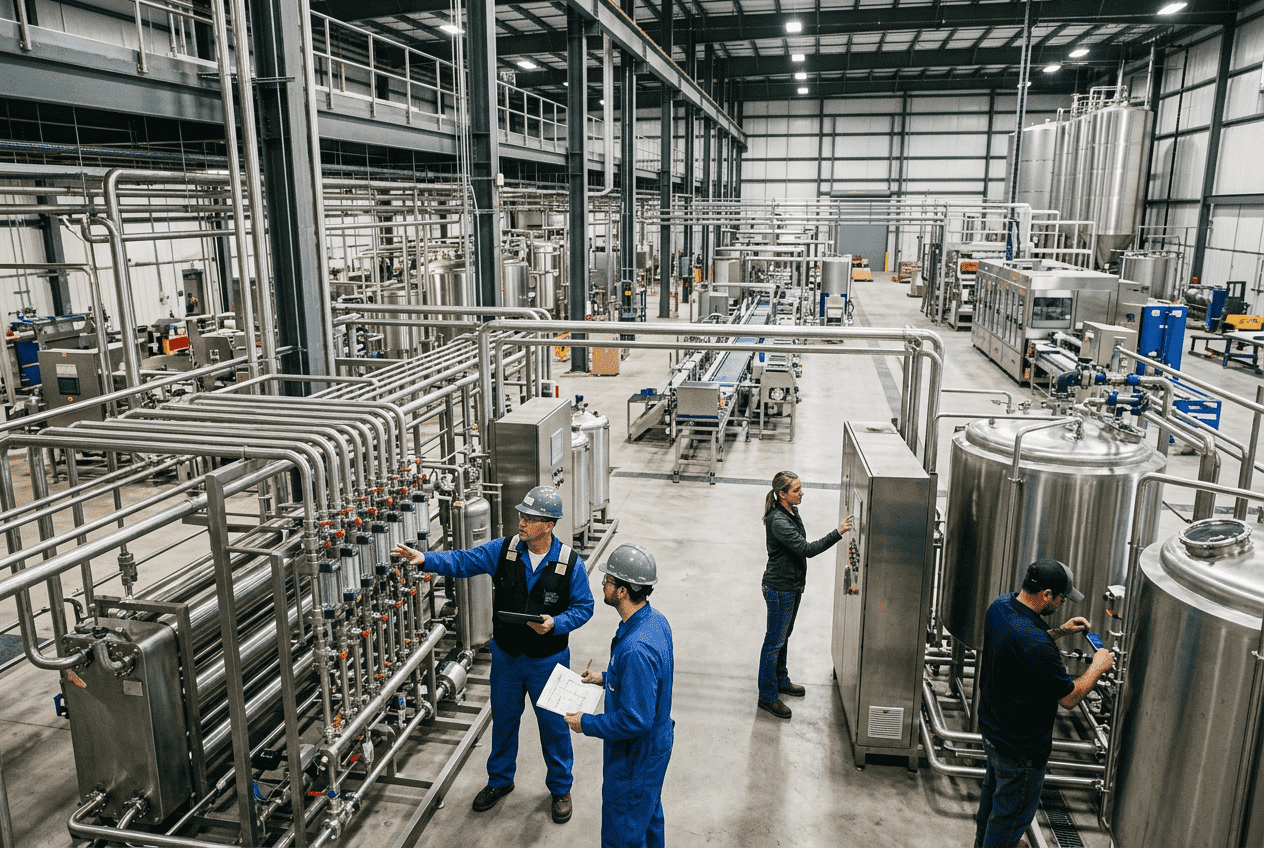
The Next Conversation
Tell us your product, batch size, production targets, available utilities, and site conditions. We’ll help define the equipment configuration and the interfaces around it.
Discuss Your Project