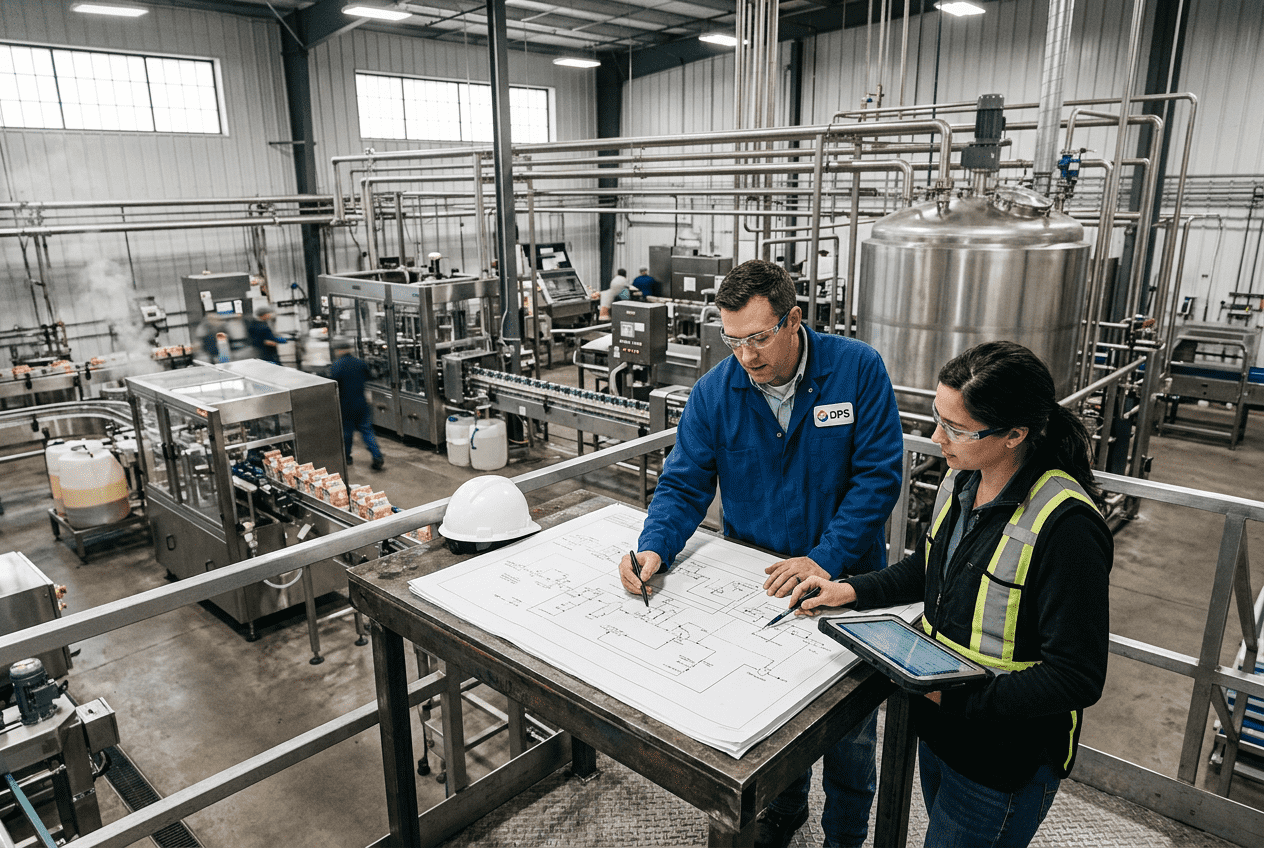
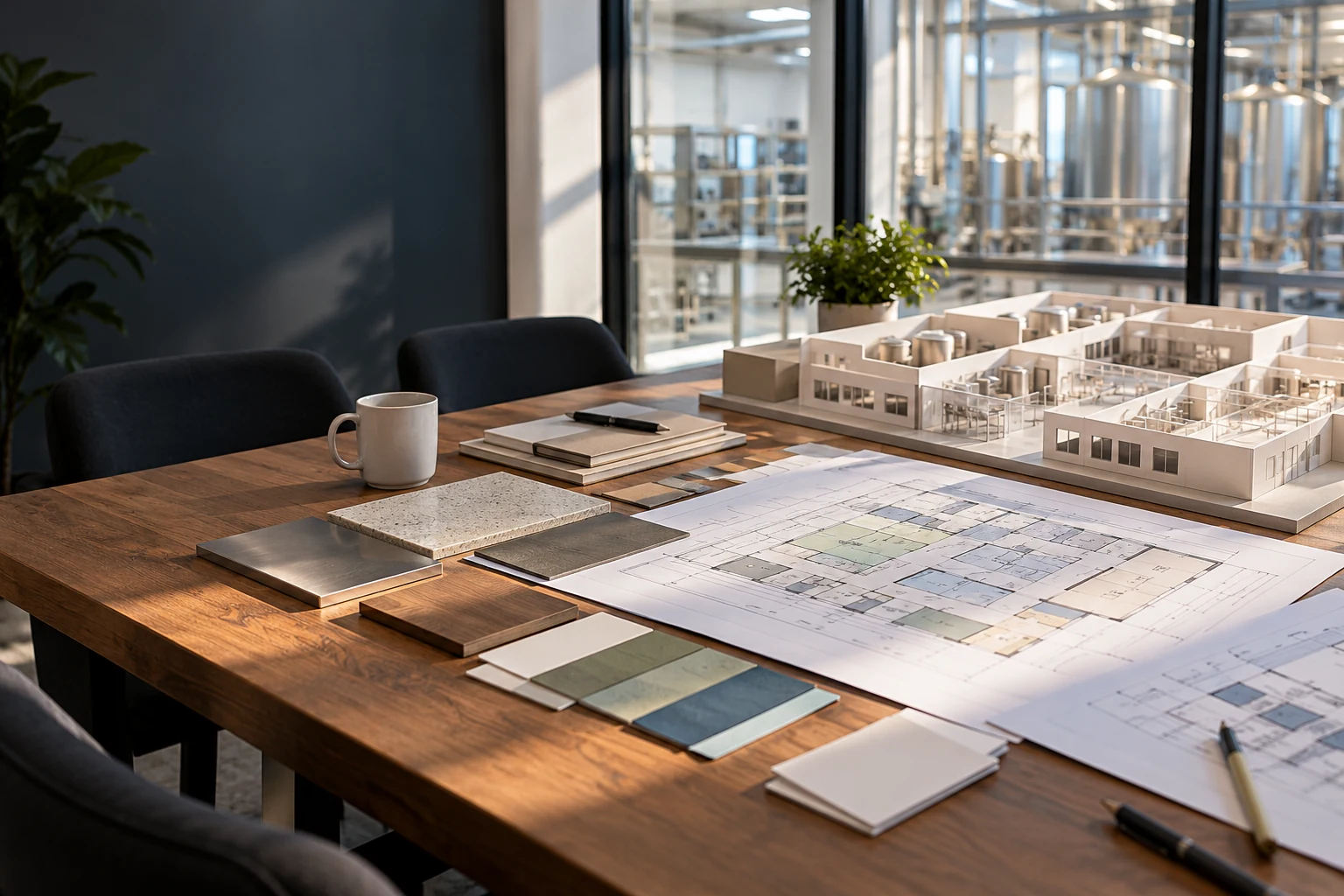
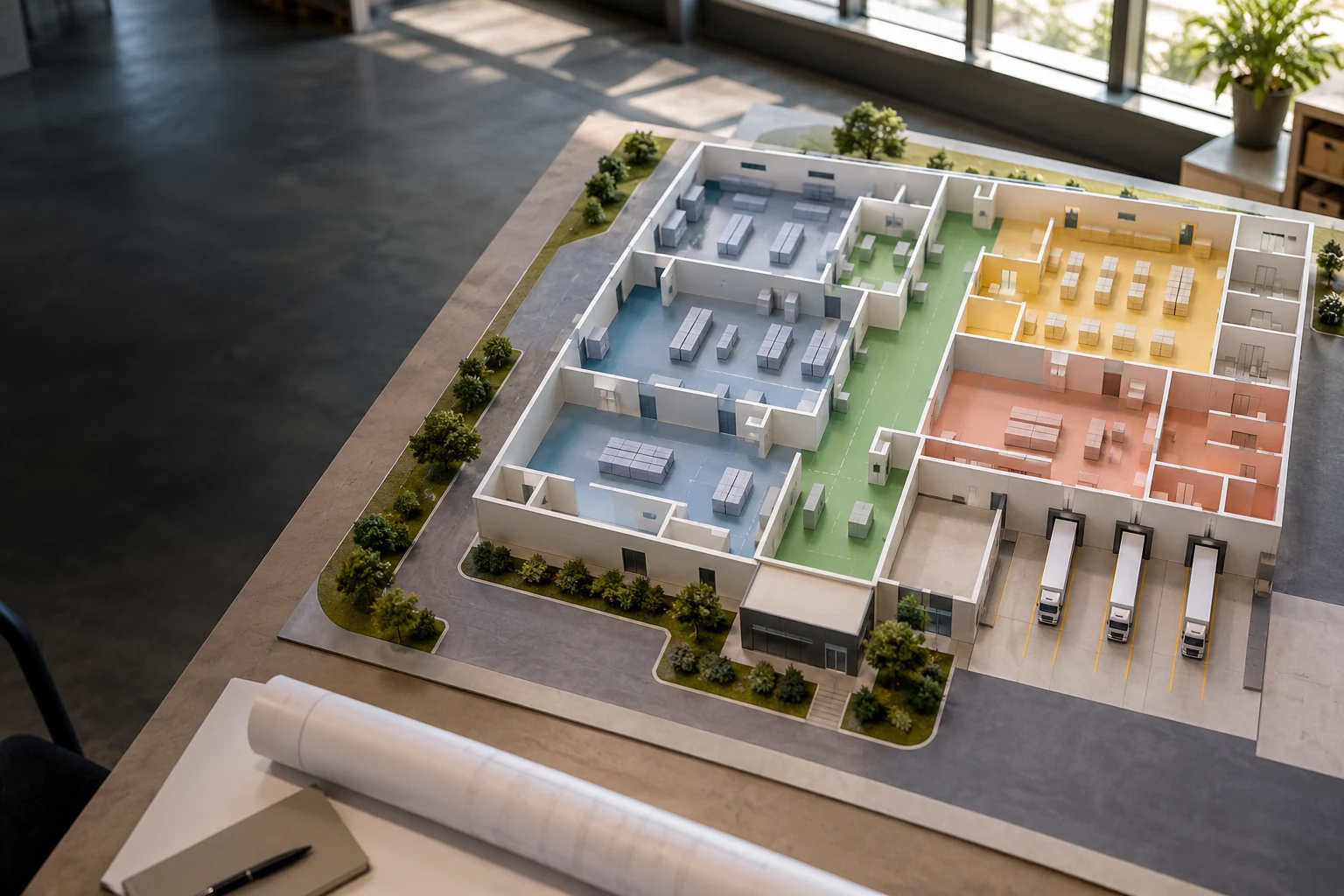
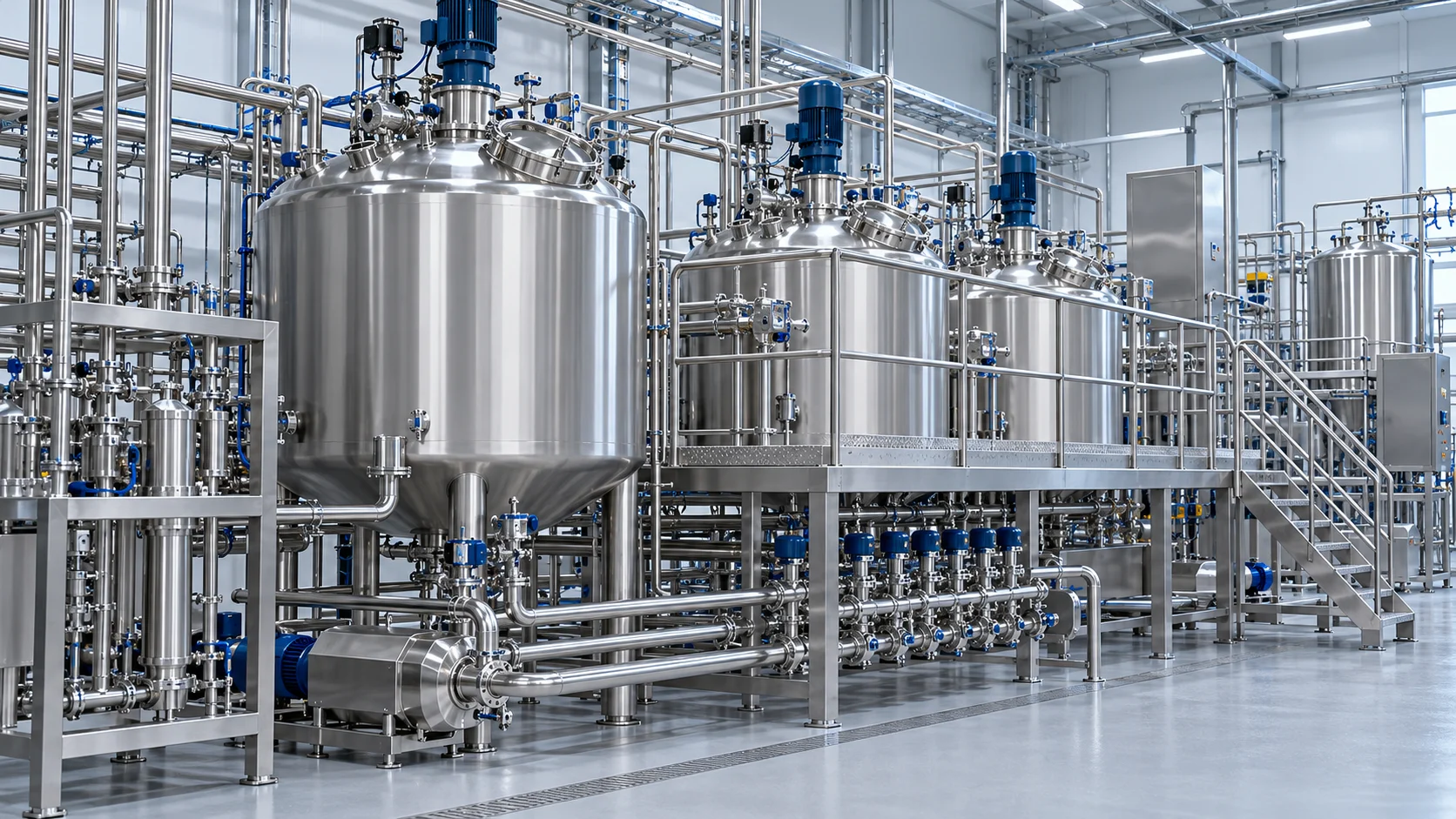
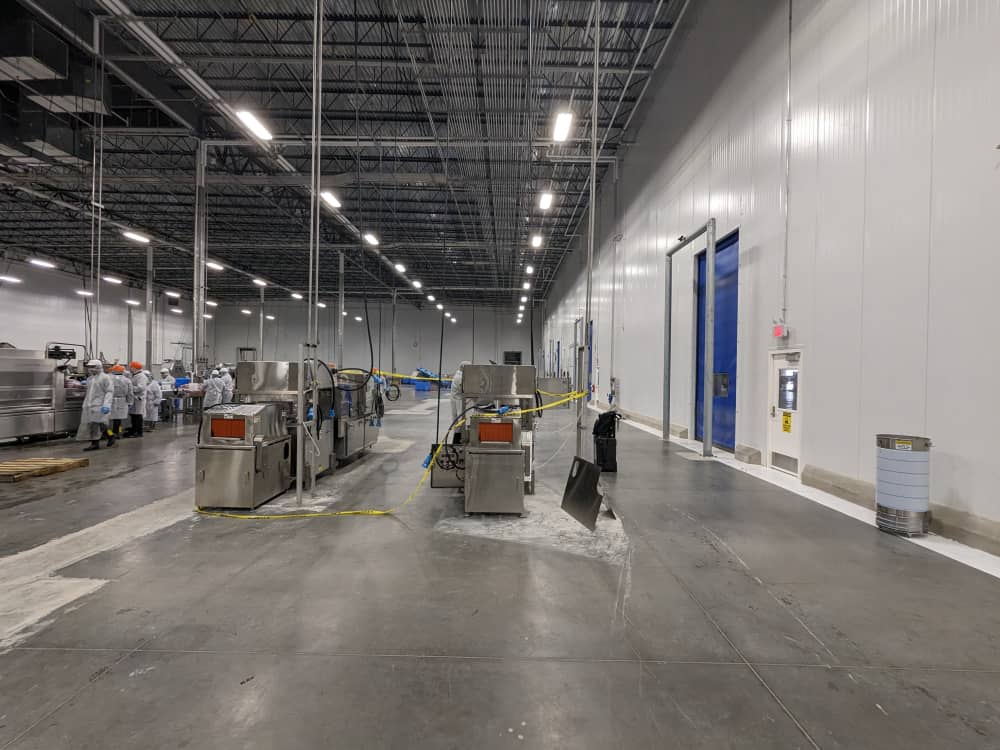
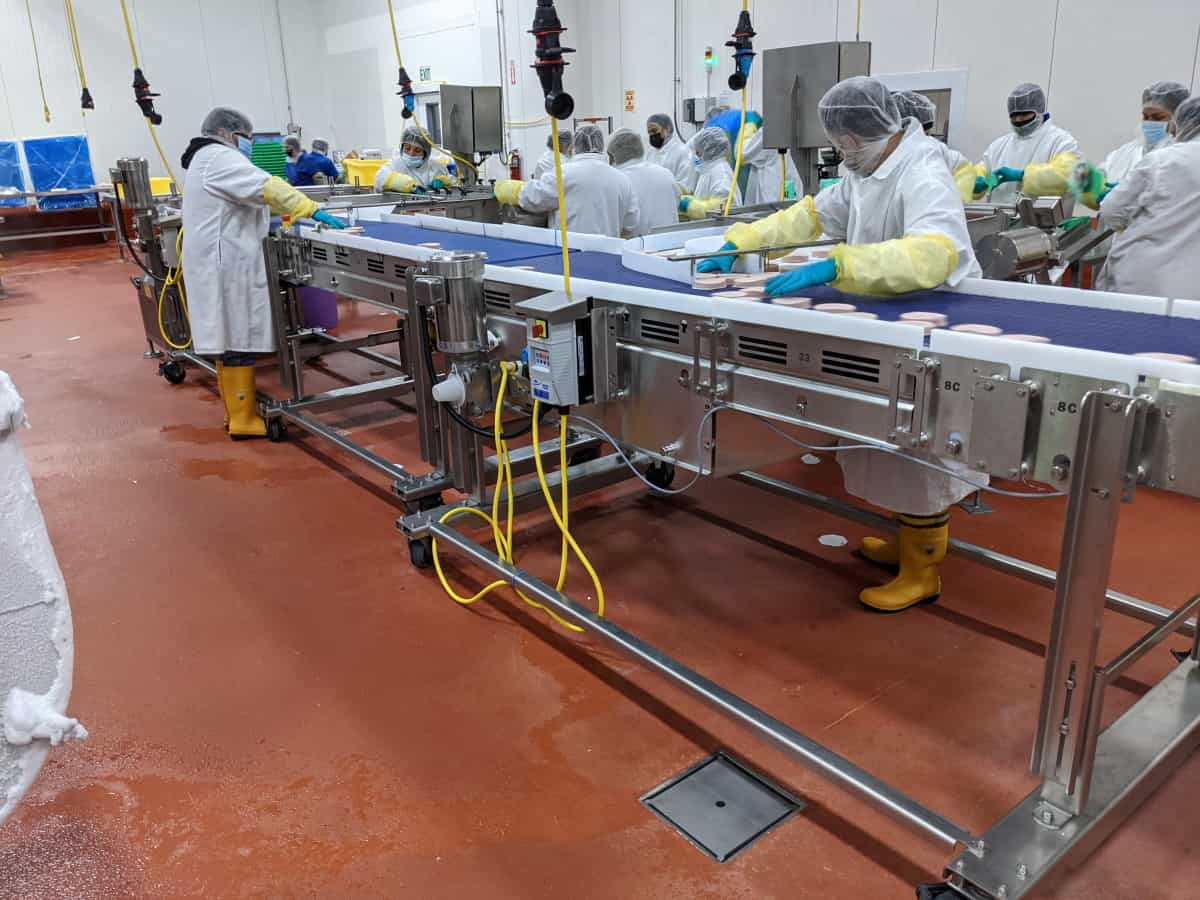
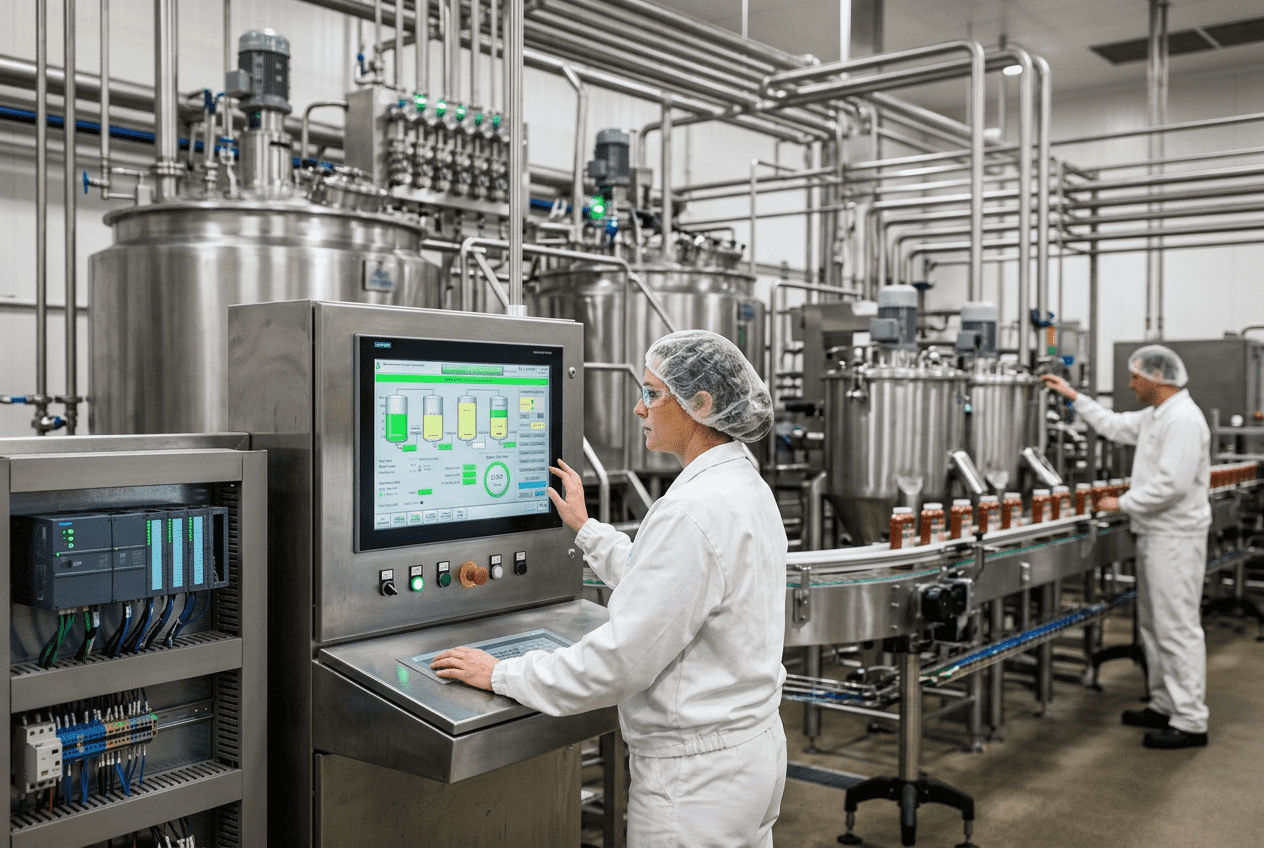
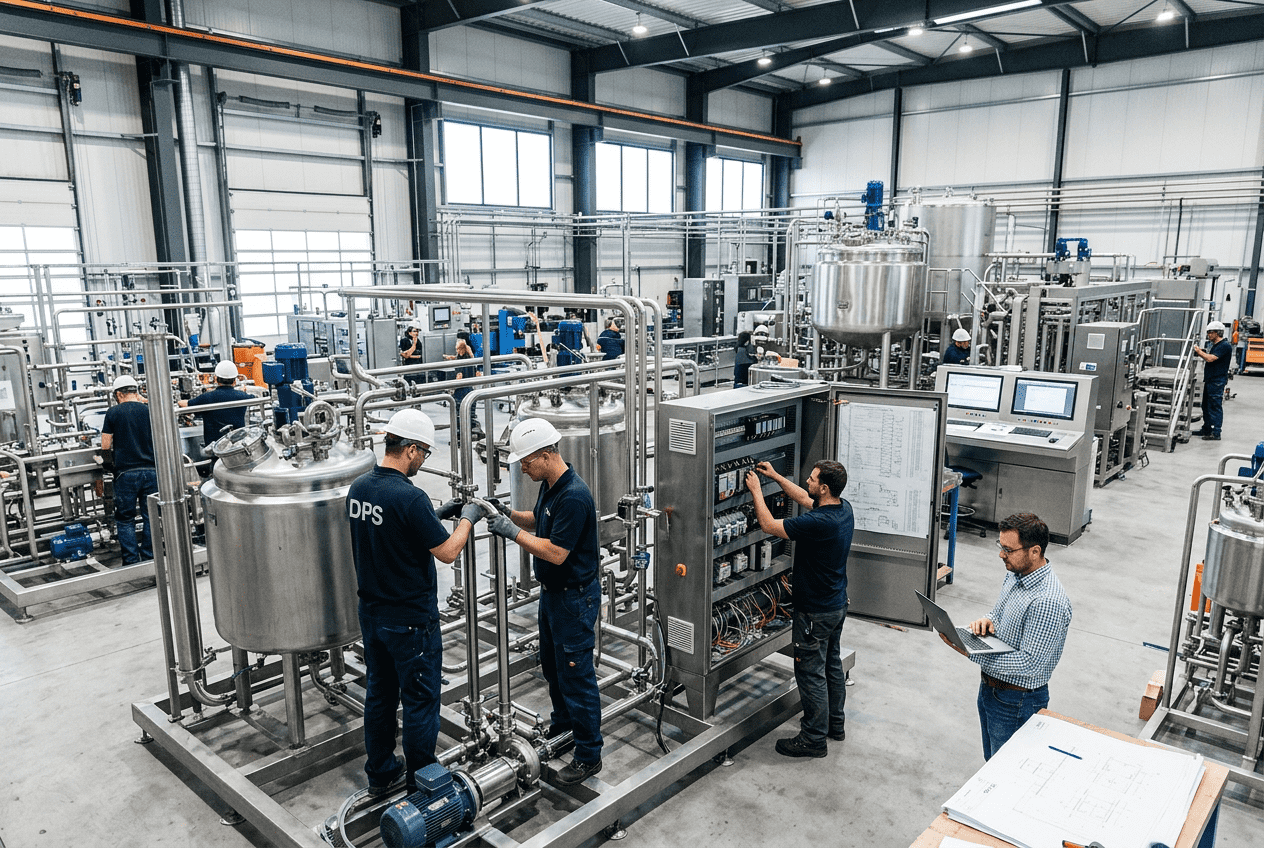
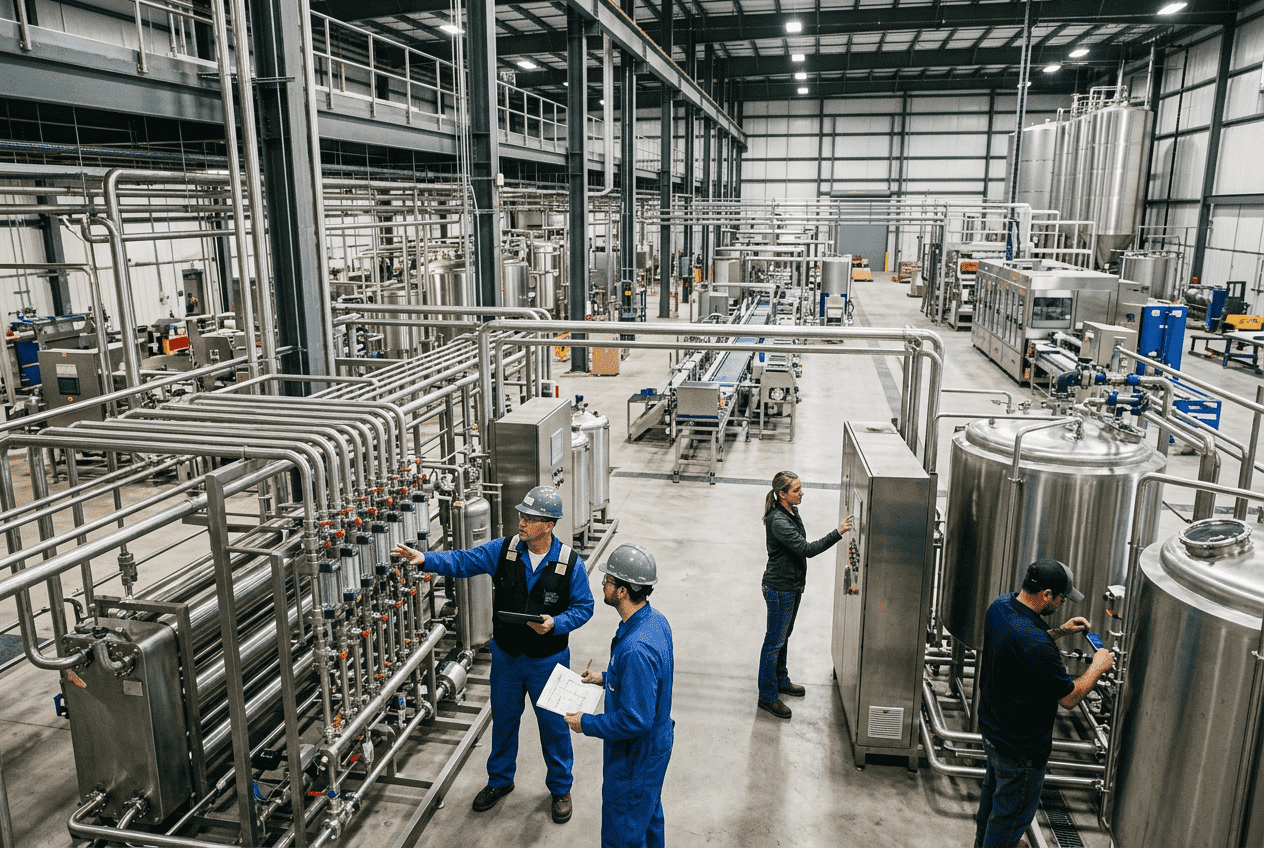
DPS starts with the product, operating sequence, and site conditions, then coordinates P&IDs, equipment duties, utility demands, facility layouts, and controls requirements. Process engineering is connected with the people responsible for fabrication, piping, installation, and automation so that the package addresses constructability and the way the line will be operated and maintained.
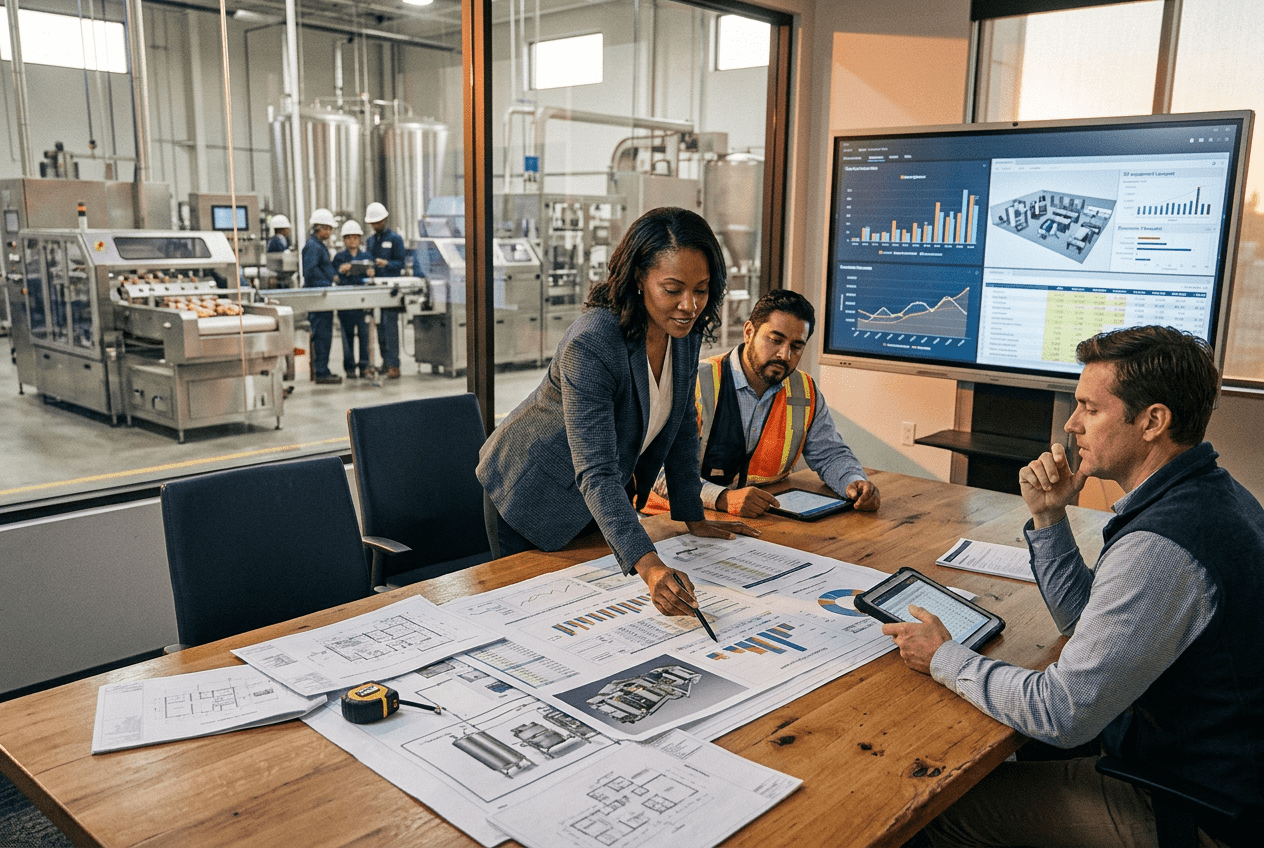
The design also considers investment priorities and phased growth. Capacity modelling, probable cost, and operating assumptions help compare a new asset with an operating or controls improvement. Deliverables and construction responsibilities are agreed at the outset; clients can retain DPS for engineering alone and use another qualified contractor to execute the completed design.
Expansion planning checks shared preparation, utilities, sanitation and access alongside the proposed line. Capacity and energy improvements start with measured interruptions, changeovers and simultaneous loads, followed by an agreed performance review. For pasteurization, aseptic or retort work, coordinate product and package requirements, heat and cool duties, instruments, records and deviation response with the specialist suppliers. Assign product-specific process approval and validation to the qualified parties before equipment or operating changes are accepted.