
In This Article
QUICK ANSWER · PROPERTY STRATEGY
Should a Food Manufacturer Lease a Facility or Build a New One?
Compare the complete commitment over the business’s planning horizon: fit-out, recurring property costs, control of modifications, usable tenure, expansion rights, exit obligations and the value of retained assets. Leasing may reduce some initial property expenditure while leaving substantial process and building investment with the manufacturer. Building may provide more control while requiring more initial capital and site-development work.
Use the same production scope and launch milestone for both options. This is a facility-property decision, separate from whether individual production machines are purchased or leased.
The rent on an industrial unit can look modest beside the cost of a new building. That comparison is incomplete when the food business must install drainage, rooms, utilities and a coordinated production system before it can use the space.
A practical lease vs build food manufacturing facility analysis asks what the business commits, what it controls and how long the arrangement supports the operating strategy. This guide explains the comparison for an owner planning a new factory, without assuming that either route is universally cheaper or more flexible.
1. Define One Production Business for the Property Comparison
Use the same product families, packaging mix, saleable capacity, operating schedule and growth assumptions. Otherwise, the comparison may reward leasing because it describes a smaller operation, or reward building because it quietly includes additional future capability.
Identify credible changes the owner is willing to make. A leased unit may require external storage, different receiving arrangements or a staged product range. Those can be valid business choices, but they should be evaluated openly rather than used to make the property fit on paper.
DPS’s conceptual process and facility planning can translate the operating brief into comparable scope options. The owner should ask which functions each property strategy includes and which assumptions remain provisional.
State the planning horizon and the commercial decision. A temporary bridge facility, a first long-term factory and a new regional production base can justify different priorities. The property route should follow that business objective.
2. Facility Leasing vs Equipment Leasing Are Separate Decisions
Leasing a building does not mean the process equipment is leased, and owning land does not require every machine to be purchased outright. Keep the property and equipment decisions separate so the cash and responsibility boundaries remain clear.
The property comparison should identify building tenure, fit-out, site work and recurring occupancy obligations. Equipment financing or rental belongs in the appropriate asset and funding analysis. The complete forecast can reconcile both without using the same payment under several headings.
A manufacturer may own expensive production systems installed inside a leased shell. Some may be movable while other improvements are closely tied to the property. Identify that distinction before treating the facility as easy to exit.
Use appropriate finance and legal advice for the actual arrangements. The planning task is to expose the commercial questions and their technical consequences, not to infer rights or accounting treatment from a broad label.
3. Lease vs Build: Compare Control and Commitment
Control can have value when the process, utilities and future development need substantial adaptation. Flexibility can have value when the business is uncertain about location or scale. Both concepts need to be defined in terms of the actual arrangement rather than assumed from ownership alone.
| Decision Factor | Lease an Existing Facility | Build a New Facility |
|---|---|---|
| Initial property scope | Existing shell plus required adaptation | Acquisition, development and construction scope |
| Modification control | Depends on permissions and agreement | Still subject to applicable approvals and site constraints |
| Tenure | Defined contractual period and options | Ownership strategy and funding commitment |
| Exit | Review obligations and recoverability | Review disposal, retained value and continuing obligations |
| Growth | Review actual expansion rights and space | Plan site and infrastructure development |
The table frames the investigation. It does not establish that any particular lease transfers risk or that ownership removes regulatory and commercial constraints.
4. Match Useful Production Life with Secure Usable Tenure
Estimate how long the facility is intended to support the business and compare that horizon with the property arrangement. The owner should understand which periods are committed, optional or dependent on a later negotiation.
A long-lived fit-out can create exposure if the business cannot rely on occupying the building for a compatible period. Conversely, committing to a permanent site can reduce flexibility if the business is still testing its market or geographic strategy.
Ask the appropriate advisers to review renewal, termination and other relevant terms. Do not treat a hoped-for renewal as a confirmed operating right. In the technical and financial model, label later occupation as a scenario if it has not been secured.
Connect tenure with the investment decision. The question is not only whether rent is affordable, but whether the property arrangement gives the manufacturing business enough time and control to justify the required installed scope.
5. Identify Tenant-Funded Fit-Out Before Comparing Initial Capital
List the work required to make the existing shell suitable: process rooms, drainage, utilities, building modifications, production installation and other project-specific provisions. Identify which party funds and owns each item under the actual arrangement.
Do not assume a landlord contribution eliminates cost. It may change payment timing or commercial terms, and it may cover only a defined part of the work. Preserve the complete scope and let finance evaluate the arrangement.
Distinguish movable assets from improvements whose value is closely tied to the building. The technical team can identify practical removal and reuse questions, while the property advisers establish the relevant rights and obligations.
CRB’s greenfield-versus-brownfield discussion highlights the need to assess existing assets and constraints. The existence of a shell can provide value, but that value should be measured through the work it actually avoids for the proposed operation.
6. Resolve Permissions for Consequential Building Changes
Identify major modifications early enough for the appropriate approval process. Floor work, roof penetrations, external utility areas and changes to access may affect both engineering and the property agreement. A technically plausible concept is not automatically an available commercial option.
Use drawings and scope descriptions that the relevant parties can understand. Broad phrases such as “food fit-out” can conceal very different work. Record which changes are accepted, conditional or still under review.
Ask legal and property advisers to clarify the responsibilities in the actual agreement. This article does not interpret a lease. The project’s practical requirement is to keep those dependencies visible in the schedule and budget.
If a necessary modification is not permitted or remains uncertain, compare the alternatives before committing further design work. The response may involve a different concept, another building or a different property strategy.
7. Verify the Leased Building’s Technical Suitability
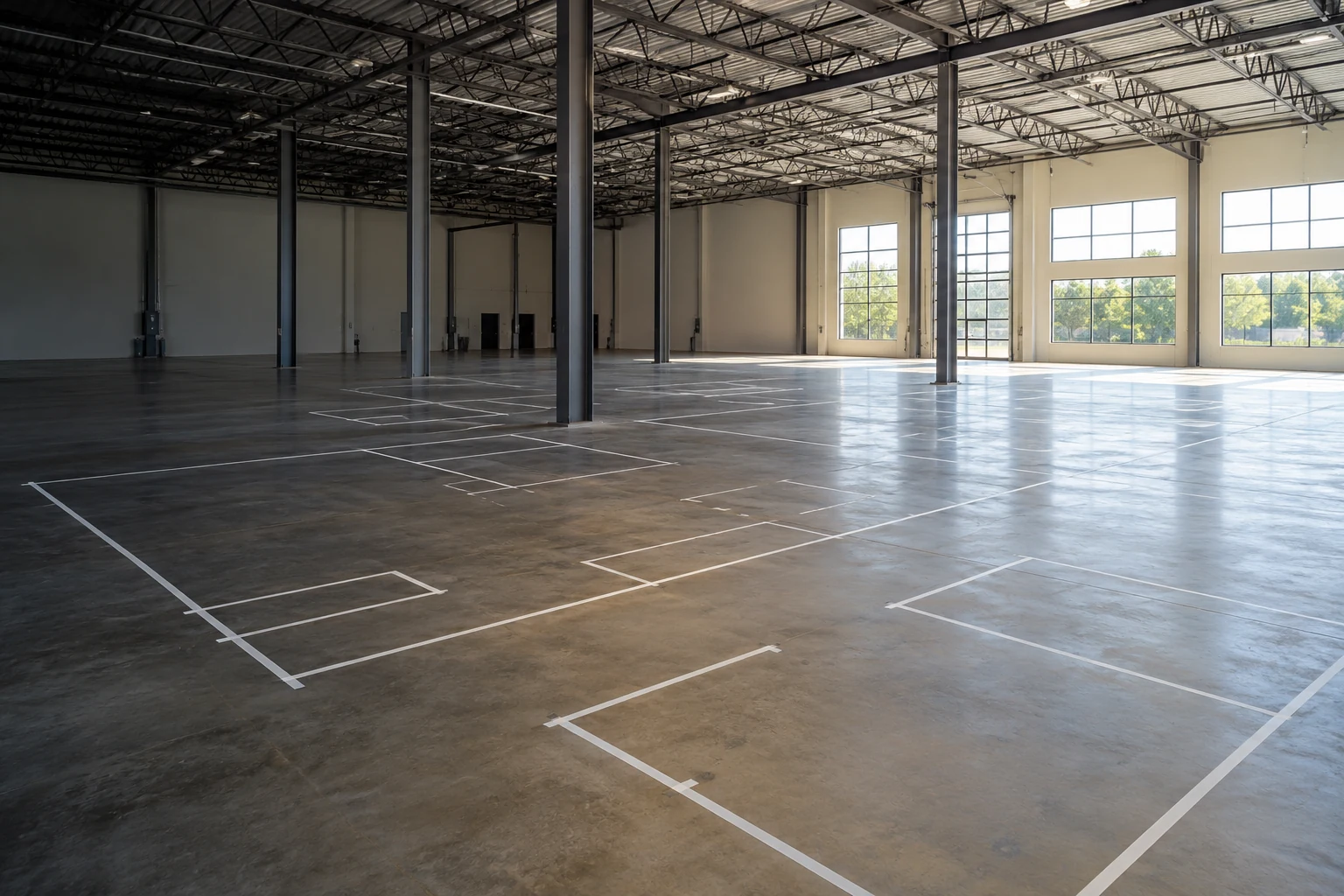
Leasing does not remove the need for building due diligence. Review usable geometry, floor and structural conditions, utility availability, wastewater route, logistics and the functions the operating plan requires. A low rent cannot correct a fundamental mismatch by itself.
Keep the investigation focused on the intended process and support functions. Some conditions can be adapted at an acceptable cost; others may restrict the operating or growth strategy. Identify the effect rather than categorizing every difference as either trivial or fatal.
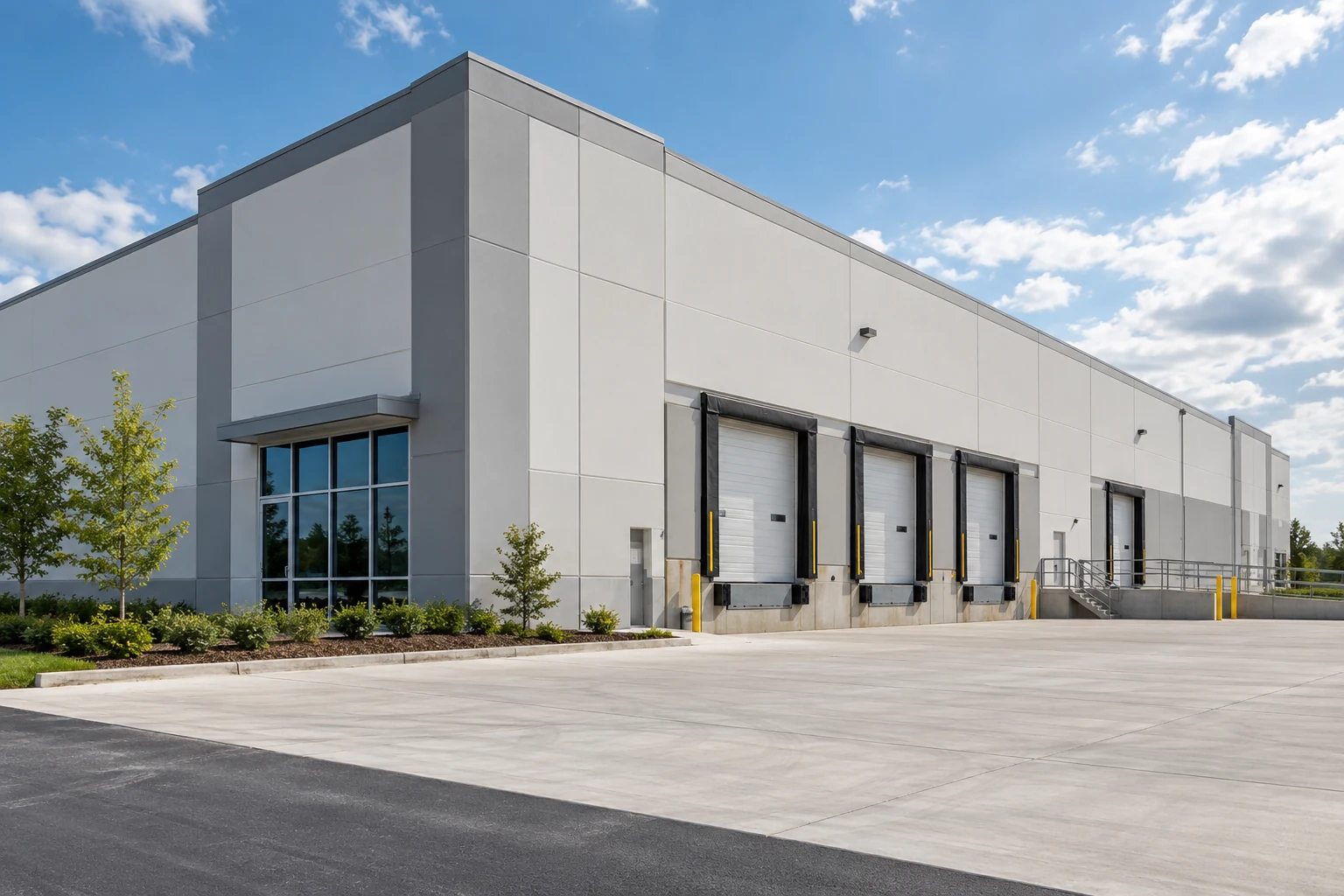
Feed the findings into the capital model. The estimate should describe the actual adaptation scope and condition assumptions, rather than use an unqualified fit-out allowance borrowed from another facility.
8. Define the New-Build Scope on an Equivalent Boundary
A new facility can be planned around the production business, but it requires its own land, infrastructure, building and delivery work. Include the complete enabling scope and the investigations needed to establish it.
Do not compare a fully developed new-build estimate with a leased option that includes only rent and visible finishes. Reconcile the process, packaging, utilities, support functions and launch requirements under the same assumptions.
Separate site acquisition from operating suitability. Owning the parcel does not prove that power, water, discharge or access conditions meet the production plan. The relevant due diligence remains necessary.
Use the development strategy to identify options for later expansion. Building new may provide more freedom, but future space and capacity have value only when they support a credible business plan and can be activated under practical site and funding conditions.
9. Compare a Transparent Five-Year Property Cash Commitment
An invented example compares property-related cash only. The leased option requires $2.4 million of adaptation and assumed fixed rent of $450,000 per year for five years. Its undiscounted cash commitment is $4.65 million.
The new-build option requires $4.0 million initially and $120,000 per year of defined recurring property costs, totaling $4.60 million over five years. These values are teaching inputs, not U.S. market rates, a DPS estimate or a recommendation.
| Item | Lease Case | Build Case |
|---|---|---|
| Initial property and adaptation scope | 2,400 | 4,000 |
| Defined annual property payment | 450 | 120 |
| Five years of recurring payments | 2,250 | 600 |
| Undiscounted five-year total | 4,650 | 4,600 |
| Common production equipment | Excluded from both | Excluded from both |
| Residual value, financing and tax | Not modeled | Not modeled |
The near-equal totals do not establish economic equivalence. The cases have different initial funding, ownership, exit and residual-value consequences, none of which should be hidden by the simple cash sum.
10. Visualize the Total without Losing the Initial Funding Difference
The chart summarizes the five-year totals from the limited example. The leased case begins with less property expenditure, but the recurring payments narrow that initial difference. The new-build case leaves the owner with a different asset position.
Illustrative five-year property cash · USD millions
Lease case · 4.65
Build case · 4.60
Bars use $4.65 million as the scale. No discounted value, residual value or investment recommendation is represented.
Ask finance to develop the complete cash and economic comparison using the actual scope, payment timing, funding arrangements and owner evaluation method. A simple sum can reveal why initial rent comparisons are incomplete, but it cannot rank the alternatives on its own.
11. Test the Planning Horizon and Renewal Assumptions
A facility strategy can look different over a short bridge period than over a long operating horizon. State the period used and why it fits the business. Do not extend a lease case indefinitely at today’s assumed payment merely to create a convenient model.
If a later renewal or relocation is uncertain, show scenarios with explicit conditions. The owner needs to understand which outcome depends on an agreement not yet secured. The model should not convert hope into a contractual right.
For the build case, consider the useful horizon, retained asset and possible future transaction under the owner’s finance process. A residual-value assumption is not a guarantee of a sale price and should not be used to make the preferred option appear certain.
Compare the alternatives using the same service objective. A route that supports only a temporary product range is not equivalent to one supporting the long-term business unless the difference is intentional and priced.
12. Examine Recoverability of Improvements and Assets
Identify which installed items could practically move and which depend on the property. Removal may require work, transport, adaptation, storage and reinstallation. The original purchase price does not establish the value available at exit.
The property agreement may address improvements and restoration responsibilities. Appropriate advisers should review the actual terms. The technical team should supply the scope information needed to understand what those terms could mean for the plant.
Keep recoverability separate from accounting depreciation. A fully depreciated asset can still have operating use, while an asset with a book value may be difficult to reuse economically. The investment comparison needs a reasoned view of future cash and capability.
Use conservative, transparent scenarios where evidence is limited. Do not claim that every machine can simply be disconnected and moved, or that every building improvement is lost. The answer depends on the asset, the site and the arrangement.
13. Put Commercial Questions into a Review Register
The owner needs a coordinated list of technical assumptions and property questions. This allows the right advisers to resolve the issues without expecting the engineering team to interpret a lease or the legal team to infer process requirements.
| Subject | Question | Technical Input |
|---|---|---|
| Modifications | What permission and responsibility apply? | Defined building and utility work |
| Tenure and options | Which periods are secured or conditional? | Plant useful horizon and expansion plan |
| Improvements | How are ownership and obligations addressed? | Movable versus property-specific scope |
| Exit | What restoration or other obligations apply? | Removal and reinstatement concept |
| Access and expansion | Which rights and areas are actually available? | Site circulation and future test fit |
Assign next actions and decision dates. An unresolved question should remain visible in the investment proposal rather than disappear because it sits outside the construction contract.
14. Compare Expansion Rights with Physical Expansion Space
Available land or an adjacent vacant unit may appear to offer growth. Confirm the technical fit and the commercial ability to use it. Physical proximity alone does not establish an expansion right or a future availability commitment.
Test how the next line affects docks, storage, people functions and utilities. A property may offer more floor area while the shared infrastructure remains the limiting factor. Keep the future operating case explicit.
DPS’s phased investment planning can help identify which enabling provisions should be evaluated initially. The owner and property advisers should then establish whether the arrangement supports the intended sequence.
If growth would require relocation, include that possibility in the strategy instead of presenting the first facility as permanently scalable. A limited-horizon facility can still be a rational choice when the business understands the transition it may create.
15. Compare the Same Commercial Launch Milestone
An existing building can shorten some development activities while adding adaptation and approval work. A new build can offer a more coordinated arrangement while requiring site development. Compare actual sequences rather than assuming the route determines the schedule.
Include property negotiations, investigations, permissions, utility readiness, design, procurement, construction and operating preparation. Some tasks can proceed in parallel; others depend on decisions or evidence. The project team should define the credible sequence.
Stellar’s planning overview places site and facility decisions within an integrated food project. That is useful context for a schedule comparison: property choice and manufacturing readiness cannot be evaluated as independent calendars.
Use the first regular customer-supply milestone if that is the business objective. A building that is physically available sooner may not support saleable production sooner once the required fit-out and launch activities are included.
16. Compare Operating Consequences as Well as Property Payments
The geometry and location can affect handling, storage, staffing, logistics and utility arrangements. The lower property payment may be offset by operating constraints, while a larger initial investment may or may not create benefits the business can realize.
Use evidence-based incremental costs. A more convenient layout does not automatically produce a staffing reduction, and a shorter customer distance does not automatically reduce every distribution charge. Define the mechanism and the assumptions behind each benefit.
Keep common costs common. If the same process and operating model apply to both options, avoid inventing different efficiencies merely to favor a preferred route. Where a real difference exists, explain it and test sensitivity.
Finance can then compare the complete operating and cash implications using the company’s evaluation method. The property strategy should be judged as part of the manufacturing business, not as an isolated real-estate payment.
17. Model Exit and Relocation as Scoped Scenarios
Define the event that would trigger exit: end of a bridge period, loss of usable space, market change or another credible condition. Identify which activities and commitments would follow. A broad label such as “easy relocation” is not enough.
| Scenario | Scope to Investigate | Business Consequence |
|---|---|---|
| Leave a leased facility | Removal, obligations, replacement site and transition | Cash, supply continuity and timing |
| Sell or repurpose an owned facility | Asset condition, transaction and retained obligations | Value uncertainty and strategic options |
| Expand in place | Available rights, space and infrastructure | Incremental capital and operating disruption |
| Continue operating | Renewal or ownership plan and required upgrades | Future commitment under stated conditions |
The objective is not to predict every future transaction. It is to make the flexibility being purchased understandable and avoid treating an uncertain exit benefit as guaranteed value.
18. Put Initial Capital and Recurring Commitments on a Time Line
A five-year total does not reveal when funds are needed. Adaptation, deposits, rent, construction progress and financing occur on different schedules. Build the cash view from actual commercial terms and the project sequence.
FDIC’s small-business financial education materials emphasize cash-flow planning. The relevant discipline here is to distinguish the total commitment from the peak funding requirement and the dates on which the owner must act.

Reconcile common production equipment and working capital separately. Excluding an item from the property comparison does not mean it disappears from the complete factory funding plan.
19. Test the Assumptions That Could Reverse the Decision
Identify the material drivers rather than changing every input by the same percentage. Fit-out scope, useful tenure, launch timing, recurring payment terms, operating constraints and residual assumptions can affect the alternatives differently.
Use transparent scenarios when commercial information is incomplete. Label an assumed renewal, landlord contribution or future disposal as conditional. The model should show how dependent the result is on that condition.
GAO’s estimating framework provides a general reference for documented assumptions, sensitivity and risk analysis. It does not supply property prices or establish the preferred route for a food manufacturer.
Ask which investigation or negotiation would improve the decision most. A targeted building review or clarification of a material property term can be more valuable than refining minor cost inputs that do not change the comparison.
20. Agree the Criteria Before Choosing the Preferred Property Route
Set the operating fit, capital boundary, usable horizon, launch target and flexibility objectives before comparing final totals. Keep hard constraints outside any weighted score. A route that cannot support the agreed operation should not win because its initial payment is small.
Have commercial, finance, operations, quality and project leaders review the same alternatives. The property advisers should identify the terms and unresolved questions relevant to each. This reduces the risk that different participants approve different interpretations of the strategy.
Record the reason for the selected route and the conditions that could require reconsideration. A decision made under transparent uncertainty can be reasonable; a decision supported by unrecorded optimistic assumptions is difficult to manage later.
The owner should be able to explain both what the arrangement enables and what it commits the business to do. That is the appropriate level of clarity for a major facility decision.
21. Use a Scoped Study to Connect Property Choice with Plant Capability
Bring DPS the product and capacity brief, candidate building or site information, available utility evidence and the investment horizon. State whether the business needs a bridge facility, a staged first factory or a long-term production base.
Ask the planning scope to compare the same production requirements across the options, identify major enabling work and expose the interfaces that require specialist review. Keep the legal, financing and property decisions assigned to the appropriate advisers.
A useful result is a decision package with defined scope, timing, assumptions and open items. It should help the owner choose a route that fits the business rather than simply demonstrate that rent is lower than a construction headline.
22. Test a Change in the Business’s Location Strategy
The factory may be serving a defined region today while the commercial plan anticipates a different customer or ingredient base later. Evaluate that possibility explicitly. A location that is attractive for the launch can create a different logistics commitment as the business develops, regardless of whether the building is leased or owned.
Identify which parts of the investment remain useful if the geographic strategy changes. Movable equipment, property-specific improvements, customer qualification and the operating organization can have different transition consequences. Do not reduce the question to whether the owner can physically remove the machines. The business also needs a route to maintain supply while another facility is prepared.
Use a credible scenario with an owner and a decision horizon, rather than a general statement that leasing offers flexibility. The analysis should show which commitment can actually be changed, under what conditions and with which additional work. That makes the flexibility claim testable and allows management to decide how much it values the option.
23. Present a Decision Packet Rather than Two Price Quotations
The final comparison should include the common production brief, concept layouts, major enabling scope, property terms requiring adviser review, cash timing and the assumptions behind exit or retained value. A short executive summary can explain the principal tradeoffs while controlled attachments preserve the detail.
For each option, identify what is confirmed, conditional and still under investigation. Assign the remaining actions and explain which finding could change the recommendation. This prevents a favorable-looking total from becoming an unconditional approval when the operating fit or commercial arrangement is still unresolved.
Keep a record of the alternatives rejected and the reason, especially where they differ materially in useful horizon or growth strategy. The owner may need to revisit the decision if demand, location or funding changes. A clear decision packet supports that later review without requiring the team to reconstruct the original reasoning from emails and individual quotations.
24. Lease vs Build Food Manufacturing Facility FAQ
Is leasing a food factory always less expensive initially?
It may reduce some property expenditure, but required fit-out, utilities and installed production systems can still be substantial. Compare the complete initial scope and payment terms. A rental quotation alone does not establish the cash needed to launch the plant.
Is this the same decision as leasing production equipment?
No. Facility tenure and equipment financing are separate decisions. A manufacturer can own machines inside a leased building or use other equipment arrangements in an owned facility. Reconcile them in the complete forecast without mixing their boundaries.
Can a short lease support a long-lived fit-out?
The owner should compare usable tenure, commercial options, recoverability and exit consequences with the investment horizon. Appropriate advisers must review the actual agreement. Do not treat a hoped-for renewal as a confirmed right in the business case.
Does the five-year example show building is better?
No. Its numbers are invented, undiscounted and limited to defined property cash items. It excludes residual value, financing, tax and other stated effects. The near-equal totals illustrate why initial payments alone cannot determine economic preference.
Should landlord contributions be treated as free capital?
No. Preserve the complete work scope and evaluate the actual commercial arrangement, payment timing and obligations with finance and property advisers. A contribution may change who funds or pays for work without eliminating its underlying cost.
Does owning a site guarantee expansion flexibility?
No. Confirm physical space, infrastructure, access and applicable conditions for the actual future operation. Ownership can provide control, but a usable expansion strategy still needs technical and commercial planning.
What should an exit scenario include?
Define the trigger and investigate removal, obligations, replacement capacity, transition timing and retained value as appropriate. Keep uncertain future transactions conditional. A flexibility claim is useful only when the owner understands the work required to exercise it.
How can DPS support the comparison?
DPS can connect the production concept, facility fit, utility requirements and phased capital options. Ask for a defined planning scope using the same operating basis across alternatives, while qualified advisers address the property and financing terms.
Sources and Calculation Notes
Research checked October 27, 2026. Numerical illustrations and decision examples were prepared for this article; they are not supplier quotations, market benchmarks or DPS project results. Project-specific requirements and responsibilities belong in the agreed scope.
- CRB — Greenfield vs Brownfield. Site and existing-building tradeoffs for capital development.
- Stellar — Food and Beverage Design and Construction. Integrated site, facility and process planning.
- U.S. GAO — Cost Estimating and Assessment Guide. Scope, technical baseline, assumptions, risk and estimate updates.
- FDIC — Money Smart for Small Business. Cash-flow planning as a business ownership competency.
- DPS — Capital Planning and Feasibility. Conceptual layouts, equipment and utility requirements, installed-cost planning and phased investment evaluation.