Disruptive Process Solutions Home
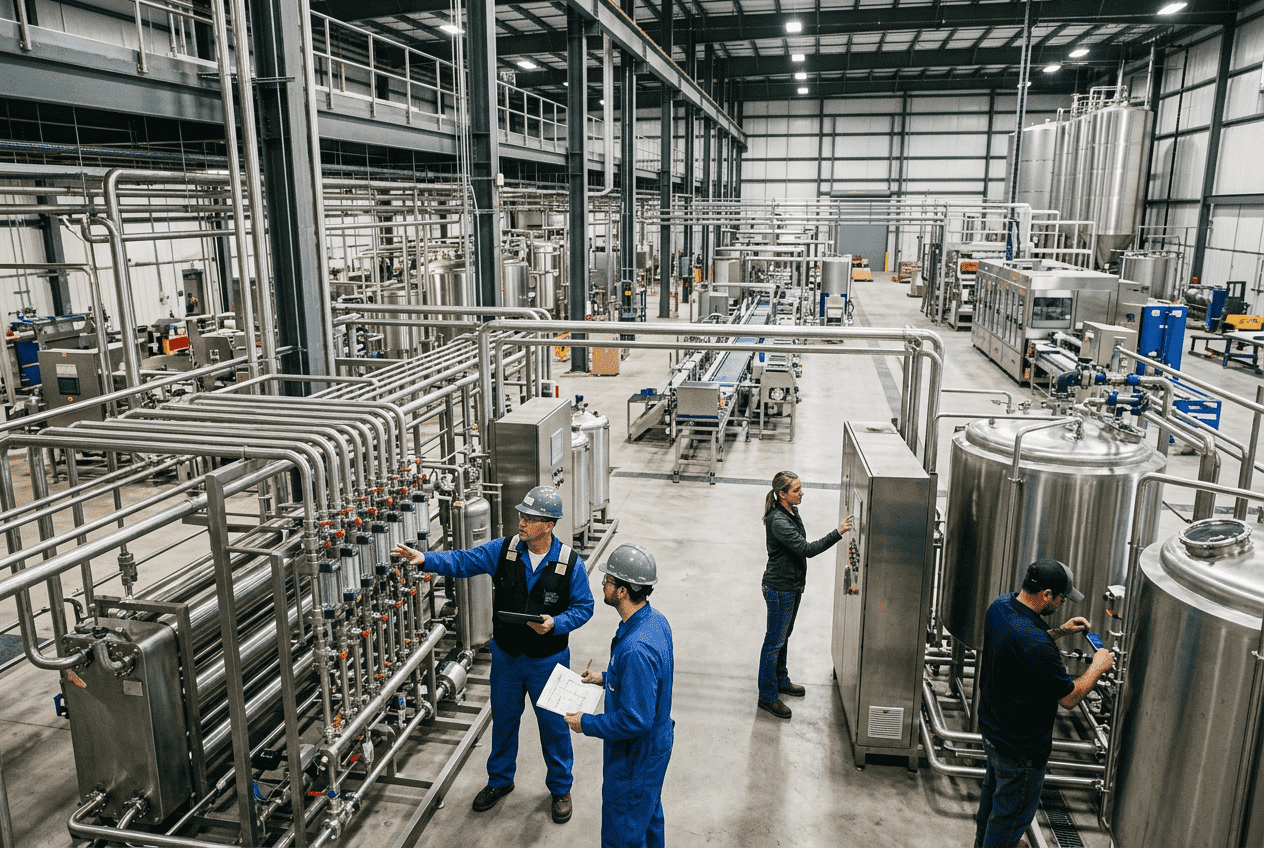
Stainless process equipment fabrication and configured vessel-supply illustration

DPS Engineering Services

Specify the Equipment Around Its Process Duty

Equipment Manufacturing & Supply

Design · Build · Manage

A vessel or skid needs to fit the product, cleaning route, utilities, controls, and available space. DPS connects equipment specifications with P&IDs, batch parameters, nozzle and instrument requirements, fabrication, inspection, and installation. Supply can form part of a wider project or a standalone engagement with mature engineering information, with capacities, standards, supplier roles, acceptance records, and timing confirmed before commitment. Shop and delivery reviews support the agreed handback.

The Service

Make the Supply Package Part of the System

Equipment dimensions and duty affect much more than the purchase order. Nozzle orientation, ports, support height, lifting points, agitation, heating, cooling, discharge, and CIP coverage need to align with the installed process. DPS coordinates that specification with fabrication or selected partners, shop review, testing, delivery, piping, controls, and the responsibilities for startup and handback.

The Challenges We Help You Address

01

Catalog Equipment That Misses the Duty

Batch size, temperature profile, headspace, cleaning circuits, and changeovers affect the required configuration. A standard vessel selected without that basis can create continuing compromises in energy, chemicals, cycles, and floor space.

02

Interfaces Left to the Owner

Equipment, piping, instruments, and control panels sourced separately can arrive with conflicting nozzles, connections, or I/O requirements. The supply package needs defined mechanical, electrical, and control boundaries before fabrication.

03

Uncertain Fabrication and Delivery

Vessel delivery affects equipment setting, trade access, commissioning, and seasonal production. Shop progress, inspection hold points, shipping arrangements, and the actual fabrication programme need visibility and coordination.

04

Quality Requirements Checked Too Late

Welds, materials, product-contact finish, dimensions, drainability, and applicable sanitary or pressure requirements must be specified and checked before shipment. Receiving inspection alone may leave little opportunity to resolve a mismatch.

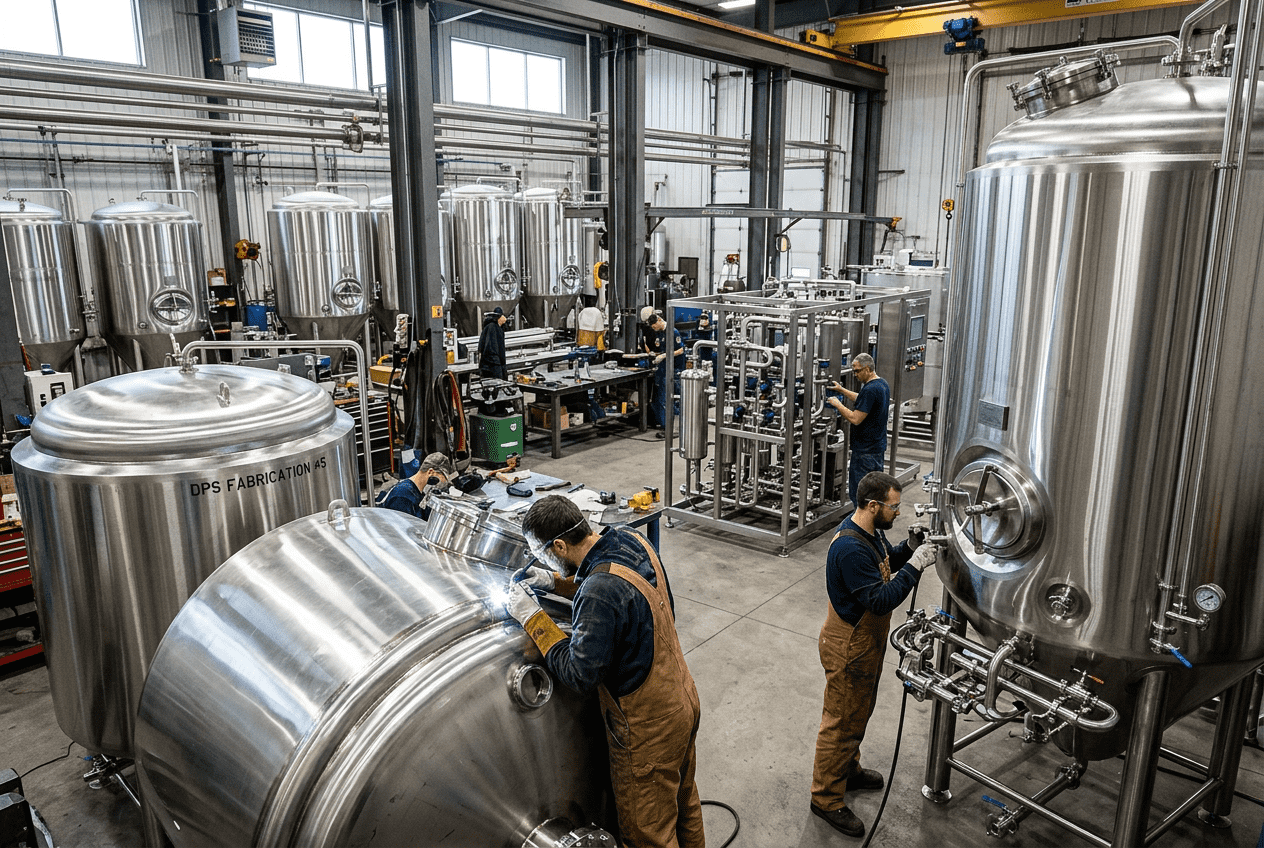
Stainless process equipment fabrication and configured vessel-supply illustration

The DPS Approach

Carry the Process Basis Into Fabrication and Supply

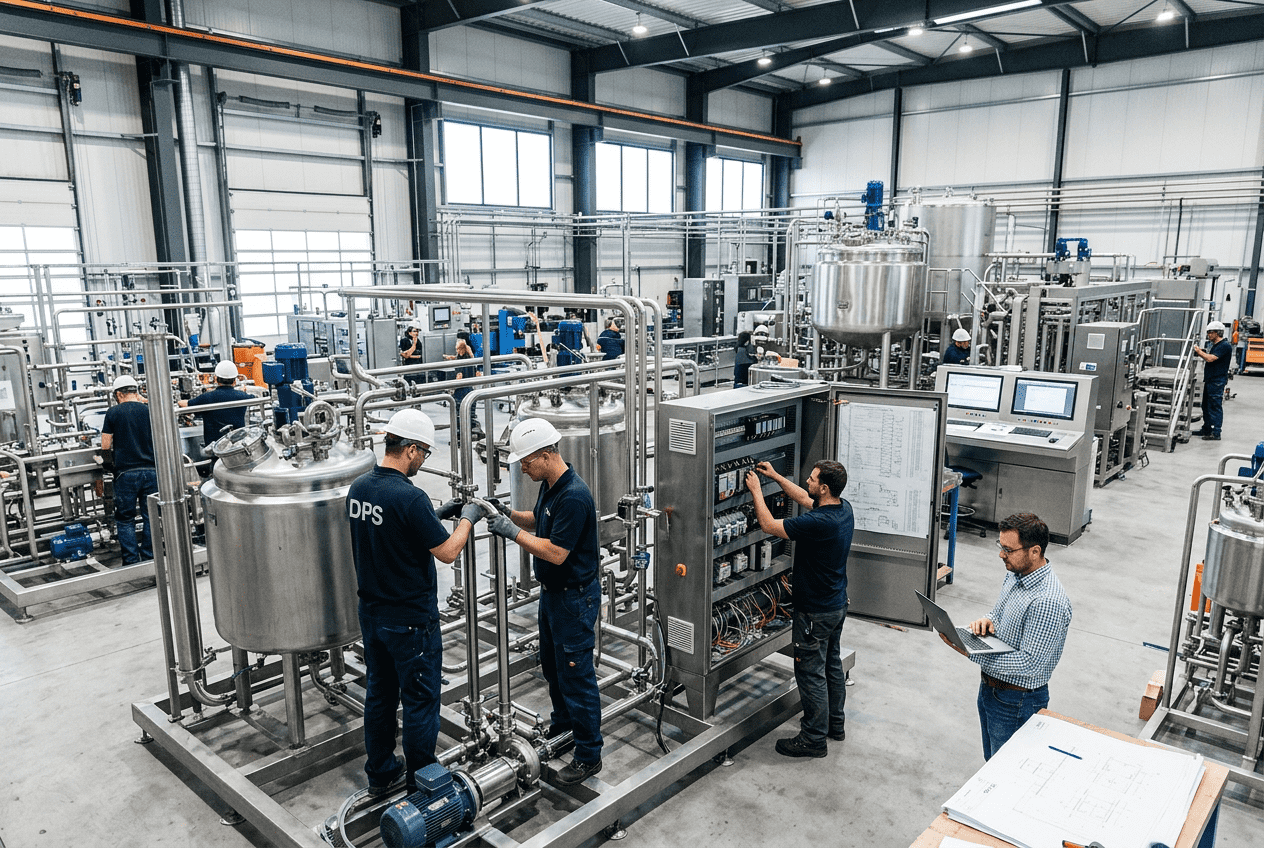
DPS specifies equipment against the P&ID, batch recipe, layout, cleaning duty, and commissioning plan. The fabrication package addresses nozzle locations, instrument ports, supports, lifting provisions, materials, welds, finish, and testing. Design reviews and in-process inspections connect those requirements with the shop work before delivery and installation.

The supply route depends on the application. Tanks, fermentation and storage vessels, CIP systems, tumblers, kettles, and custom skids may use direct fabrication or qualified partners, with larger or code-specific vessels sourced through an agreed supplier. Reference capacities and finishes are confirmed in the proposal; required certifications, pressure-code construction, fabrication location, records, and acceptance responsibilities must be verified for the selected configuration.
Capabilities

The Disciplines Behind the Delivery.

Develop equipment from the process duty, batch requirements, P&IDs, facility layout, and installation interfaces. DPS coordinates configured tanks, vessels, CIP systems, tumblers, kettles, and skids through fabrication or qualified supply partners, with materials, acceptance requirements, documentation, delivery, and commissioning responsibilities agreed for the selected application.

Configured Tanks and Vessels

Define storage, process, and fermentation duties with materials, orientation, agitation, heating or cooling, ports, venting, pressure requirements, and cleaning geometry.

CIP Equipment Packages

Coordinate circuit count, supply and return manifolds, dosing, recovery, chemical monitoring, and recipe or PLC interfaces against the soil load and cleaning requirements.

Marination Tumblers

Specify batch duty, drum and seals, variable-speed operation, vacuum or brine interfaces, programmable tumble and rest sequences, and cleaning provisions.

Processing Kettles

Connect batch capacity with steam or electric heating, scraping and mixing, temperature control, discharge, and any direct-steam process requirement.

Integrated Skid Assemblies

Coordinate blending, batching, heat exchange, or filtration equipment with skid frames, piping, wiring, controls boundaries, and agreed pre-shipment checks.

Fabrication Verification and Partner Supply

Define material traceability, weld and finish inspection, dimensions, pressure tests, passivation, records, qualified supplier roles, and shop or delivery reviews.

Scope & Deliverables

Define What the Work Will Deliver.

Capacities, configurations, materials, and standards below are planning references. Confirm the selected configuration, duty, availability, fabrication route, applicable certifications, and acceptance requirements in the project proposal.

Equipment Manufacturing & Supply Scope and Deliverables
Equipment CategoryCapacity & ConfigurationMaterials & Standards
Process Tanks
  • 50–12,000 gallons
  • Insulated/non-insulated
  • Agitated/static
  • Jacketed (steam/glycol/electric)
  • Cone/dish/flat bottom
  • Pressure-rated options

304/316L SS; 3-A Sanitary Standards; Ra ≤32 µin standard product-contact finish

Storage Vessels
  • 100–12,000 gallons
  • Vertical/horizontal orientation
  • Level instrumentation provisions
  • Vent and overflow sizing
  • CIP spray device integration

304/316L SS; atmospheric or low-pressure rated; ASME code construction through a qualified supplier where required

Fermentation Vessels
  • 100–12,000 gallons
  • Carbonation stones
  • Sample ports
  • Blow-off assemblies
  • Temperature probes per zone
  • Dry-hop ports
  • CIP-optimized geometry

316L SS standard; 3-A Sanitary Standards requirements; dual-zone glycol jacket capability

CIP Systems
  • 2–4+ circuit systems
  • Single-use/re-use configurations
  • Heat recovery
  • Automated chemical concentration control
  • PLC-integrated with DPS batch/recipe systems

304/316L SS construction; supply and return manifolds; chemical dosing integration

Marination Tumblers
  • 200–2,500 lb batch
  • Vacuum capability
  • Brine injection integration
  • Programmable tumble/rest cycles
  • CIP-compatible drum design

304 SS drum and frame; food-grade seals; variable speed drive

Processing Kettles
  • 50–1,000 gallons
  • Scrape-surface agitation
  • Tilt/discharge mechanisms
  • Temperature control integration
  • Direct-steam injection option

304/316L SS; steam-jacketed or electric; 3-A Sanitary Standards

Custom Skid Assemblies
  • Project-specific
  • Blending skids
  • Batching skids
  • Heat exchanger assemblies
  • Filtration skids — pre-tested before shipment

304/316L SS; carbon steel frames; fully piped and wired on skid

Surface Finish Options
  • All product categories
  • Mechanical polish
  • Electropolish
  • Passivation per ASTM A967
  • Surface finish certification with Ra measurement documentation

Standard Ra ≤32 µin; high-polish Ra ≤20 µin; electropolish available

Common Questions

Before We Start.

Questions About Equipment Manufacturing & Supply

View All DPS FAQs
Can Equipment Be Purchased Without a Full Design-Build Project?

A standalone supply engagement can be considered where the process information is mature. Provide the P&ID, batch conditions, duty, instrument requirements, nozzle specification, and facility interfaces for review before fabrication is agreed. The supply package then defines the equipment configuration, verification records, delivery, installation boundaries, and startup responsibilities, including work retained by the owner or another integrator.

How Are Equipment Lead Times Established?

Confirm the programme after engineering approval, configuration, materials, inspection requirements, and fabrication workload are reviewed. Indicative scheduling references are eight to fourteen weeks for standard tanks and vessels in the 50–5,000 gallon range, and twelve to eighteen weeks for CIP or complex skids. These references require a current project-specific quotation and coordination with transport, site readiness, and the wider construction schedule.

How Are Sanitary and Quality Requirements Verified?

Define the applicable sanitary design and acceptance requirements in the equipment specification. Checks can include material mill certificates and traceability, full-penetration weld inspection, visual and borescope records, measured product-contact finish, dimensions, drainability, and CIP coverage. The turnover package can include weld logs, finish measurements, material records, and hydrostatic or pneumatic test results. Confirm the selected equipment’s 3-A or other certification status separately from specifying design requirements.

Can ASME-Code Pressure Vessels Be Supplied?

Code-stamped vessels can be sourced through qualified fabrication partnerships where the application requires them. Determine the governing pressure conditions, applicable codes, design authority, inspection, and documentation before selecting the supply route. Atmospheric storage, fermentation, blending, and CIP applications still require an application-specific assessment; the project should identify the responsible manufacturer and verify any required stamp and certification rather than assume a blanket DPS approval.

Which Capacities and Larger-Vessel Options Can Be Considered?

Tank and vessel configurations include reference capacities up to 12,000 gallons, with individual category ranges shown in the scope table. Confirm actual fabrication capability, configuration, and availability for the selected duty. Larger fermenters, storage silos, or blending tanks can be evaluated through qualified partners, with DPS coordinating specification, vendor review, shop inspection, delivery, and the piping, controls, and documentation interfaces.

Connect the Next Part of Your Project.

Explore All Services

The Next Conversation

Bring the Duty and the Interfaces to the Specification

Share the P&ID, product and batch parameters, cleaning requirements, space, utilities, and instrument list. DPS can help define the supply route, equipment package, verification records, and responsibilities for installation and startup.

Discuss Your Project