
In This Article
How Should a Food Factory Integrate Processing and Packaging Capacity?
Model the complete product path at the bottleneck, using the actual campaign, transfer, packaging and release conditions. Upstream nameplate capacity does not become saleable output unless the downstream operation can accept it within the permitted product and operating arrangement.
Identify the constraint by product and package, then decide whether to change the campaign, synchronize the resources, add a technically suitable holding function or expand a defined downstream duty. Buffers can absorb temporary differences; they do not remove a sustained rate mismatch.
A process machine rated above the packaging line can create an attractive capacity number and an impractical factory schedule. The mismatch appears as waiting product, stopped processing or an overloaded manual transfer. Integration planning should reveal that result before equipment is selected, while the owner can still choose the process, package and supporting scope as one operating system.
1. Define Output at the Finished Product and Package
Start with the quantity the plant must deliver in its intended package and planning period. Identify the product and package assumptions behind that requirement. Bulk processing quantity, packaged units and released saleable output are different measures; the capacity model should connect them through the actual process rather than use the most favorable equipment rating.
For a hypothetical product, define a kilogram basis through processing and packaging so the first comparison uses consistent units. If packaging is quoted in packs per minute, convert using the specified net quantity and the relevant operating basis. Do not assume that a change in pack size leaves every downstream task unchanged.
List the complete path: preparation, processing, transfer, intermediate handling, filling or packing, case handling and the relevant release activities. Identify which resource each step occupies and when it becomes available for the next lot. Some activities can overlap; others may compete for one crew or one destination.
Assign the source of each rate. A supplier’s proposed duty, a demonstrated product trial and an early owner assumption carry different confidence. Keep that distinction in the model and ask which uncertainty could change the investment decision. The owner should know whether the apparent bottleneck is established by actual product information or simply caused by inconsistent preliminary assumptions.
Include the case and pallet destination when it can constrain the operating path. Finished packs accumulating beside a machine are not equivalent to product moving through the intended dispatch arrangement within the same period.
2. Translate Batch Equipment into Downstream Delivery
A batch machine does not deliver product as a continuous hourly average unless the connected arrangement makes that meaningful. Record loading, processing, discharge and the next readiness point. Identify the quantity and timing presented to the following operation, together with the transfer and handling arrangement that connects them.
DPS’s tumblers and marinators offering connects the equipment duty with brine preparation, loading, discharge, chilling, sanitation and recipe controls. For a suitable product application, these interfaces can determine the downstream presentation as strongly as the vessel’s nominal batch quantity.
For example, ask what happens when discharge is ready but the receiving packaging resource is occupied. The design may require a technically appropriate intermediate arrangement, a changed campaign sequence or a different equipment selection. The relevant product and food safety owners establish permissible handling and holding conditions; a spreadsheet cannot authorize indefinite waiting.
Give the packaging supplier the actual presentation basis rather than only an average daily quantity. State the form of discharge, expected lot size, receiving method and intended sequence. Request the corresponding receiving duty and operating assumptions. This lets the owner compare an integrated path instead of discovering after procurement that one package expects a continuous feed while the upstream equipment supplies discrete lots.
Mark when discharge can begin and whether the receiving task occupies another resource. A nominal batch duration that excludes that handoff can understate the time before the upstream machine is ready for its next lot.
3. Calculate the Sustained Limit Before Adding a Buffer
Consider invented net rates of 1,000 kilograms per hour for processing and 700 for packaging during six available productive hours. The individual quantity allowances are 6,000 and 4,200 kilograms. If they form one path under those assumptions, the sustained packaging limit is 4,200, not the sum or the higher processing allowance.
Running both at those rates creates a 300-kilogram-per-hour difference. An assumed usable buffer of 300 kilograms would fill in one hour if it begins empty and there are no other flows. That simple calculation excludes actual batch timing, product restrictions, changeovers and release work. It illustrates a mismatch, not a recommended buffer design.
A larger buffer can delay the point when upstream must stop, but it does not make a persistent 700-kilogram-per-hour packaging resource accept 1,000. The owner needs a sequence that balances the rates or an expansion of the actual constraint. Any holding arrangement requires a separate technical basis for its product duty and usable capacity.
Use the chart to keep the complete-path quantity visible while discussing equipment alternatives. If a supplier proposes faster processing, ask which operating condition allows the additional output to reach a usable destination. If none changes, the proposed speed may have other benefits, but it should not be credited as an increase in sustained finished quantity in this example.
Record the buffer’s assumed starting quantity. If the same three-hundred-kilogram buffer begins partly occupied, the available time before it fills is shorter; an empty-start result should not silently represent every campaign transition.
4. Compare Synchronization, Buffering and Downstream Expansion
There are several responses to the mismatch, and they purchase different capabilities. Synchronizing upstream production to downstream availability changes the operating sequence. A technically suitable buffer changes the timing relationship within its usable limits. Expanding packaging changes the constrained resource if other connected functions can support the new duty.
For synchronization, model when processing runs and when it waits. The owner may cover demand without additional equipment, but the resulting occupied time and campaign flexibility should be visible. Slowing or stopping a process is only an option where the actual equipment, product and procedure permit that behavior.
For buffering, calculate the actual timing profile rather than divide daily quantity by storage size. Batch discharge can create a short peak even when average rates balance. Identify usable capacity, receiving and discharge behavior, and the product conditions established by the responsible team. Nominal volume alone cannot establish the suitability of the proposed holding function.
For expansion, include case handling, labor, material replenishment, utilities and connected controls. A faster filler or packer may expose another constraint. The table compares the purpose and unresolved duty of each response. The owner can then invest in the capability required by the campaign instead of buying a buffer to solve a sustained mismatch that it can only postpone.
Ask what operating condition ends the buffer’s useful role. A short packaging pause and a full-shift rate deficit need different responses, even when both initially appear as product accumulating between the same machines.
| Response | What Changes | What Must Still Be Established |
|---|---|---|
| Synchronization | Upstream sequence follows downstream availability | Product/equipment suitability and resulting occupied time |
| Suitable buffer | Temporary timing difference absorbed within usable capacity | Actual quantity profile, handling and product conditions |
| Downstream expansion | Constrained duty increases if support permits | Full packing path, replenishment, utilities and controls |
| Campaign redesign | Order sequence and transitions change | Delivery commitments, product grouping and operating feasibility |
5. Design the Product and Material Handoff Around Actual Tasks
The interface includes physical work as well as rates. Identify how product reaches packaging, how empty containers and packaging materials arrive, where completed cases wait and how operators perform the required tasks. A connection drawn between two boxes does not establish a workable handoff in the room.
For a manual receiving step, observe or define the task cycle using the actual container and intended quantity. Include positioning, connection or unloading, required checks and the next movement. If one worker also replenishes packaging, show when those tasks compete. Do not convert a rated machine speed directly into a feasible labor plan.
DPS process engineering describes equipment documentation, layout, utilities and production modeling. The integrated deliverable should connect the timeline to the physical route: the receiving point and assigned resource on the model must match the arrangement shown to the installation team.
Walk one lot through the proposed layout with operations. Where is it at the moment packaging pauses? What occupies the transfer route? Where does the next lot wait, if waiting is permitted? Give each answer an actual destination or revised sequence. This exercise often exposes the specific supporting function the capital comparison needs, rather than generating a general instruction to optimize flow.
Use the proposed container dimensions in the walkthrough. An operator may be able to reach an empty connection during design review while a full container or material trolley blocks that position in the intended campaign.
6. Define the Useful Operating Stage Before Calling It Line Capacity
DPS describes a Los Angeles ground-beef project with multidisciplinary engineering and staged execution. Its relocated slicing room began lower-rate early production at Week 11; complete system integration and final delivery followed later.
That distinction matters when an owner phases a new or expanded factory. An early operating area can provide useful capability without representing the complete line’s intended quantity. Define the product, route, receiving and downstream functions available at that stage, rather than apply the final project capacity to the first activity that starts.
Create a stage-release record linking installed functions to the intended operating duty. Identify material receipt, product movement, packaging, relevant utilities, controls and the checks needed for that stage. If the final downstream resource is not ready, the owner needs an established alternative route and duty before counting the early phase as saleable capability.
Use the published case as an execution example, not as evidence that the offered tumbler was installed there or that another plant reaches full output in eleven weeks. The practical application is the explicit boundary between an early room startup and complete integrated capacity. Keep that boundary in the schedule and commercial plan so production, sales and the installation team do not rely on different meanings of “line started.”
State which product and package sales may commit for the early stage. The commercial team needs the available route and quantity basis, not just the milestone date when one relocated room begins a limited duty.
7. Give the Connected Sequence an Owner During Installation
Define the normal transfer and the relevant unavailable states before suppliers finalize controls. The source, receiving package and any intermediate function need compatible meanings for requested, ready, active and complete. State who owns the sequence and what the operator can do when the next resource is unavailable.
For the hypothetical mismatch, the process may need an established response as available receiving capacity approaches its permitted limit. The actual design determines how that condition is established and acted upon. Adding a generic high-level indication does not assign the process response or authorize a product to remain waiting indefinitely.
DPS general contracting describes coordinated process installation, piping, controls and commissioning. A useful installation plan groups the physical transfer route with the related equipment states and checks, so the field team does not complete mechanical and software portions under incompatible assumptions.
Assign acceptance scenarios to the connected path: a normal lot, a packaging interruption and the agreed recovery. Identify the actual equipment needed to demonstrate each one. Individual package checks can support preparation, but the owner still needs an assigned demonstration of the relevant handoffs. The table gives illustrative integration decisions; the project team establishes the actual safe operating and release requirements for the product and installation.
Keep the recovery sequence visible to operations. If upstream has stopped with product present, the relevant team must establish the permitted next action before a downstream restart can be treated as a routine resumption.
| Interface | Decision Before Procurement | Evidence to Plan |
|---|---|---|
| Batch discharge to receiving | Presentation, destination and accepted quantity | Demonstration of agreed lot handoff |
| Packaging unavailable | Assigned source response and operator information | Agreed interruption scenario with connected packages |
| Intermediate handling | Permitted duty, usable capacity and release responsibility | Relevant conditions and route established by responsible team |
| Stage startup | Which complete path is available for intended product | Defined stage checks before operating commitment |
8. Invest in the Constraint That Changes the Required Output
Compare alternatives using the same product, package, calendar and release basis. Show which constraint each option changes and the supporting scope required. An upstream capacity increase, a new holding function and a downstream expansion answer different questions even when each is described as a production improvement.
For a DPS review, bring the supplier duties, campaign timing, batch presentation, package mix and proposed layout. Ask for a connected-path model and interface review tied to the actual investment decision. The result should identify whether the required quantity can be achieved through the existing sequence or which specific duty must change.
Keep the owner’s uncertainty explicit. A packaging rate still awaiting product trials may justify a decision gate before committing a large upstream expansion. A confirmed delivery pattern can justify a particular campaign or resource arrangement. Use the evidence available to select the next action instead of presenting preliminary rates as a precise factory-output promise.
After approval, preserve the connected model when packages change. A substitution affecting discharge timing, pack size or material replenishment can move the bottleneck without changing the main machine’s nominal capacity. Reviewing that interface keeps the factory aligned with the operating system the owner intended to buy and gives a practical basis for the next stage of optimization.
For the approval record, identify the rate input that deserves the next trial or supplier demonstration. Resolving that uncertainty may change the preferred investment more than improving the precision of a preliminary equipment-cost allowance.

FAQ
Should the fastest machine define plant capacity?
No. Model the complete product path and the relevant constraints using consistent units, productive time, product presentation and release conditions.
Can a buffer solve a permanently slower packaging line?
It can absorb a temporary difference within an established usable duty. It does not remove a sustained rate mismatch; the operating sequence or constrained duty must change.
What should the packaging supplier receive before quoting?
Provide the product and package basis, upstream presentation, lot quantity, receiving arrangement and intended sequence. Average daily quantity alone may conceal the actual handoff.
When should a holding function be added?
Only after the timing profile and product duty justify it. Establish usable capacity, receiving/discharge behavior and relevant handling conditions with the responsible technical team.
How should an early operating stage be counted?
Define the complete route and intended product available at that stage, including packaging and required checks. Keep early useful capability distinct from final integrated capacity.
Which integration tests matter beyond individual machine checks?
Plan the relevant connected handoffs, unavailable states and agreed recovery with assigned responsibility and actual interfaces. Establish the requirements for the specific operation.
Sources and Calculation Notes
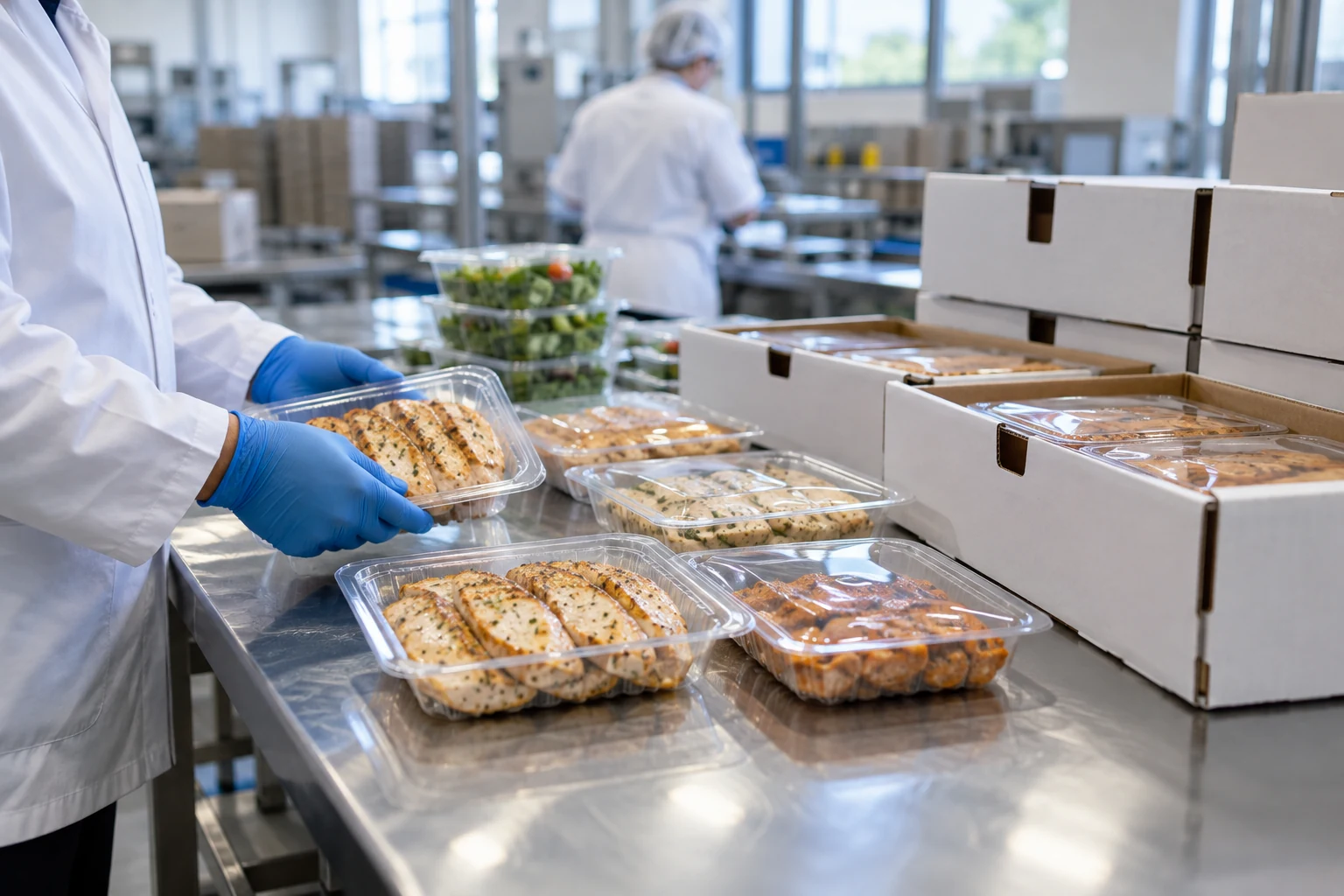
Checked October 27, 2026. DPS case statements are attributed company reports, not independently audited performance. The numerical illustration is hypothetical; concept photographs are not project documentation.
- DPS — Tumblers and Marinators — Offered batch-equipment and surrounding interface scope; not a case installation claim.
- DPS — Process Engineering and Design — Layout, utility and production-model coordination.
- DPS — General Contracting — Connected process installation and commissioning scope.
- DPS — Ground Beef Line Execution — Early lower-rate slicing-room startup distinguished from later complete integration.