In This Article
QUICK ANSWER · CAPITAL PLANNING
Should a Food Factory Be Built in Phases or All at Once?
Compare a complete initial operating phase with the full-build option at the same product and demand basis, including the work required to add capacity later. Phasing can reduce the initial commitment and preserve learning, but later mobilization, integration and interruptions can add cost. A full build can avoid selected later work while committing capital before the future demand is established.
Define what the first phase must supply, which shared infrastructure is necessary now, what can be reserved and what evidence triggers expansion. A phase should be a complete usable operating system, not an incomplete plant whose missing functions are expected to appear after launch.
A phased factory can be described attractively as buying only what is needed now. The difficult questions follow: what is actually needed to operate, what must be sized for later use, and what happens to production when the next phase is installed? The full-build alternative has a different challenge—demonstrating why its larger immediate commitment is justified before later demand becomes reliable.
This guide compares phased food factory construction with building the intended scope at once. It focuses on the owner’s investment and operating decision, not a universal preference for smaller or larger projects. The capital and capacity example is invented and uses an explicitly simplified boundary rather than market prices or a forecast of future construction cost.
1. Define a Complete Day-One Factory Before Dividing the Project
State the product and package envelope, customer demand, operating calendar and quality requirements the first phase must support. Then identify the entire sequence from receiving through production, packing, storage and shipping. Required supporting functions belong in the initial operating scope even if later output will be larger.
Do not confuse a reduced launch commitment with an omitted function. If production requires a particular utility, material-handling step or quality responsibility, the phase plan must provide it or a credible alternative. Calling the missing work phase two does not make the first operation complete.
Use an owner-approved launch basis for both alternatives. The full-build concept can include future capability, but its initial product and customer obligations should be comparable with those of the phased concept. This allows the study to isolate the value and cost of committing future capacity early rather than compare two different businesses.
2. Separate Future Demand from the Initial Commitment
List the later scenarios by product, package, volume and timing. Record the evidence and conditions behind each one. A mature commercial target can justify preserving an option without justifying its full installation at launch.
Identify what would make the later phase unnecessary or different. The market could grow more slowly, customers could select another package or the product mix could narrow. Those possibilities are not reasons to avoid planning; they are reasons to distinguish flexible provisions from commitments that are expensive to change.
Disruptive Process Solutions (DPS) can connect demand scenarios with conceptual process, utility and facility options during capital planning. Ask the study to show what each scenario requires and which assumptions drive the next investment. This gives the owner a better decision basis than a single future forecast automatically treated as approved installed scope.
3. Describe What Building All at Once Actually Includes
Define the full-build alternative in functional terms. Identify installed production resources, shared utilities, rooms, support functions, staffing and the path to commercial readiness. More building area alone is not the same as a fully operating future factory.
Separate installed equipment from reserved provisions. A full shell with one active line can still be a phased production strategy. Conversely, installing future equipment without the people or infrastructure needed to use it does not create immediately available saleable capacity.
Use consistent labels in the investment paper. The owner should know which commitments are made now, which capability can operate at startup and what remains dependent on later action. That clarity prevents the comparison from switching between building phasing and production phasing as though they were the same decision.
5. Use a Site and Layout Concept That Shows the Next Phase
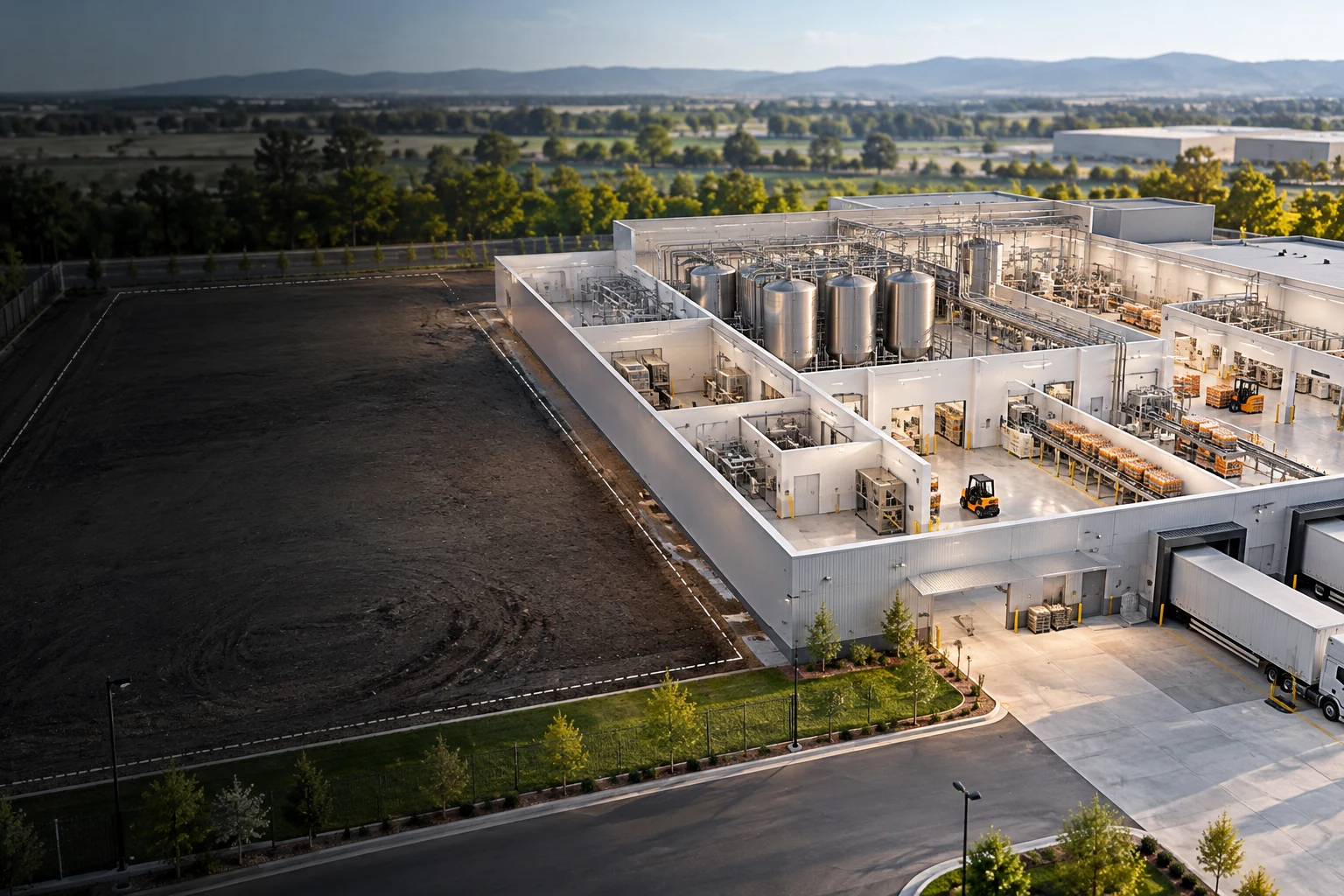
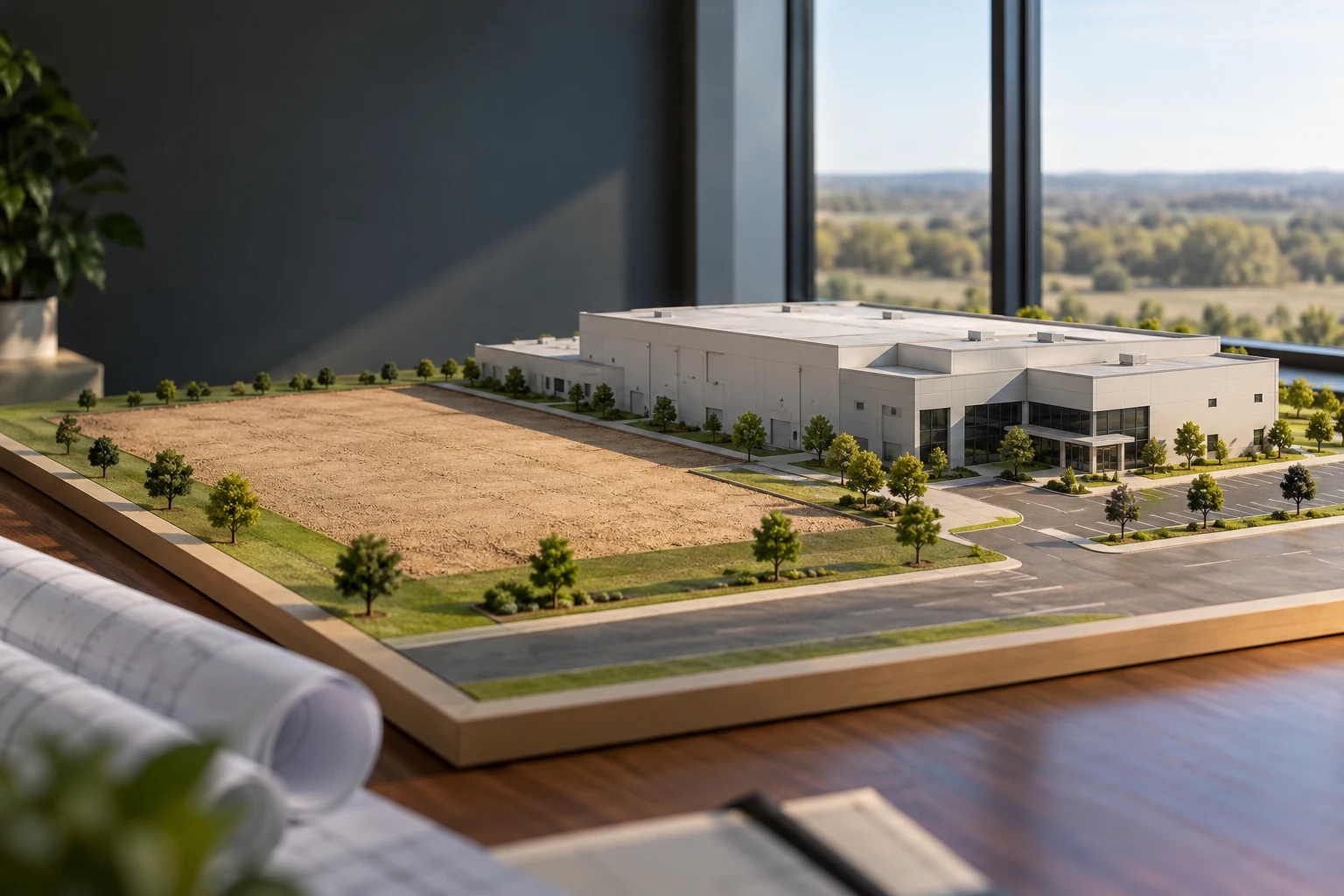
Lay out the launch operation and the proposed later addition together. Trace ingredients, products, people, packaging, finished goods and waste. Required separation and access should follow the actual food operation at each stage, not be postponed because an area is marked future.
Test how equipment and construction materials enter for the expansion. An empty rectangle is not a useful provision if installation blocks the only shipping route or requires removing important first-phase functions. Identify staging, access and the operating response to later work.
DPS’s process and facility coordination can connect these questions with utility and package boundaries. Ask for a concept that explains the initial operation and the physical path to the later phase. This makes expansion a defined option with consequences rather than an attractive blank area on a rendering.

6. Test the Operating Calendar at Both Capacity Levels
Develop representative schedules for launch and expansion using the intended product mix. Include preparation, production, packaging, changes, cleaning and the necessary support work. Additional equipment may change coordination and resource demands rather than simply multiply the initial output.
Check the shared functions under simultaneous operation. A second line can require more preparation, quality coverage, material handling or shipping even if it fits physically. A later shift can require a different staffing and utility arrangement from a concurrent second line.
Keep capacity statements attached to their assumptions. A phase drawing may reserve a future line, but that space should not count as current production. A supplier’s maximum rate should not be presented as annual saleable output without the calendar and complete-system basis. The business should know what capacity is installed, demonstrated, staffed and conditional at each stage.
7. Compare Initial Utilization Under an Invented Phase Plan
Assume an invented business with launch demand of 1 million saleable units and a later scenario of 3 million. The phased concept installs a complete initial system with 1.2 million annual saleable units of assumed capacity, then expands to 3.6 million. The full-build concept installs 3.6 million initially.
At launch, modeled utilization is about 83.3% for the phased initial concept and 27.8% for the full-build concept. At the later 3 million-unit demand, both would use about 83.3% of their assumed 3.6 million capacity, provided the later phase is completed and all connected resources support the operating basis.
These inputs are arbitrary teaching assumptions. They do not recommend either utilization level or establish a safe or achievable equipment rate. They show the timing of the capacity commitment relative to demand. A real comparison needs product evidence, an integrated calendar, infrastructure and staffing for each phase before the denominator can be treated as supported capacity.
| Measure | Phased Concept | Full-Build Concept |
|---|---|---|
| Initial annual capacity | 1.2m units | 3.6m units |
| Launch demand | 1.0m units | 1.0m units |
| Launch utilization | About 83.3% | About 27.8% |
| Later annual capacity | 3.6m after defined expansion | 3.6m initially installed |
| Later scenario demand | 3.0m units | 3.0m units |
| Later utilization | About 83.3% | About 83.3% |
8. Show the Initial and Total Commitments Separately
For a separate invented capital illustration, assume the phased concept requires $5 million initially and an additional $2.6 million for the later scope. Its combined allowance is $7.6 million. Assume the equivalent full-build scope requires $6.8 million initially.
The phased option reduces the initial outflow by $1.8 million in this example, but its combined stated allowances are $0.8 million greater. The additional later allowance is assumed to include the defined remobilization, integration and tie-in scope for the illustration. These amounts use one assumed price basis and are not future market price forecasts.
The example excludes discounting, financing, taxes, escalation changes, working capital, operating benefits and residual values. It therefore cannot select the preferred investment. It makes the tradeoff visible: delaying commitment can have value while also carrying a different aggregate scope cost. Finance should compare the actual time-based cash and commercial scenarios under the company’s method.
| Measure | Phased Concept | Full Build |
|---|---|---|
| Initial outflow | 5.0 | 6.8 |
| Later defined scope allowance | 2.6 | 0.0 within this scope |
| Combined stated allowances | 7.6 | 6.8 |
| Initial outflow difference | 1.8 less than full build | Reference |
| Combined allowance difference | 0.8 more than full build | Reference |
9. Define the Later Construction and Tie-in Scope Now
Identify what must be done to add the future capability. Include physical access, temporary arrangements, installation, connections, controls changes, testing and the work needed before commercial use. A future equipment purchase price alone will not describe that expansion.
Develop the sequence with the relevant delivery and operating teams. Determine which work can occur beside production and which requires an agreed interruption. The customer-supply response should be credible, whether it uses planned stock, another qualified source or a changed schedule.
Record the assumptions used to estimate later work. If the business cannot know the final product or package scope yet, preserve a clear boundary and identify what will need reassessment. Planning does not require pretending that future details are certain; it requires showing what option is preserved and what conditions could change its scope.
10. Include the Production Consequences of Adding the Next Phase
A phased strategy can reduce launch commitment but create another period of change while customers are being supplied. Identify the operations, access routes and shared systems affected by the expansion. Do not describe later installation as disruption-free without a sequence supporting that claim.
Price the defined response once. Inventory builds, temporary outsourcing or changed logistics may already appear in the cash model. Reconcile them with any separate transition allowance so the same consequence is not counted twice.
Compare that exposure with the full-build launch workload. Installing everything initially can avoid selected later tie-ins while creating a larger first readiness task. Both time patterns deserve analysis. The decision should show how the business supplies its customers through the chosen path, rather than compare only the final appearance of the two plants.
11. Compare Funding Needs Across the Whole Sequence
Map deposits, construction payments, one-time readiness activities and operating cash over time. Phasing changes when capital is committed but does not necessarily make every period easier to fund. A later phase can coincide with a stock build or additional customer receivables as sales grow.
Keep project payments, working capital and operating deficits distinct, then reconcile them. A larger initial plant may require more launch cash; a phased path may require financing again under different business conditions. Identify those dependencies rather than assume future funding will be available automatically.
Test delayed growth and faster growth. Slower demand can postpone a later commitment, while faster demand can create a supply gap before expansion is ready. Each scenario needs a credible operating and funding response. The owner should understand the cash consequences of exercising or delaying the option, not only the initial cost difference.
12. Stage the Organization and Readiness Work with the Capability
Define the people and support functions required at each stage. The first phase needs a complete operating organization for its scope, and the next phase may require new roles, more coverage or different responsibilities. A smaller physical installation is not automatically a simpler business if its service obligations are broad.
Plan recruitment, training, procedures and supplier support before each commercial readiness milestone. Identify whether experienced staff must operate the initial factory while supporting the expansion. That resource conflict can change the implementation calendar.
Keep one-time readiness work separate from recurring operating commitments. A phase plan should show when costs begin and what benefit activates them. This gives the business a clearer comparison of installed capability, staffed capability and the actual date when additional demand can be accepted.
13. Use Early Operating Evidence to Improve the Later Concept
A phased strategy can create a learning opportunity if the project is designed to use it. Identify which launch findings could change the next investment: product mix, campaign sizes, accepted output, material losses, staffing or the pattern of customer orders.
Measure those findings against the initial basis rather than collect data without a decision purpose. If the next phase depends on a particular constraint, establish how the business will know that constraint has become material. If the launch product changes, identify which earlier assumptions remain valid.
Preserve the ability to respond. A later phase already fixed through binding commitments may provide less learning value than its label suggests. The owner should understand which choices remain open and the cost of changing them. This makes the staged approach an explicit option strategy rather than an assumed benefit of spending in installments.
14. Define Expansion Triggers That a Reviewer Can Verify
A trigger should connect commercial evidence with operating need. It may include sustained compatible demand, a defined customer requirement and evidence that the current system cannot economically supply it. An arbitrary calendar year or a single optimistic inquiry is a weaker basis for another major commitment.
State who confirms the trigger, which data are used and how long the relevant condition must be observed. The actual period should match the business rather than be borrowed as a generic rule. Also identify the lead time between authorization and useful capacity, so the trigger is early enough to support customers.
DPS’s phased capital planning can connect those conditions to scope, infrastructure and the work needed to activate the next stage. The useful output is a decision path: what evidence authorizes which commitment, what remains optional and how the plant operates while the next phase is delivered.
| Decision | Evidence to Establish | Consequence to Review |
|---|---|---|
| Reserve future space | Credible option and practical access | Initial property and layout cost |
| Provide an early interface | Later connection need and difficulty | Initial utility or construction scope |
| Order next production capability | Qualified demand and system constraint | Capital, staffing and supply timing |
| Begin tie-in work | Defined sequence and readiness | Current production and customer response |
| Release added capacity | Relevant acceptance and operating basis | Firm customer commitments |
15. Compare the Risks of Committing Early and Committing Later
A full build can expose the owner to unused capability, product changes and fixed commitments before demand is demonstrated. Phasing can expose the business to later cost, funding availability, expansion lead time and interruption. The purpose is not to assign one strategy a universal lower-risk label.
Identify specific uncertainties and responses for each alternative. Record what can change the scope or the timing, the evidence needed and the owner of the action. Keep known required work in the estimate and owner-requested future changes separate from estimating uncertainty.
Use scenarios that could change the decision. If future demand is highly uncertain but later expansion is practical, preserving options may have value. If a later tie-in would create a severe and unavoidable supply consequence, an earlier commitment may deserve stronger consideration. The appropriate answer follows the actual business and site, not a generic rule about phased projects.
16. Make Phase Interfaces Part of Supplier and Contractor Scope
Tell suppliers which capability is being purchased now and which interfaces must support a later option. Ask them to state the supported envelope, exclusions and work needed for future additions. A phrase such as expandable should be replaced by an understandable scope and conditions.
Assign ownership of shared controls, utility connections, records and testing. A later package should not depend on an interface that no party was contracted to provide. Where an initial provision is deliberately omitted, record the later consequence and its assumed cost.
Use the same phase register during detailed design and procurement. Changes made to simplify the first installation can unintentionally remove the option the owner thought it was preserving. Review those changes against the business basis so value decisions are explicit rather than discovered when the next phase is finally requested.
17. Compare Complete Strategies Rather than Only Initial Budgets
The comparison should include the same product and demand scenarios, complete initial capability, later scope, operating cash, funding and the path to customer supply. A smaller initial price is only one attribute of the phased strategy, while a larger first installation may have benefits and costs beyond its capacity.
Use the company’s financial method consistently. Show the effect of timing, demand and the assumptions excluded from a simple capital table. Keep strategic considerations visible where they cannot be supported as precise financial benefits.
Explain the preferred tradeoff in a decision record. State what the owner commits now, what remains conditional and what finding would change the choice. A staged authorization can be useful, but it should specify exactly what the next work resolves. The goal is a reviewable factory strategy rather than a slogan favoring either phasing or full build-out.
18. Preserve the Selected Phase Logic Through Later Project Changes
Maintain the initial and future scope boundaries in the owner requirements and concept documents. A new package, product or customer promise can change the value of an existing provision. Update the phase and funding models when the commercial basis changes.
Identify who can authorize changes that use reserved space, alter connection points or remove installation access. Those decisions may appear local during construction while affecting the later investment strategy. The owner should understand their effect before they are implemented.
At the end of the first project, retain the evidence and drawings needed to evaluate the next stage. The phase plan should not disappear into an early presentation. Its practical value is that the business can revisit a defined option with a known basis, actual operating findings and a clear record of what was built.
19. Define Acceptance and Operating Readiness for Each Phase
Each phase needs a clear basis for moving from installed work to commercial use. Identify which mechanical, controls, utility and product activities apply to the specific addition, and who provides the relevant materials, staff, records and specialist input. A completed equipment installation does not establish that all connected functions are ready to support customer supply.
Review what must be reassessed when the operating arrangement changes. A second line can alter simultaneous utility demand, material movement, staffing or the timing of cleaning. The team should identify the evidence needed for those changes rather than assume the first phase's results automatically cover every later configuration.
Keep acceptance responsibilities in the procurement scope. A package supplier may demonstrate its own functions while a separate party coordinates the complete-system sequence. State how those activities connect and which owner decisions remain before the added capability becomes available commercially. This reduces the risk of a later phase appearing complete in one contract while important interfaces remain unresolved.
Use the readiness milestone in the financial and demand model. If additional output depends on trials or operating preparation after delivery, the benefit should begin on the supported date, not the earliest equipment arrival. A phase strategy becomes credible when its capacity, customer and cash assumptions all refer to the same milestone. Record the remaining conditions, the person responsible for confirming them and the planned review before accepting firm customer commitments against the additional output.
20. Ask DPS to Compare the Staged and Full Commitments
Bring the launch products, customer demand scenarios, operating calendar, site information and capital constraints to DPS. State what the first operation must deliver and why the later capability may be needed. Include existing proposals, their exclusions and the status of product or process evidence.
Agree on concept layouts, utility requirements, package boundaries, installed-cost planning and phase implications for the decision. Ask the team to distinguish complete initial operating scope, reserved provisions and later work. Identify specialist inputs and the assumptions that remain open.
The resulting recommendation should show the full strategy: how the business launches, what it commits before demand is proven, what evidence activates the next stage and how customer supply is maintained. That is the basis for choosing phasing or full build-out with an understandable investment and operating commitment.
21. Phased Food Plant Development FAQ
Is phased construction always cheaper?
No. It can reduce the initial commitment while later mobilization, integration and interruptions add cost. Compare complete scope and time-based cash. The invented example has lower initial phased outflow but a higher combined allowance.
Does building the full shell mean the production system is fully built?
Not necessarily. Building area, installed equipment, demonstrated capability and staffed output are different. State which commitments exist at launch and which remain dependent on later action.
What should the first phase include?
It should include a complete usable operating system for the approved launch products and demand, including required support functions. A necessary utility or quality responsibility cannot simply be omitted and called a later phase.
Should shared utilities be sized for maximum future demand?
Not automatically. Compare the initial duty, operating range, modular additions, space and connection consequences with the relevant team. Price the specific option preserved rather than apply a universal future-proofing rule.
What do the 83.3% and 27.8% figures recommend?
Nothing by themselves. They are ratios from invented demand and capacity inputs, not target utilization levels or equipment performance. Actual project decisions need product, schedule, infrastructure, staffing and economic evidence.
When should the later phase be authorized?
Use a defined trigger connected to qualified demand, the actual system constraint and implementation lead time. Record the evidence, decision owner and operating consequence. A calendar date or one prospect alone is not a complete capital case.
How should expansion disruption be modeled?
Develop the actual installation and tie-in sequence, identify affected production and define the customer-supply response. Reconcile inventory, outsourcing and other costs so the same consequence is not counted in several allowances.
What can DPS help clarify?
A scoped engagement can connect demand scenarios to layouts, utilities, installed scope, early provisions, later phases and investment evaluation. Agree on the initial operating boundary and the evidence the next decision requires.
22. Sources and Calculation Notes
Research checked October 27, 2026. Numerical planning examples are original illustrative calculations, not supplier quotations, market averages or DPS customer results.
- CRB — Food and beverage production strategy. Connecting future product and production needs with capital planning.
- CRB — Greenfield vs brownfield developments. Site and infrastructure consequences for project choices.
- Dennis Group — Conceptual and master planning services. Early concept and cross-functional project planning.
- Foth | Food Plant Engineering — FAQ. Project-specific scope and cost variables.
- DPS — Capital Planning and Feasibility. Relevant phased-investment and conceptual infrastructure planning scope.
Editorial draft prepared for DPS. Project-specific product, process, site and financial assumptions require confirmation before investment approval.