In This Article
QUICK ANSWER
What Must Be Defined Before Planning a Protein Food Plant?
Define the incoming material and the finished product before selecting the plant scope. Primary processing, portioning, grinding, marination and cooking are different operations with different equipment, product routes and service needs. A value-added protein project should not inherit an entire primary-processing scope unless its supply and commercial model actually require it.
Translate that scope into a mass balance, product calendar and equipment-interface plan. Compare investment against the finished packs the factory can release, with the remaining material routes visible. Select optional processes such as marination only when the intended product needs them.
Protein food plant planning can become unnecessarily expensive when the project is defined by an industry label rather than a specific transformation. “Meat plant” does not tell a designer whether the facility receives prepared raw material for grinding, makes marinated portions or performs a much broader set of upstream operations.
An owner comparing a new build with prepared-material supply should make this distinction early. The facility may serve the same retail market through very different combinations of purchased preparation and internal processing. The first capital decision is therefore a boundary decision. What arrives, what changes on site, what leaves and which supporting operations make that change possible? DPS's process and capital-planning services can develop that basis, with equipment selected for the actual product rather than added as a standard protein-industry package.
1. Define the Receiving Condition and the on-Site Transformation
Describe incoming materials in terms useful to engineering: physical form, condition, delivery unit and the preparation already completed by the supplier. Then identify the transformation the new facility must perform before the product reaches its intended pack and distribution route.
A plant receiving material ready for grinding has a different scope from one responsible for earlier primary-processing activities. A marinated portion line adds another product transformation. A cooked product introduces a different process and receiving boundary again. Do not combine those routes merely because all belong to the protein sector.
Record the make-or-buy decision behind the boundary. Purchasing more prepared material may remove some on-site operations but change material cost, supplier dependence and storage requirements. Bringing a preparation step in-house can add equipment, space, labor, services and material routes beyond the visible machine.
Use a simple incoming-to-outgoing flow diagram during feasibility. Identify the operations deliberately excluded as well as those included, so bidders do not price different factories under the same project name. Keep the commercial reason for each boundary decision alongside its engineering consequence.
For an expansion, check whether the existing receiving and storage arrangement supports the proposed incoming form. Adding value-added equipment does not automatically create the handling route needed to feed it.
The result should be a specific production brief: defined materials enter, named operations occur on site and identified products leave. That brief is the foundation for a meaningful layout, investment estimate and supplier enquiry.
2. Compare Primary-Processing Scope vs Value-Added Scope
Compare the operating responsibilities instead of treating one scope as inherently better. An upstream operation may be commercially necessary for one business and an avoidable investment for another. The right boundary depends on supply, product strategy and the owner's ability to operate the complete route.
| Planning Question | Broader Primary Scope | Defined Value-Added Scope |
|---|---|---|
| What arrives? | Carcasses or bone-in cuts for the selected cutting route | Prepared boneless trim to an agreed receiving specification |
| What is built? | Selected cutting and deboning before the next product operation | Grinding, blending and packing for the defined product |
| What drives the budget? | Cutting workspace, handling and separate bone or other material routes | Trim handling, batch preparation and finished-pack route |
| What remains external? | Earlier supply operations outside the selected route | Cutting and deboning performed by the supplier |
Review every included transformation for its associated material streams. The main product is not the only output. Other usable material, packaging, cleaning residues and waste need defined destinations appropriate to the actual operation.
Connect the comparison to supplier quotations. One proposal may assume prepared incoming material while another includes additional preparation. Their equipment prices are not comparable until the receiving and finished-product boundaries agree. Ask both teams to trace the same incoming delivery through their proposed plant. Note any preparation they assign to a supplier, an existing area or the owner. Those assignments explain a meaningful portion of the difference that a side-by-side machine list can conceal.
Do the same for utilities and building services. The owner should see the scope generated by each included operation rather than a generic allowance per unit of protein output.
A staged approach can be sensible: begin with a defined value-added route and preserve a credible later integration option. But that option needs a specific future duty and an accessible connection path. Empty space alone does not establish that a broader processing scope can be added economically.
3. Convert Incoming Mass into Saleable Packs and Other Streams
Investment comparisons need a common output unit. Incoming mass, product mass and finished packs are related but not interchangeable. Create a mass balance for each planned product route, including added ingredients and all outgoing streams relevant to that operation.
Take an invented simplified example with 1,000 kilograms entering one route and no added ingredients. At an assumed saleable fraction of 80 percent, that route produces 800 kilograms, or 1,600 half-kilogram packs. At an assumed 70 percent it produces 700 kilograms, or 1,400 packs. The other 200 or 300 kilograms require separately identified routes.
| Quantity | Scenario A | Scenario B |
|---|---|---|
| Incoming mass | 1,000 kg | 1,000 kg |
| Assumed saleable fraction | 80% | 70% |
| Saleable mass on this route | 800 kg | 700 kg |
| Half-kilogram packs | 1,600 | 1,400 |
| Other material routes | 200 kg | 300 kg |
These fractions are deliberately illustrative. Real assumptions need product-specific evidence, and not every material outside the principal pack is waste. Its identity, value and handling requirements belong in the business and facility model.
Illustrative finished packs from equal input
A · 1,600 packs
B · 1,400 packs
Repeat the balance for the commercially important products instead of averaging away their differences. If one recipe requires a smaller portion while another has a different preparation loss, their pack outputs need separate calculations. Reconcile the total material leaving all routes with the defined inputs before using the result in revenue planning. The model explains why a quote expressed only in incoming kilograms can mislead an investment comparison. Check the product and output boundary behind every capacity claim before connecting it to revenue.
If a formulation adds ingredients, expand the balance rather than treating the added mass as an unexplained yield gain. Keep saleable quantity, product identity and required quality conditions together throughout the calculation.
4. Add Marination Only When the Product Requires It
Marination is a product decision, not mandatory hardware for every protein plant. Establish the intended formulation and treatment before selecting the operation. A plain ground product, for example, should not inherit a tumbling stage merely because another product family uses one.
DPS offers tumblers and marinators with integration around brine preparation, loading, discharge, chilling, sanitation and recipe controls. Where the actual product requires marination, those interfaces should be part of the equipment enquiry rather than assumed to exist outside the package.
Define where ingredients are prepared, how the correct recipe reaches the batch and what receiving operation accepts the treated product. Review usable batch quantity and complete occupancy, including loading, transfer and cleaning. A treatment duration alone does not establish the batch calendar.
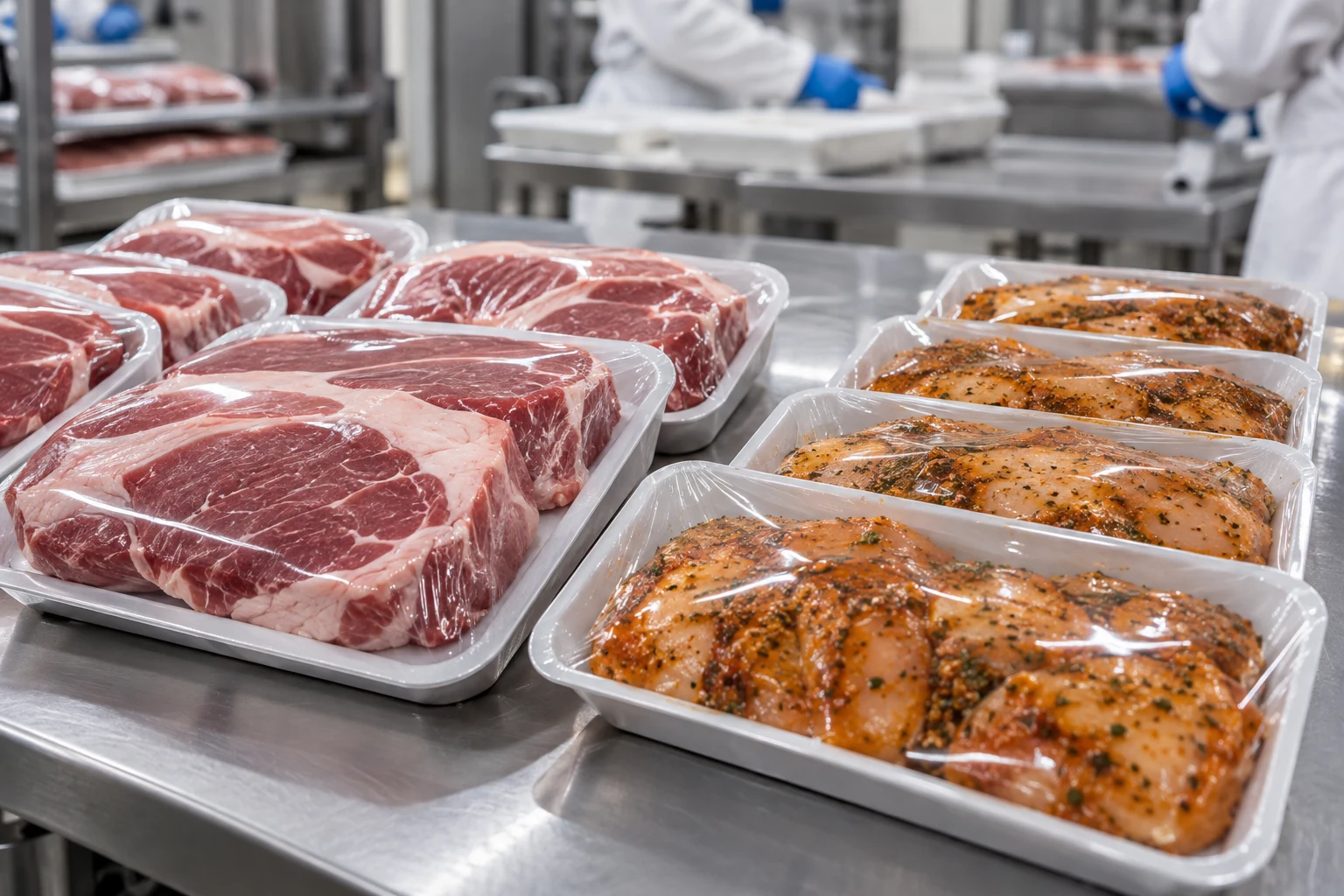
Keep product trials and commercial assumptions distinct. A supplier's offered equipment does not establish a guaranteed yield improvement or the settings appropriate to a particular formulation. Agree the product-specific evidence needed before crediting any benefit in the investment model.
The capital question is whether the complete marination route supports the planned packs and calendar. If ingredient preparation, chilling or discharge limits the operation, a larger tumbler alone may not remove the constraint.
Specify optional future marinated products separately so their requirements do not inflate the initial scope without a commercial reason. A trial brief should also identify the intended pack and receiving operation, because successful batch treatment alone does not demonstrate a complete saleable route.
5. Design the Layout Around Product States and Transitions
The layout should explain how the defined incoming material becomes the selected finished product. Show receiving, storage, preparation, processing, packing and outgoing routes, with the required product states and handling conditions established by the responsible team.
Review transitions between products, not only continuous running. Recipe changes, component availability, cleaning and packaging changeovers consume shared time. An arrangement with adequate nominal rate can still fail the sales program if these activities block the same limited asset.
Identify shared people, transfer resources and storage positions in the operating model. If two routes require the same loading resource simultaneously, their separate equipment capacities cannot simply be added. Resolve the conflict through a feasible calendar or a deliberate scope change.
Use actual delivery and shipping units when evaluating space. Material can accumulate at receiving, before packing or during order assembly. Those quantities and movements should be visible alongside the process equipment footprint.
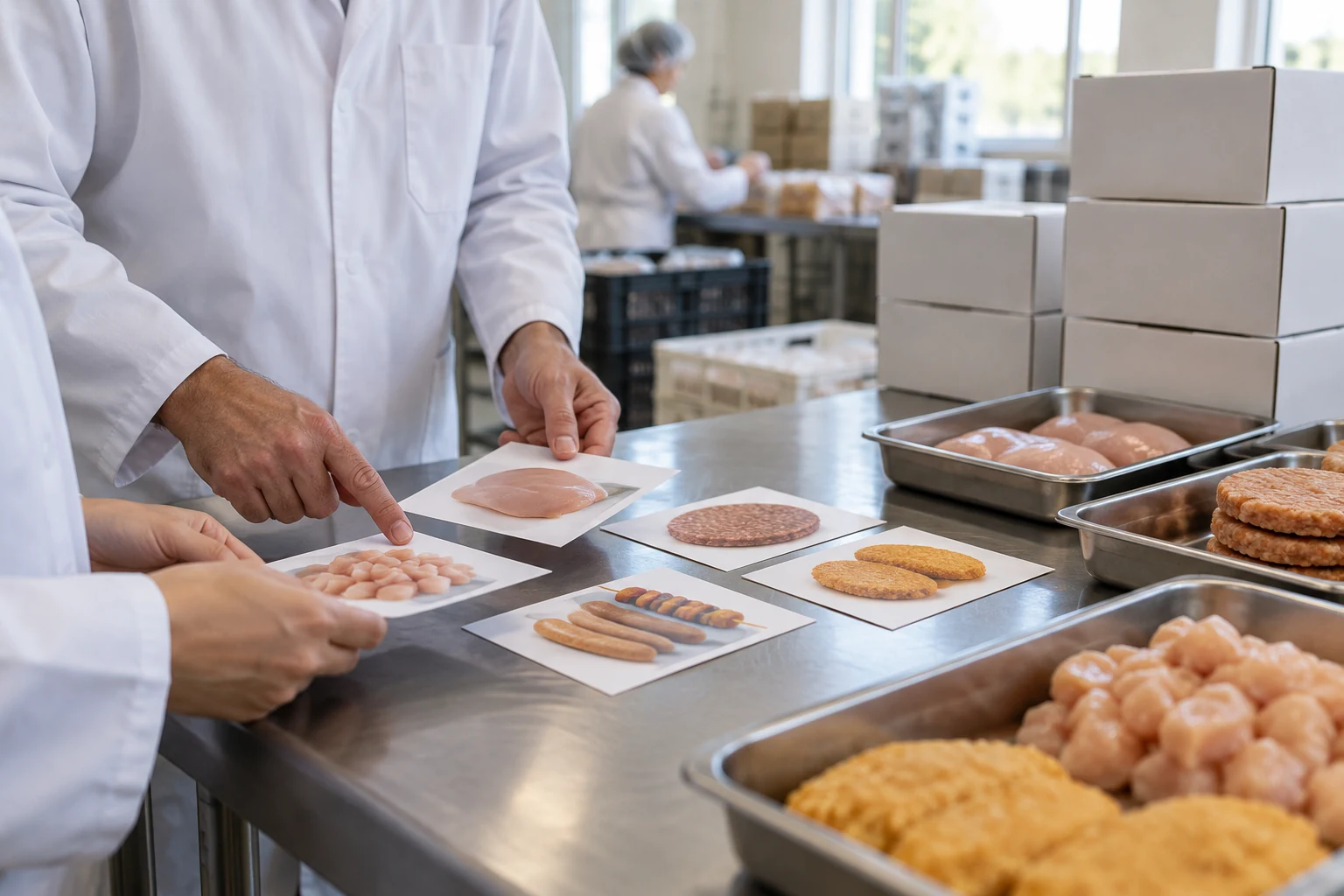
For a future cooked route, establish its specific process and separation requirements before reserving an arbitrary area. Its interfaces may differ substantially from the initial raw-product operation. A phased master plan must preserve the correct future relationship, not merely unused floor area.
Ask operations to follow one representative batch and one difficult product transition through the proposed layout. The resulting movement and waiting points often identify the most useful design change before building work begins.
6. Separate Early Operating Scope from Full Project Integration
That account illustrates why a protein expansion needs distinct operating and project milestones. A bounded area may become useful before the complete integrated project is handed over. Its early release should not be described as full-rate acceptance of every new operation.
Apply the distinction when scheduling a new value-added route. Identify which receiving, processing or packing function can be released with its own required services and checks. Then identify what remains dependent on shared utilities, controls or another construction area.
A DPS process-engineering package can connect the process documentation, equipment interfaces and phased execution basis. For this task, request a milestone definition that states the product route and permitted operating scope, not simply a date labeled production start.
During an operating-site project, build the installation sequence around the actual available work windows and material routes. Early procurement helps only when the receiving space and interfaces are prepared for the package. Protect the existing operation from an improvised installation sequence that consumes its only access or service path.
The investment lesson is practical: phase the project around complete, usable functions. Keep final integrated performance and closeout visible so a valuable early stage does not hide remaining work or distort the ramp-up assumption used in the business plan.
7. Compare Capital Options on the Same Finished-Product Basis
DPS's capital-planning and feasibility service connects the operating baseline with equipment, utility scope, installed-cost alternatives and phased investment. Use that work to compare the selected protein routes on the same incoming and finished-product basis.
For each option, show the required product program, usable output, included operations and supporting scope. Keep purchased-material assumptions visible. An option that receives more prepared input may need less plant investment but a different supply model; that is a business tradeoff, not a free capacity saving.
Compare installation and operating consequences together. A processing package can require additional preparation, cooling, sanitation, material handling or packing scope. The project estimate should include those interfaces before a low machine price becomes the preferred investment.
Show any product benefit using evidence appropriate to the actual formulation and process. Do not convert equipment marketing into a guaranteed yield, quality or profit improvement. If a trial is needed, make its result a decision gate rather than silently assuming a favorable outcome.
Keep the planned expansion option tied to a defined future route. A later marinated or cooked product may require different interfaces from a simple volume increase in the first product. The initial investment should protect the credible option without pretending that all protein operations share one infrastructure requirement.
Management can then compare complete alternatives: capital committed, product scope achieved, supply dependence retained and the specific limitation that triggers the next phase.
8. Issue Equipment Enquiries That Preserve the Process Boundary
Convert the approved process into equipment enquiries with consistent boundaries. State incoming material, product family, usable batch or flow requirement, intended operating calendar and required receiving conditions. Include the connection data each supplier must provide for building and utility design.
For a marination package, the enquiry should make brine preparation, loading, discharge, chilling and cleaning responsibilities explicit. For another protein route, include the interfaces that route actually needs rather than copying a marination specification into every purchase.
Define acceptance in the same finished-product terms used in the investment case. A machine demonstration with a convenient product or pack does not necessarily demonstrate the planned commercial range. Agree representative test conditions and identify who supplies material, people and downstream readiness.
Ask each bidder to state which assumptions affect its quotation and which changes would alter its duty. This makes vendor information useful to the integrated design and reduces the chance that incompatible package assumptions survive until installation.
Keep the equipment and building teams on the same process issue. If the incoming material form changes, update handling, storage, utility and output assumptions together. A seemingly small procurement change can move the factory boundary that justified the original capital plan.
The resulting package describes a plant built for a defined transformation. That clarity helps the owner buy the required capability, avoid unrelated primary-processing scope and preserve a deliberate route toward higher-value products.
Protein Food Plant Planning FAQ
Does a value-added protein plant need primary processing?
Only the operations required by its incoming material and finished-product model. Define the supplier preparation boundary and on-site transformation before selecting equipment or estimating the facility.
Is marination necessary for a ground-beef line?
Not as a general requirement. Select tumbling or marination when the actual product and formulation require that process. Do not add it merely because the facility handles protein products.
Should capacity be quoted in incoming kilograms or finished packs?
Use both with a traceable product-specific balance. Incoming mass helps define processing duty; saleable packs connect the plant to the commercial output. Added ingredients and other material streams must remain visible.
Can an equipment supplier guarantee the project's yield assumption?
Require relevant evidence for the actual product and agreed operating conditions. Avoid treating an offered technology or unrelated trial as a guaranteed commercial yield or profit result.
How should a staged expansion start?
Define the bounded operating function, its prerequisites and release evidence. Distinguish that early scope from final integrated performance acceptance and whole-project handover.
What information does DPS need for feasibility?
Provide incoming material specifications, desired products and packs, production calendar, known site constraints and future product plans. Request a process-boundary, equipment-interface and installed-capital comparison based on those inputs.
Sources and Calculation Notes
DPS services, equipment and project statements use the sources below. Numerical examples are original teaching calculations, not customer results, supplier quotations or sizing recommendations.
- DPS — Process Engineering & Design. Process documents, utility loads and equipment interfaces.
- DPS — Capital Planning & Feasibility. Operating scenarios and phased investment.
- DPS — Tumblers & Marinators. Current marination offering and interfaces.
- DPS published project — Ground Beef Line Execution — Confidential Client. Project-specific account, attributed to DPS.
Research reviewed October 27, 2026.