
In This Article
QUICK ANSWER
Should a Food Plant Use Design-Build or Design-Bid-Build?
Choose the delivery method that fits the owner's decision capacity, design maturity, interface risk and authority to release work. Design-build places design and construction under one owner contract; traditional design-bid-build uses separate design and construction relationships. Neither structure removes the need for a defined food-production basis or clear acceptance responsibilities.
A useful food plant design build vs design bid build comparison examines who resolves process interfaces, who controls design changes and what evidence supports price and schedule commitments. Compare the proposed contract and team arrangement, not the method's label alone.
A food factory has overlapping building, process, utility and controls decisions. Choosing a delivery method changes how those decisions are managed, but it does not make them disappear. A single contract can still contain exclusions; separate contracts can still support coordinated early work.
The comparison is most useful before the owner has committed equipment that constrains the building or appointed teams with incompatible assumptions. At that stage, a practical discussion of decision rights can still change the procurement route. Later, the same unresolved issues tend to reappear as requests for changes. The owner's practical question is which arrangement creates accountable decisions before they become expensive field changes. DPS offers process-critical general contracting and owner-representative services for defined engagements. Those are different roles, and the chosen contract must make their authority and boundaries explicit.
1. Separate Contract Structure from the Operating Requirement
DBIA defines design-build around a single owner contract for design and construction. The AIA's project-delivery primer describes traditional design-bid-build in terms of design documents followed by a separate construction procurement. These definitions describe relationships, not automatic performance outcomes.
Start the comparison with the same food-production requirement. State products, packs, calendar, required processes, site conditions and acceptance basis. If one proposal assumes a narrower product range or less utility integration, its lower price does not show that its delivery method is more efficient.
Consider the owner's ability to make decisions. An engaged production team may be well placed to review a developed design before competitive bidding. Another owner may need a coordinated design-and-construction team to develop options and resolve constructability while the operating basis matures.
Neither owner can delegate an undefined commercial objective and expect a specific factory in return. Identify the decisions retained by the owner, the information required for each and the person authorized to approve changes.
Review the actual team as well as the structure. Food-process knowledge, controls integration and field coordination matter whichever contract route is chosen. A strong method label cannot compensate for a team that does not understand how the selected product moves through the plant.
The initial choice should explain who develops the production requirement and how that requirement becomes a buildable, accepted scope.
2. Compare Control and Responsibility at Real Decision Points
Use the points where the owner must act to compare the methods. Who can change the equipment duty? Who prices a revised utility route? Who coordinates a contractor's request with the process designer? The answers depend on the contracts and delegated authority, not only the organization chart.
| Decision | Design-Build | Design-Bid-Build |
|---|---|---|
| Owner contract structure | Combined design and construction responsibility | Separate design and construction relationships |
| Design development | Coordinated within the design-build team | Owner and designer develop bid scope |
| Interface resolution | Define included integration and exclusions | Define designer and contractor coordination duties |
| Owner control | Set requirements and approval rights explicitly | Manage decisions across separate relationships |
Specify the owner's review points without creating ambiguous approval. A review should identify the decision being made and the information available. It should not become an informal transfer of design responsibility merely because operations attended a meeting.
Price control also requires defined scope. A combined arrangement may establish some commitments while other packages remain under development. A bid based on developed documents can still contain allowances or excluded interfaces. Compare those conditions directly.
For each route, ask how a changed product requirement reaches the affected equipment, building, utilities and controls documents. The strongest arrangement is the one that makes that chain visible and assigns the decision promptly.
Test a specific decision during interviews. Suppose a vessel connection changes after a building service route has been developed. Ask who obtains the revised data, who authorizes redesign, who prices field consequences and who updates the controls interface. A clear answer is more useful than a general assurance of teamwork. That review reveals the owner's management burden. It also shows where specialist owner-side support may be valuable without assuming that every owner needs the same delivery structure.
3. Put Process-Equipment Interfaces into the Delivery Scope
A process package can cross several contracts. Consider a vessel: its supports, piping, services, cleaning connection, controls and receiving operation must work together. The purchase order may cover only some of those elements, leaving other work with building or specialist contractors.
DPS's current tanks and vessels offering includes integration with piping, CIP and controls. In a delivery-method comparison, ask which party develops those interfaces, which party installs them and who demonstrates the integrated operating sequence. The equipment offering is a scope reference, not proof that a particular vessel was used in the relocation case.
Design-build can place coordination within a combined team, but the owner should still examine the included boundaries. Owner-purchased equipment, existing services and third-party packages can remain interfaces outside that team's assumed duty unless the contract addresses them.
Design-bid-build requires those boundaries to be coordinated across the design and construction relationships. Vendor information must arrive in time to affect issued documents, and later revisions need a controlled route through the project.
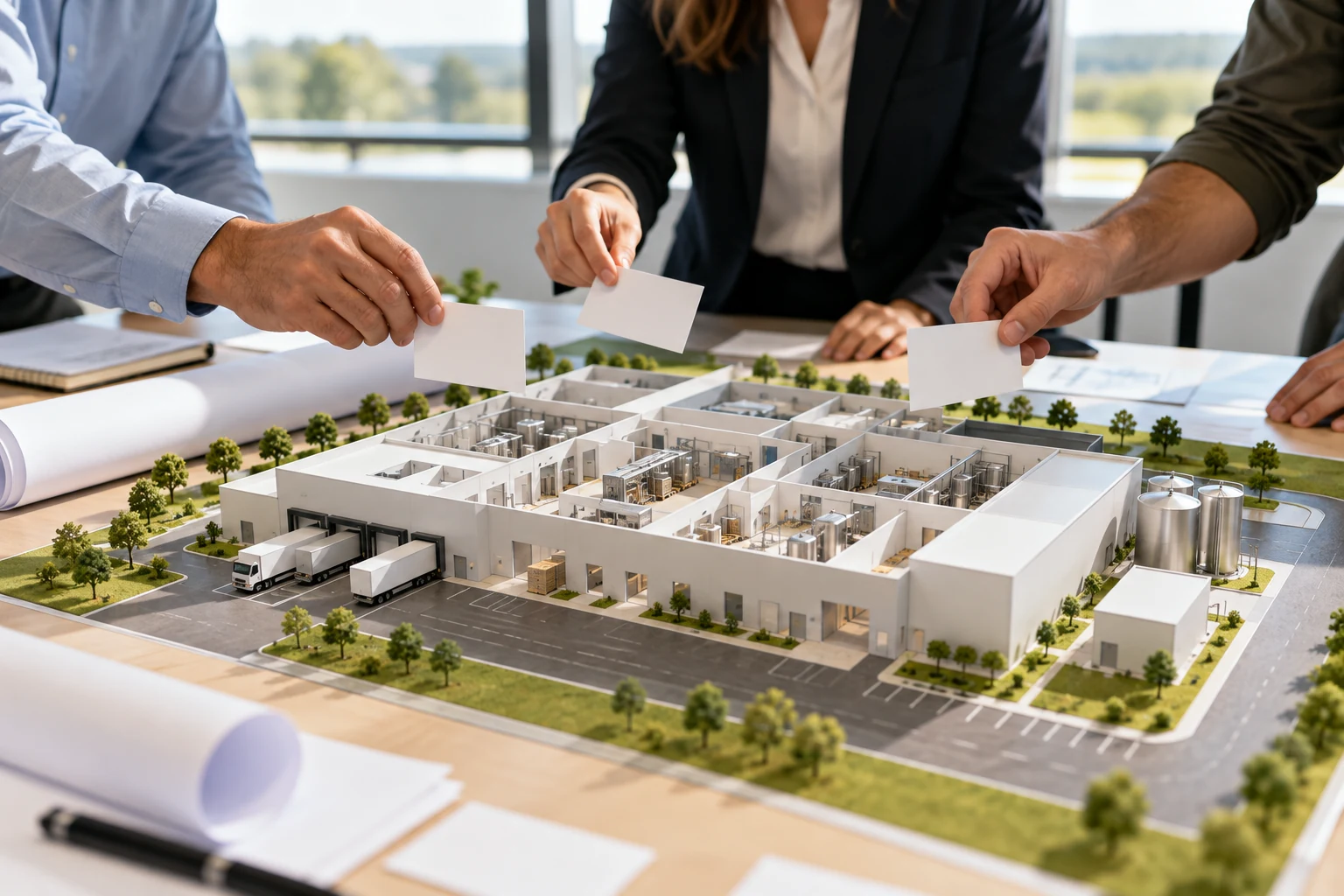
Use one representative equipment package to test both proposed arrangements. Follow its data from enquiry through design, purchase, installation and commissioning. An unresolved handoff in that exercise is a concrete issue to settle before choosing the delivery contract. Keep supplier drawing approval distinct from confirmation of integrated duty: a nozzle location can be accepted while the operating sequence still requires an unresolved cross-package decision.
4. Test the Proposed Schedule with Actual Release Dependencies
Schedule advantage comes from a feasible sequence, not from naming the project design-build. Work can overlap only when the earlier commitment has sufficiently defined inputs and the contract gives someone authority to release it. Unresolved changes can consume the apparent saving.
Consider an invented dependency sketch. Design takes six weeks, a purchased package takes eight weeks after release and field work takes four weeks after both are ready. Waiting for design completion gives 6 + 8 + 4 = 18 weeks. Releasing a sufficiently defined package at Week 3 gives max(6, 3 + 8) + 4 = 15 weeks.
| Scenario | Release | Package Ready | Field Finish |
|---|---|---|---|
| Sequential release | Week 6 | Week 14 | Week 18 |
| Defined early package | Week 3 | Week 11 | Week 15 |
Either delivery structure may support an early package if the agreements and scope maturity permit it. The comparison should therefore identify which real package can be released, which information is frozen and who carries the consequence of a later change.
Illustrative completion week
Sequential · 18
Defined early release · 15
Check the field prerequisites too. Equipment delivery cannot start installation if the receiving space, foundations, services or access are unavailable. A realistic schedule includes those links and the integrated startup that follows physical placement.
Ask both teams to explain the release mechanism rather than offering only a completion date. This exposes the actual tradeoff between early commitment and retained design flexibility. If the critical package cannot be defined at Week 3, the illustrated saving is unavailable. Conversely, if construction access rather than fabrication controls the start, an earlier order may change inventory at the site without changing the completion date.
5. Compare Price Commitments with Their Assumptions and Exclusions
A fixed-looking number can represent different levels of definition. One proposal may include developed process and utility scope; another may leave a major package as an allowance. Compare the included factory, not just the headline price or fee percentage.
Identify the product assumptions behind each commitment. A later change in pack, recipe range, campaign pattern or receiving material can affect several packages together. The contract should explain how such changes are identified, priced and approved before the team proceeds.
Separate design development from a changed owner requirement in the decision record. The commercial treatment depends on the actual agreement, but the technical cause should remain clear. A product change is different from resolving an interface that the original scope already required.
Use consistent cost boundaries when comparing alternatives. Include equipment procurement, field installation, services, controls, building work and commissioning responsibilities appropriate to the project. Review owner-retained work and specialist packages explicitly so they do not disappear between proposals.
The owner also needs an understandable reporting rhythm. At each commitment point, show what is priced, what remains provisional and which unresolved decision can change the forecast. This is useful in both a combined contract and a separately procured design-and-build sequence.
Ask the proposed team to demonstrate that reporting with one representative package. A concrete example of an allowance becoming a committed scope says more about control than a broad promise of budget certainty.
6. Assign One Accountable Destination-Readiness Plan
The delivery lesson is the connection between equipment movement and receiving-site readiness. A machine can arrive on time while the plant remains unable to use it. A contract comparison should show who coordinates those prerequisites and who reports a dependency that threatens the operating sequence.
Use that test for a new food plant. Follow the first critical process package from its available vendor data through site preparation, service connection and integrated startup. Identify which organization owns each transition and how an unresolved issue reaches the person authorized to decide.
The project account supplies an integration example; it does not by itself establish a delivery-method cost advantage or a standard new-build duration. Evaluate the proposed method through its actual responsibility arrangement rather than attributing every reported outcome to the contract label.
Where the owner buys equipment directly, preserve coordination with the building and field teams. A combined construction arrangement does not automatically absorb every owner purchase, and separate contracts do not excuse an unassigned handoff.
The practical selection question is whether the proposed team can produce one credible destination-readiness plan with named decisions and linked prerequisites. That plan should cover the transition from construction completion to an operable process, not stop when equipment is placed.
7. Define DPS's Contract Role and Local Construction Arrangement
DPS describes general-contracting services around process-critical engineering, piping, equipment installation, controls and commissioning, coordinated with specialist building trades. Its stated approach uses direct GC licensure in applicable states and licensed local general contractors elsewhere. Do not treat national project capability as direct GC licensing in every state.
The procurement brief should identify the actual contracting entity, local construction arrangement and responsibility for each regulated professional or trade service. Confirm those details for the project location before relying on a broad service description.
DPS also offers owner-representative services covering scope and budget review, bid and design coordination, changes, installation oversight and turnover. That is a distinct engagement. An owner should define its authority, reporting line and relationship to the designer and contractor.
If considering DPS for different roles, make the proposed allocation explicit. Do not describe the same unrestricted engagement as both the design-builder's own delivery duty and independent owner-side review of itself. Contract scope and reporting arrangements determine how the work is performed.
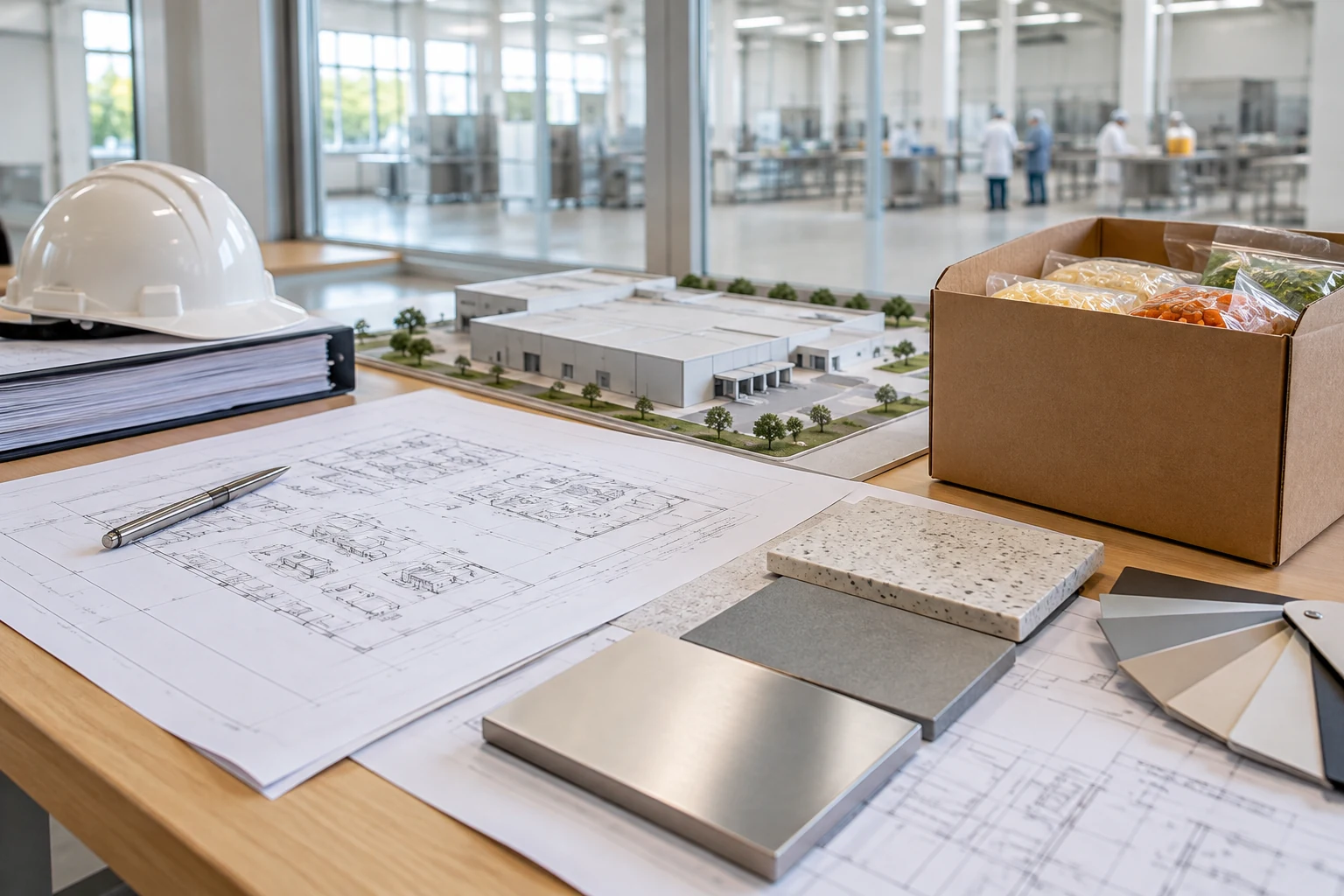
Use the role definition to assess gaps rather than merely add another organization. The owner needs clear technical decisions, commercial approvals and acceptance evidence. A useful appointment explains which of those functions it supplies and which remain with others. Establish a route for disagreements between owner-side review and delivery responsibility, including who can authorize work to continue. This avoids allowing several reviewers to issue conflicting instructions directly to the same field contractor.
8. Select the Arrangement Using a Common Owner Brief
Issue the same production and project basis to the teams being compared. Include products, operating calendar, site information, owner purchases, known interfaces and the evidence required for acceptance. Ask each team to explain how its proposed arrangement develops and delivers that factory.
Request a responsibility map, a release sequence and a cost-boundary explanation. These three items reveal how the method operates in practice. They show who can resolve the important decisions, what early work is actually feasible and which scope remains with the owner.
Review the owner's staffing honestly. Separate contracts can require active coordination and decisions across organizations. A combined contract still needs an owner capable of defining requirements, reviewing key choices and approving changes promptly. Unavailable owner decisions can delay either structure.
Compare the team's relevant process and field capabilities using specific examples. The question is whether it understands the interfaces controlling this factory, not whether it can repeat a general claim about faster or cheaper delivery.
Before appointment, align the role, local delivery arrangement and acceptance responsibilities with the actual agreements. Use appropriate project advisers for the contractual provisions. Keep technical requirements and commercial authority understandable to the people who will operate the plant.
The preferred route is the one that gives this owner a clear, manageable path from production requirements to an accepted operating facility. That conclusion can favor either method when the scope, team and decision arrangements support it.
Food Plant Project Delivery FAQ
Does design-build automatically cost less?
No universal saving should be assumed. Compare the same factory scope, allowances, owner-retained work and change exposure using actual proposals. A delivery label is not a quotation or a cost guarantee.
Can design-bid-build use early equipment purchases?
It may, when the agreements, authority and design maturity support a defined early package. Identify the frozen requirements and how later changes would be handled.
Does one contract remove equipment-interface risk?
No. Owner purchases, existing services and third-party packages still need explicit boundaries and coordination. Check the proposed team's included integration duties and acceptance responsibilities.
Is DPS directly licensed as a GC in every state?
Its service description states direct licensure in applicable states and licensed local general contractors elsewhere. Establish the actual project-location arrangement and contracting responsibilities during procurement.
When would an owner representative be useful?
When the owner needs defined support reviewing scope, decisions, bids, changes or turnover. Specify authority and role separation rather than assuming the representative takes over every design or construction obligation.
What should be compared before appointing a delivery team?
Compare its responsibility map, feasible release sequence, cost boundaries and relevant process capabilities against a common owner brief. Verify how the owner will make and approve the decisions that remain.
Sources and Calculation Notes
DPS services, equipment and project statements use the sources below. Numerical examples are original teaching calculations, not customer results, supplier quotations or sizing recommendations.
- DPS — General Contracting. Coordinated field execution and delivery responsibilities.
- DPS — Owner’s Representative. Owner-side review and oversight scope.
- DPS — Tanks & Vessels. Current vessel offering and integration boundaries.
- DPS published project — Golden West Food Group — Co-Packing Plant Relocation. Project-specific account, attributed to DPS.
- DBIA — What Is Design-Build?. Single owner contract for design and construction as a delivery-method definition; no cost or schedule statistics reused.
- AIA — A Primer on Project Delivery Terms. Traditional design-bid-build structure and separate design/construction relationships.
Research reviewed October 27, 2026.