Scenario
New Facilities
Check product / demand, site feasibility, full plant economics, growth phases and startup before layout.
Compare new facilities, expansions, relocation, modernization, bottlenecks, hygienic work, product adaptation, utility constraints and startup readiness.
Start with the operating and investment decision
A project scenario describes the owner’s investment situation. DPS can connect capital planning, process engineering, owner representation, project management, construction, installation and controls around it. Start with the measured trigger, practical alternatives, continuity requirements and acceptance basis, then build the cost and benefit model that fits that decision.
Different triggers can use the same technologies while facing different approval, outage and startup risks. This library does not treat an engineering intervention as a universal compliance solution or promise a specific price, performance improvement or execution window.
Choose the trigger that matches the owner’s decision. Each scenario includes two focused planning situations to help define the scope, counterfactual, execution requirements and evidence needed before capital is committed.
Scenario
Check product / demand, site feasibility, full plant economics, growth phases and startup before layout.
| Planning situation | Resolve before investment |
|---|---|
| Leased-Shell Food Plant | Is the leased shell compatible with production, drainage, utilities, access and the fit-out economics? |
| Phased Greenfield Development | Which expansion interfaces are needed now, and what later capital belongs to each stage? |
Scenario
Compare demand and usable capacity with feasible improvements before adding production assets.
| Planning situation | Resolve before investment |
|---|---|
| Capacity Expansion in an Existing Building | Can the existing building support equipment, flow, utilities and the proposed installation window? |
| Adding a Production Line | Can upstream, downstream, staffing and shared services support another line? |
Scenario
Assess retained assets, destination readiness, uncovered outage and controlled restart.
| Planning situation | Resolve before investment |
|---|---|
| Operating-Plant Relocation | How will inventory cover, destination readiness and restart protect current commitments? |
| Retained | Does the condition and integration cost make retained / used equipment viable at the new duty? |
Scenario
Separate equipment condition and controls support from the measured performance problem.
| Planning situation | Resolve before investment |
|---|---|
| Legacy Controls Cutover | How will backups, OEM states, I/O, testing and rollback govern a legacy control cutover? |
| Targeted Process Equipment Retrofit | Which verified performance gap can a partial equipment change resolve? |
Scenario
Locate the constraint at the actual product mix, then compare targeted corrections and expansion.
| Planning situation | Resolve before investment |
|---|---|
| Cook-Cool-Fill Bottleneck | Which loading, cook, cool, discharge or fill step limits complete good batches? |
| Changeover Capacity Loss | Does qualified recovered changeover time create usable, commercially realizable output? |
Scenario
Turn site-specific hygiene findings into scope, interfaces, verification and accountable acceptance.
| Planning situation | Resolve before investment |
|---|---|
| Allergen Separation Retrofit | What site-specific product / people / equipment separation and verification basis is required? |
| Drainability & Zoning Upgrade | How do drainage, cleaning access and hygienic zoning findings change the facility scope? |
Scenario
Assess the new recipe / package against existing equipment, trial results and the operating envelope.
| Planning situation | Resolve before investment |
|---|---|
| New Viscosity | Can the retained mixing / transfer / thermal train handle the new texture and particles? |
| New Package | What changes when the package or qualified preservation route is different? |
Scenario
Determine whether the limitation is demand, source, distribution, recovery or simultaneous use.
| Planning situation | Resolve before investment |
|---|---|
| Production | Which heating / cooling / CIP peaks conflict, and can the qualified schedule change? |
| Air | Is the air, power or water limit at source, distribution or the point of use? |
Scenario
Coordinate installed packages, utilities, trials, operator readiness and responsibility for good output.
| Planning situation | Resolve before investment |
|---|---|
| Installed Line Performance Gap | Which missing condition or interface prevents the installed line from meeting accepted duty? |
| Multi-OEM Acceptance | Who owns the complete-line test and the handover across several specialist suppliers? |
Swipe horizontally to compare all columns ↔
| Requirement | Information to prepare | Why it changes the decision |
|---|---|---|
| Trigger and counterfactual | What happens if nothing changes, and which alternatives are feasible? | Mandatory projects may need total-cost comparison rather than invented annual ROI. |
| Commercial and operating baseline | Good output, demand, margin, actual costs, retained assets and product envelope. | Use a measurable starting point and matched scope. |
| Continuity and execution | Live areas, outage, temporary services, supplier lead time, trials and restart. | Separate one-time transition cash from recurring annual benefit. |
| Accountability and acceptance | Owner, DPS, OEM, trade and quality responsibilities. | Define evidence for both physical performance and realized economics. |
Swipe horizontally to compare all columns ↔
| Operating trigger | Desired improvement | Financial basis | Read next |
|---|---|---|---|
| Output shortfall at the real product mix | Identify the limiting system before expansion | Demand-capped contribution and measured complete-line duty. | Bottleneck Optimization ↗ |
| Required transfer of equipment / production | Compare reuse, replacement and destination readiness | Total transition cost, covered / uncovered outage and future operating differences. | Plant & Equipment Relocation ↗ |
| Inadequate utility conditions | Diagnose source, distribution and peak sequence | Independent energy and capacity benefits; right-sized capital. | Utility Capacity Constraints ↗ |
| Specific ice cream or sauce intervention | Build a tightly scoped industry-project brief | Interface tests, one-time exposure and recurring cash. | Ice Cream Refrigeration & CIP Upgrade ↗ |
Compare operating correction, controls, distribution and targeted equipment changes.
Rebuild the entire product / package, site, utility, OEM, staffing and demand case.
Use readiness and coverage planning for a mandatory move or renewal.
Illustrative case / USD / pre-tax / five years
The relocation example deliberately defaults to zero recurring benefits. It costs the transition and compares uncovered outage alternatives rather than inventing additional product sales from moving the same assets. If a future operating difference is measured, it can be modeled separately and must use a consistent counterfactual.
Includes contingency, startup and working capital
Incremental operating cash before tax
Includes year-one ramp assumption
At 10% annual discount
Net annual benefit ÷ initial cash
Net cumulative gain ÷ initial cash
| Measure | Calculated amount / condition |
|---|---|
| Defined capital scope + site | $700,000 |
| Contingency | $105,000 |
| Startup / shutdown and working capital | $200,000 |
| Total initial cash | $1,005,000 |
| Good incremental sold kg per year | 0 |
| Steady net annual operating benefit | $0 |
| First-year net benefit after ramp | $0 |
| Five-year NPV at 10% | −$1,005,000 |
Initial cash includes defined capital and site work, contingency, separate startup / transition cost and working capital. Annual benefit is contribution plus independent baseline savings less added fixed cost. Year one scales gross benefits by the stated ramp while paying added fixed cost in full. The model excludes tax, debt, depreciation and asset resale; working-capital recovery defaults to zero.
Swipe horizontally to compare all columns ↔
| Decision lens | Useful comparison | What needs care |
|---|---|---|
| Scenario defined by a desired purchase | “We need a larger tank” begins with a solution. | May miss cooling, transfer, cleaning, packaging or demand constraints. |
| Scenario defined by a measured problem | “The line waits for cooling during two daily overlaps.” | Supports a testable engineering and capital alternative. |
| Scenario defined by a mandatory event | “The lease ends and the plant must move.” | Needs viable options, full transition cost, coverage and readiness gates. |
Swipe horizontally to compare all columns ↔
| Discipline | How it supports the decision | DPS scope |
|---|---|---|
| Process engineering | Define the product / process basis, measured constraint and package interfaces. | Read process engineering ↗ |
| Capital planning | Compare feasible alternatives, scope, timing, cash need and uncertainty. | Read capital planning ↗ |
| Owner representation & project management | Coordinate decisions, supplier boundaries, schedule, cost and change. | Read owner representation & project management ↗ |
| General contracting / installation | Plan field interfaces, trades, outages and integrated installation. | Read general contracting / installation ↗ |
| Configured equipment | Review tanks, cookers, CIP or tumblers / marinators where their duty fits. | Read configured equipment ↗ |
| Automation & controls | Agree recipes, states, interlocks, package handshakes and handover. | Read automation & controls ↗ |
Select only equipment appropriate to the actual duty. Specialist process packages and qualified product / food-safety release are assigned explicitly; service links are not a promise that all disciplines or approvals apply identically to every project.
Prepare the information below, export the assumptions you have modeled, and discuss the unknowns with DPS. An unmeasured input is a question to resolve, not a reason to invent precision.
Checklist and model data stay in this browser until you choose to share them.
The existing DPS manufacturing-scenarios overview provides the nine project triggers. The linked detail guides add transparent decision tools without attributing hypothetical costs or returns to published customer projects.
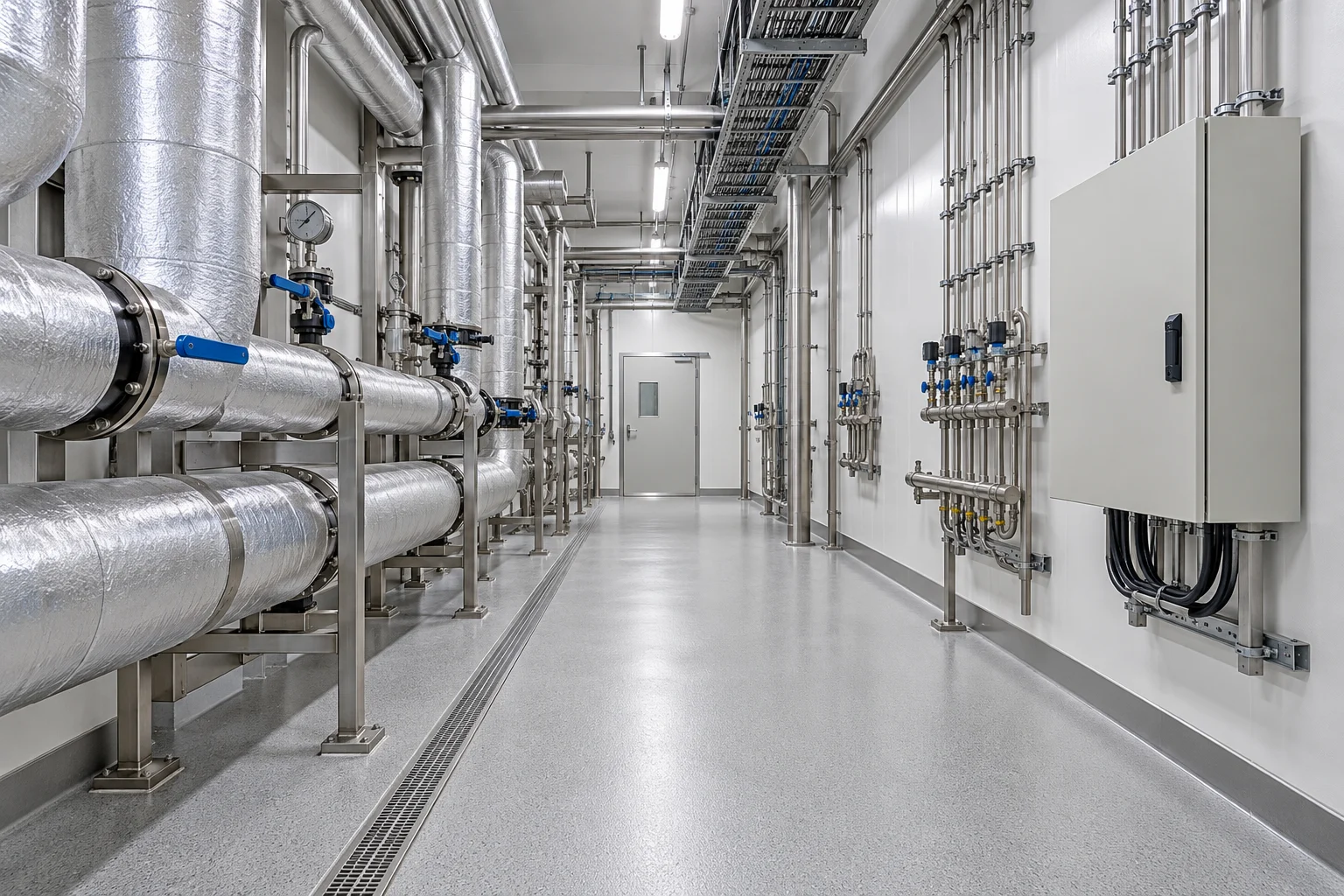
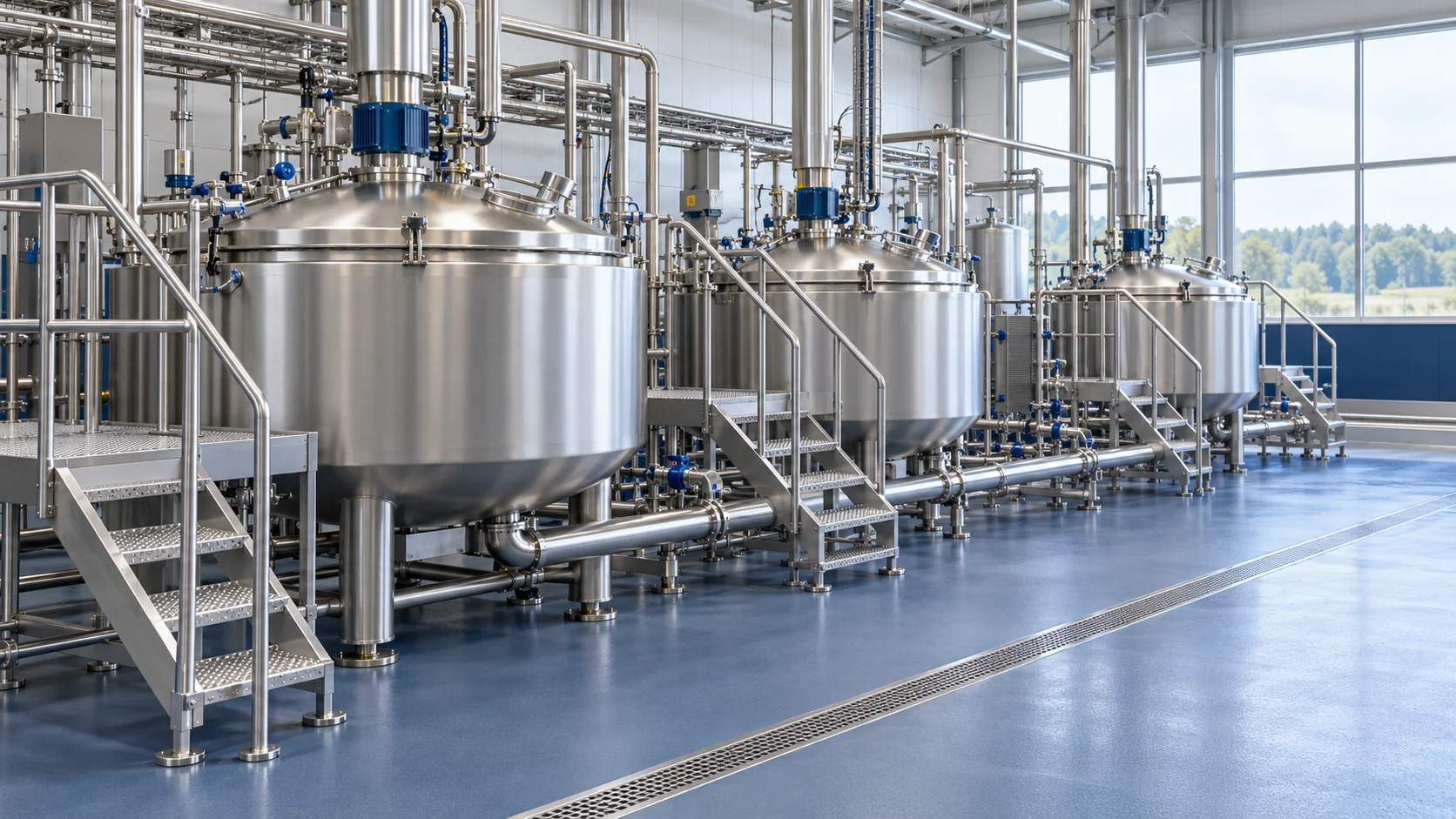
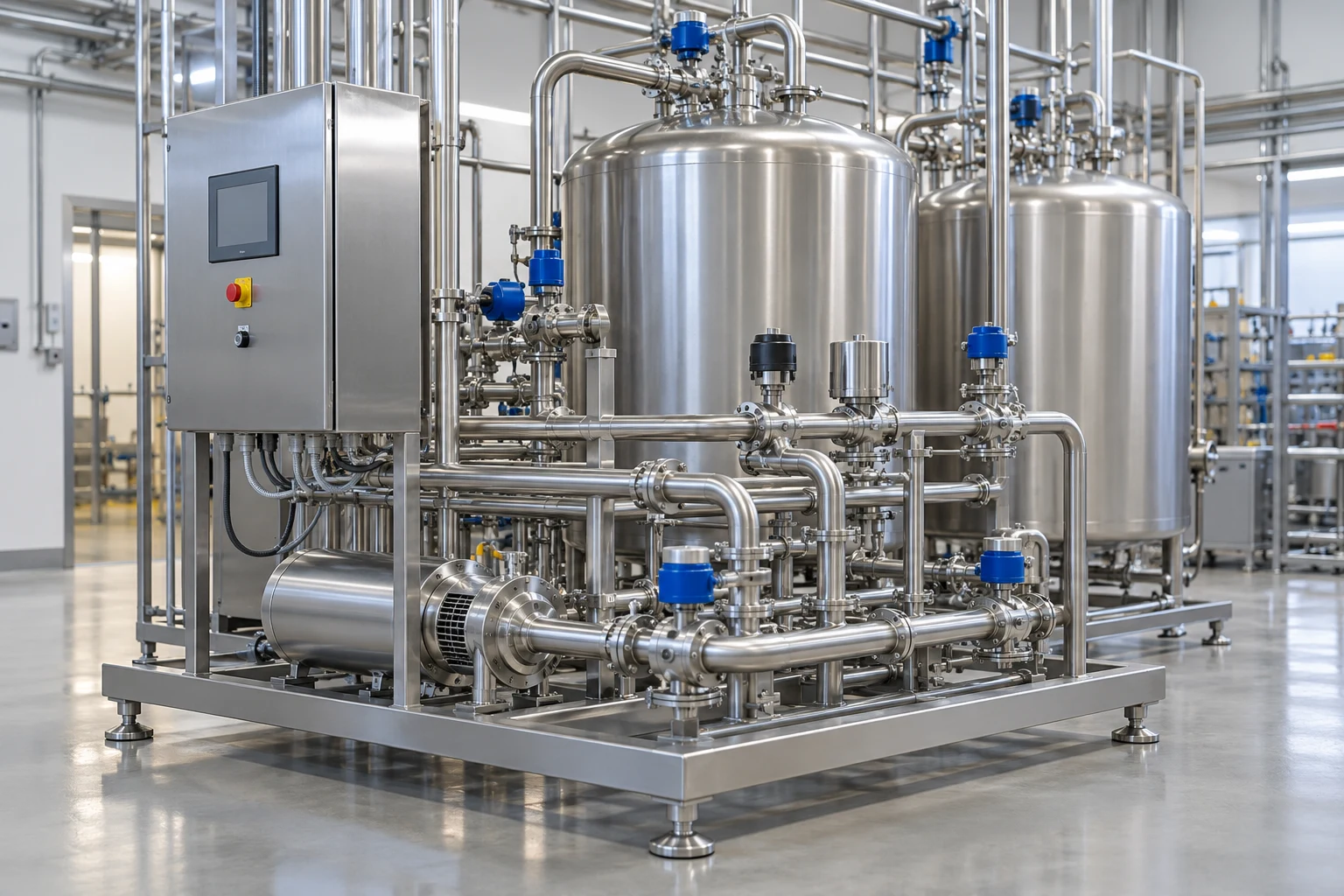
Illustrative budgets and returns are not market price ranges, supplier quotes or achieved DPS customer outcomes. Images are generated engineering concepts, identified in their captions. Confirm site, supplier, product and commercial assumptions for the actual investment.
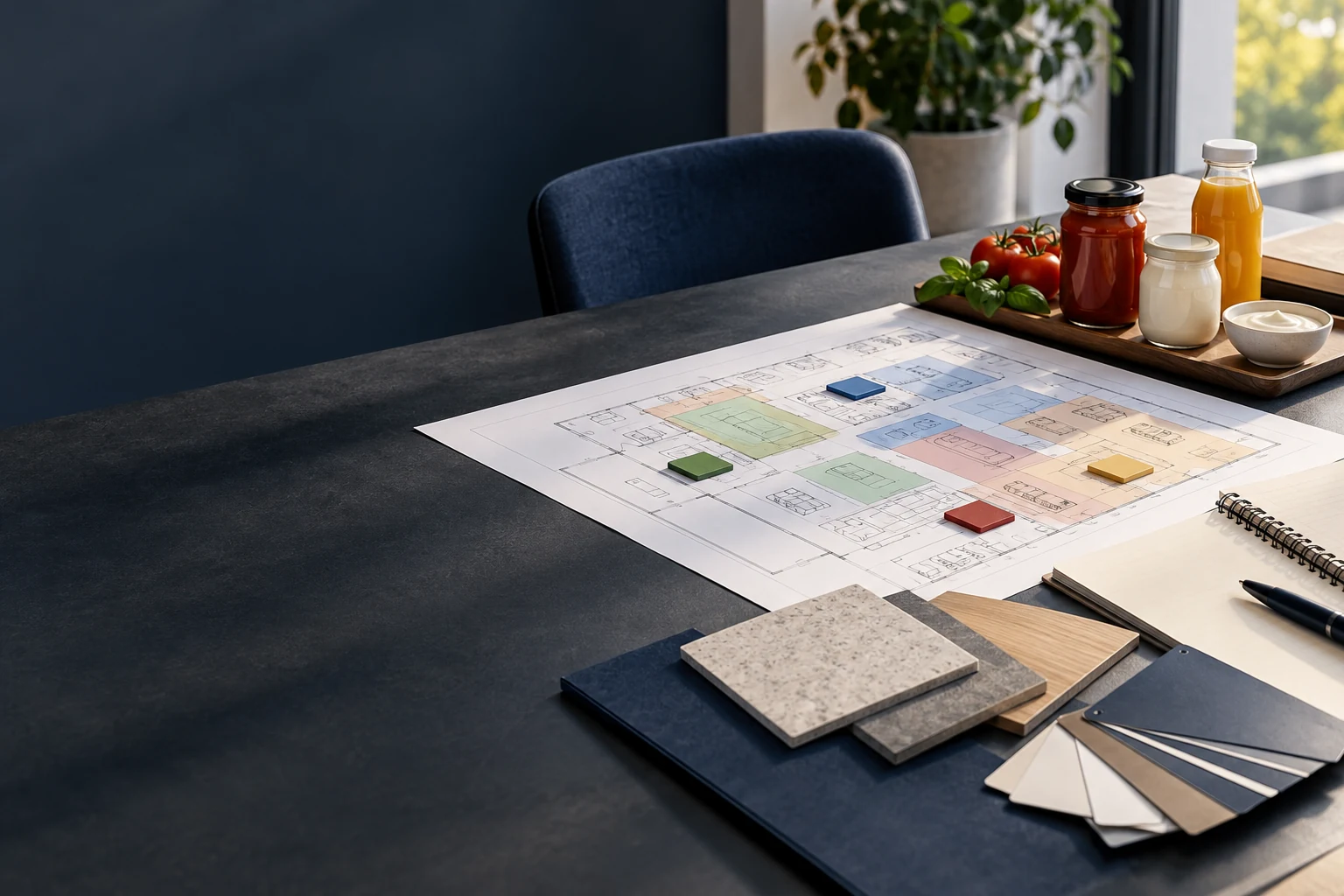
Scope a food plant feasibility study around demand, process options, site constraints and investment gates before approving detailed design or CAPEX.
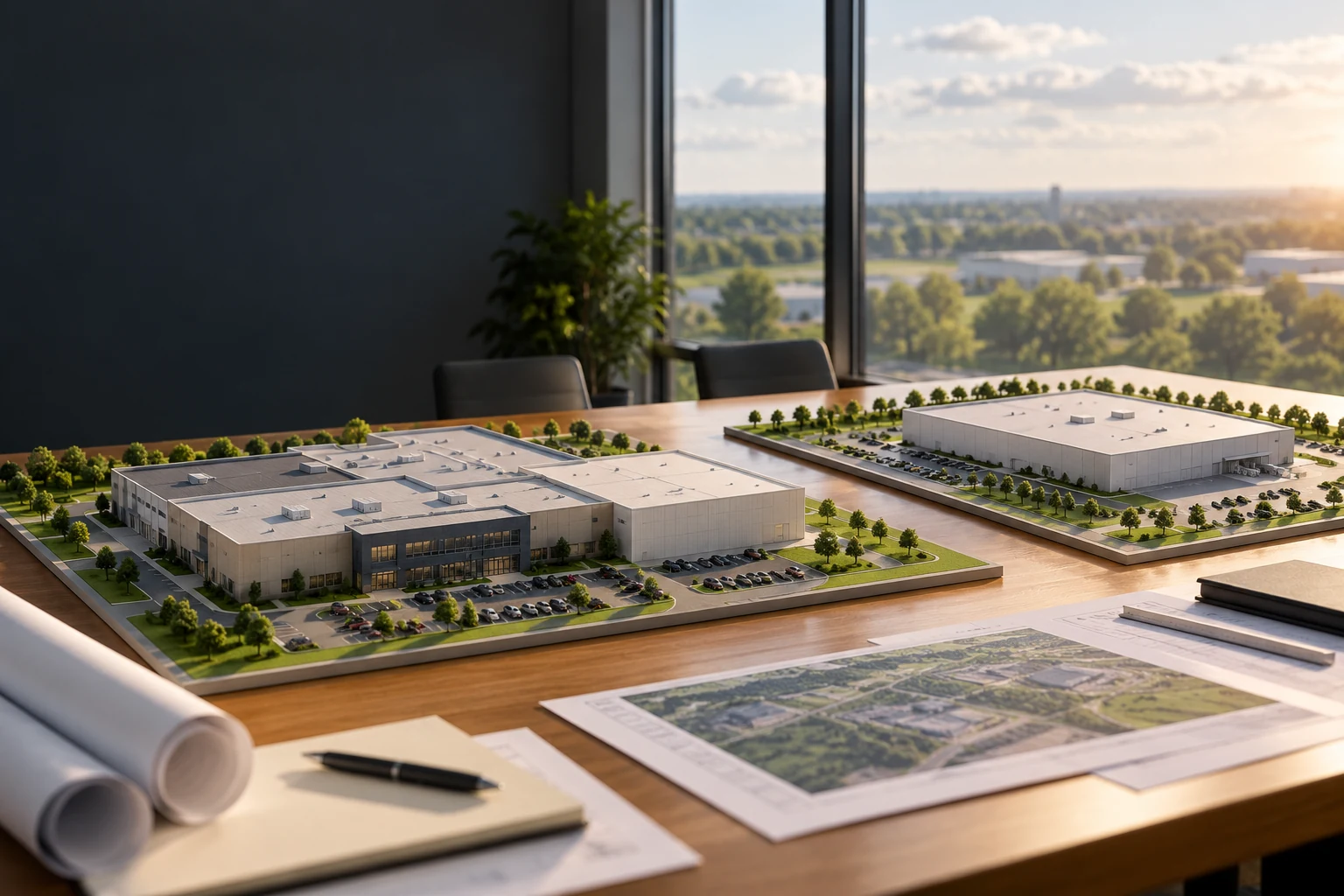
Compare expanding an existing food plant with a new facility using site fit, infrastructure, production disruption, delivered capacity and investment timing.
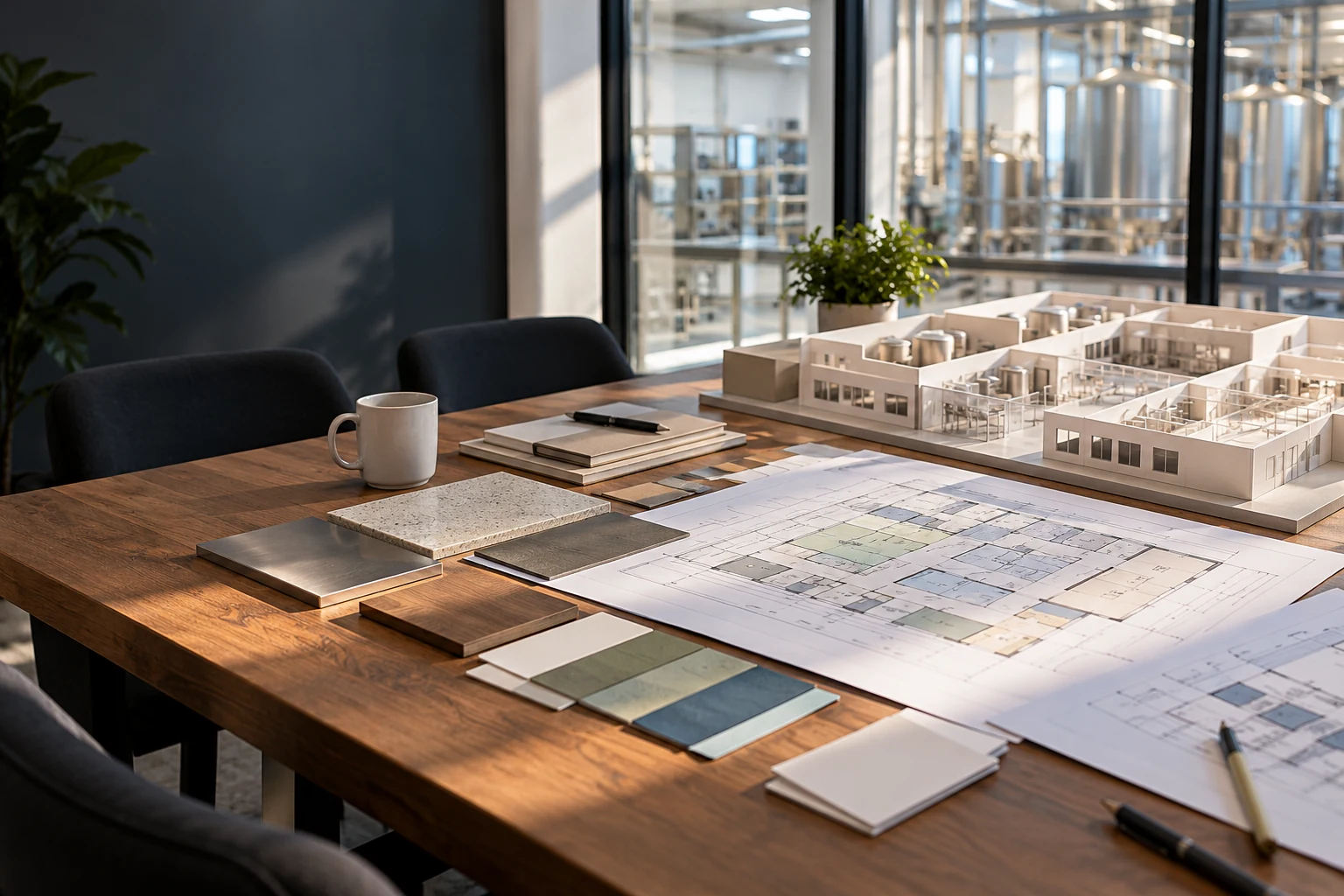
Follow the food plant design process from owner requirements and concept options to coordinated drawings, bid packages and controlled design reviews.