Recipe authority and versions
Define who may author, approve, release and change parameters. Separate a master formulation from equipment-specific executable steps and permitted operator adjustments.
Define approved recipes, material identity, actual additions, batch events and exception handling before selecting another reporting screen.
Start with the business outcome
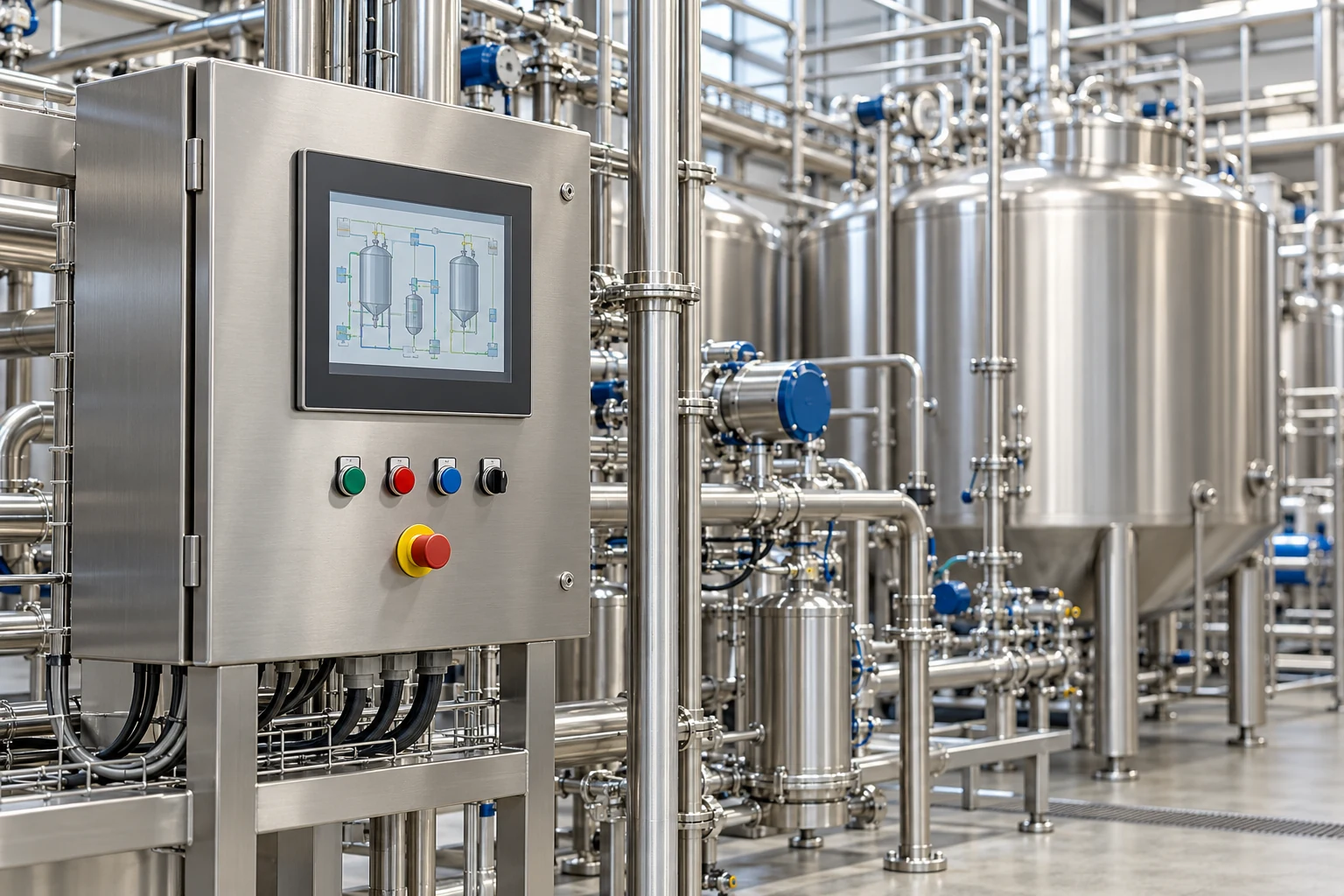
A recipe-management project is useful when the plant cannot reliably connect the approved formula, actual execution, material lots and accepted batch. DPS can coordinate process requirements, instruments, controls and agreed data interfaces. The value comes from fewer evidenced operating errors and useful records, rather than from collecting more tags or claiming automatic regulatory compliance.
Agree software, licenses, existing-system APIs, data ownership, retention, account permissions and support boundaries. The owner’s quality / regulatory team defines applicable record and release requirements; a recipe or reporting platform does not itself establish certification.
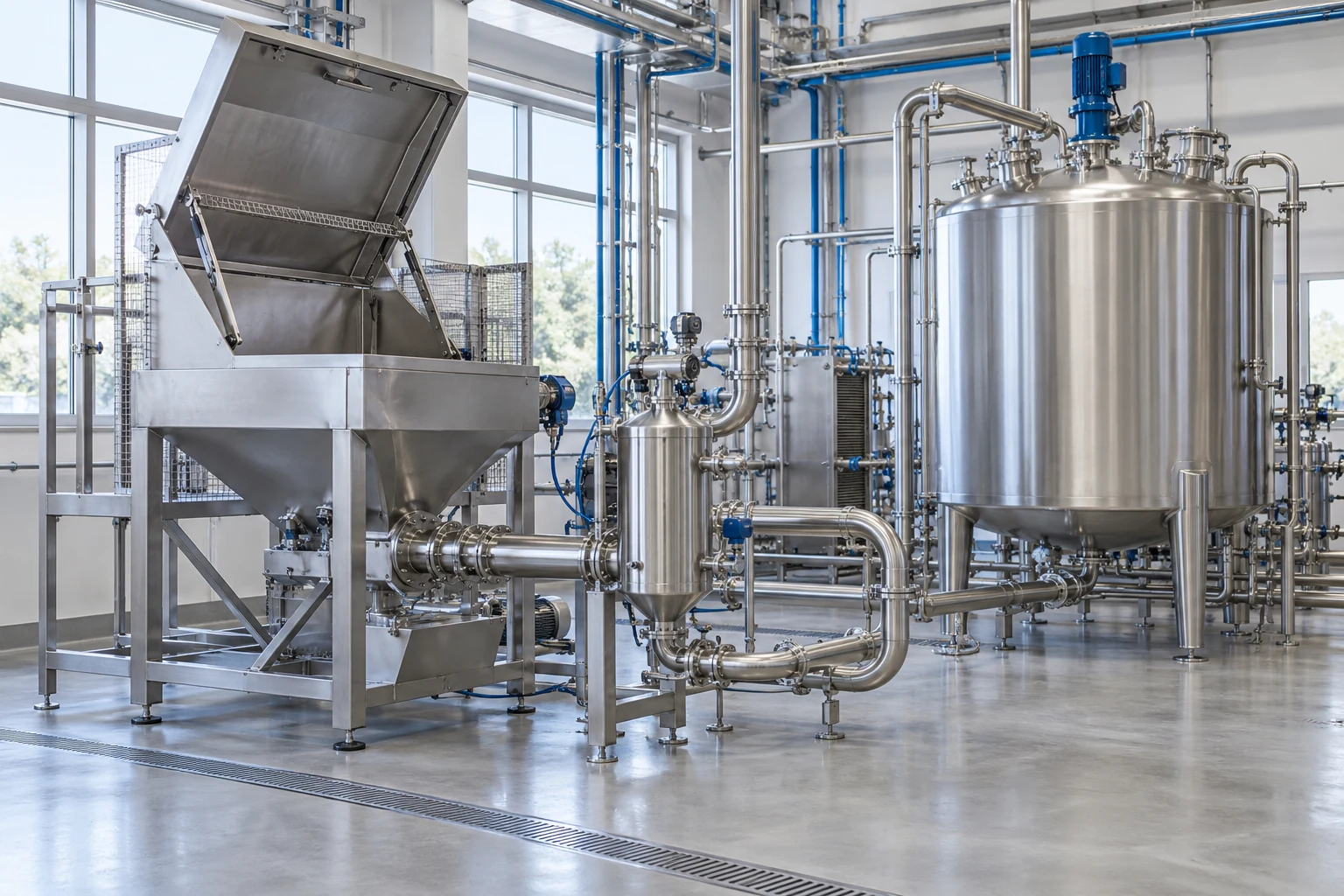
Define who may author, approve, release and change parameters. Separate a master formulation from equipment-specific executable steps and permitted operator adjustments.
Map receiving identifiers, containers, additions, transfers, splits, rework and packaging. Decide which real events connect lot identity to a finished batch and how exceptions are resolved.
Specify timestamps, quantities, units, source, data quality and retention for an operational purpose. Missing or stale measurements must remain distinguishable from a real zero.
Translate the approved production sequence into authorized parameters and operator decisions.
Define the record’s required sources and integrity before choosing visualization or report format.
Coordinate traceability across existing material, process and business systems.
Swipe horizontally to compare all columns ↔
| System | Operating duty | Relevant DPS guide | Confirm before purchase |
|---|---|---|---|
| Instrumentation and controls | Execute the agreed sequence and record meaningful equipment states. | Automation & controls ↗ | I/O, alarms, recipe authority, backups and acceptance tests. |
| Measurement and material interfaces | Connect real quantities and material identity. | Process engineering ↗ | Scale / meter basis, recipe tolerance and operator workflow. |
| OEM and field interfaces | Connect the selected equipment to the existing operating train. | Installation & integration ↗ | Mechanical, electrical, software, site access and integrated acceptance. |
| Process engineering | Turn measured requirements into an interface and duty specification. | Process engineering ↗ | Actual product envelope, baseline data, qualified trials and responsibilities. |
These functions overlap but answer different operating questions. Define each before combining software budgets.
Swipe horizontally to compare all columns ↔
| Decision | What to compare | Acceptance evidence |
|---|---|---|
| Recipe control | What approved sequence and parameters may execute? | Version, authority, additions, exceptions and recovery tests. |
| Batch record | What actually happened to this batch? | Reliable timestamped events, measured quantities and disposition. |
| Genealogy | Which material / rework lots connect to which product? | Actual workflow mapping across source systems and split / merge scenarios. |
Swipe horizontally to compare all columns ↔
| Observed condition | Measure before design | DPS / team decision | Economic basis |
|---|---|---|---|
| Wrong version or addition | Record deviations and actual consequences. | Define recipe authority and measurement. | Verified purchasing / rework savings. |
| Manual record burden | Time real tasks and paid staffing. | Automate suitable reliable event capture. | Actual avoided paid cost, not general redeployment. |
| Unexplained batch events | Compare records with plant states. | Improve source / timestamp / exception handling. | Useful fault resolution and independently measured paid cost. |
| Complex material genealogy | Map actual splits, transfers and rework. | Agree identifiers and system boundaries. | Operational evidence; no invented recall or fine saving. |
Review current recipes, manual workarounds, instruments and actual errors before choosing a platform. Preserve identifiers and supported interfaces while making change / recovery rules explicit.
Define material identity, recipe authority, batch states and the reporting purpose alongside process design. Include software, instruments, qualification / testing, fixed support cost and owner staffing.
Compare proposals with the same product duty, supplier boundaries and acceptance basis. The amount below is a transparent planning example, not a market price range, supplier estimate or DPS quotation.
| Cost bucket | Assumed amount |
|---|---|
| Application engineering and supplier duty review | $50,000 |
| Defined equipment / instrumentation components | $181,000 |
| Mechanical and electrical field installation | $92,000 |
| Controls and interface development | $55,000 |
| Commissioning / agreed acceptance support | $25,000 |
| Training, documentation and handover | $17,000 |
| Defined project scope | $420,000 |
| Separate site / facility additions | $20,000 |
| Capital contingency (15%) | $66,000 |
| Separate one-time startup / shutdown cost | $30,000 |
| Incremental working capital | $10,000 |
| Total initial cash | $546,000 |
The defined scope assumes applicable freight, procurement charges and taxes are included in the owner’s estimate. Add missing civil, land / shell, OEM, environmental, validation and permitting costs explicitly. Site and field conditions, duty, production access and quoted supplier scope determine actual price. Financing is excluded.
Hypothetical screening case: 250 days × 0.25 equivalent useful hour/day × 1,200 accepted kg/h × 60% realization, capped at 60,000 kg incremental demand, gives 45,000 additional sold kg/year. Net price $4.5/kg less incremental variable cost $2.9/kg gives $1.6/kg contribution. Verified baseline purchase savings are $5,000, realized payroll savings $8,000, energy $0, cleaning resources $3,000 and maintenance $4,000 per year. Deduct $25,000 additional annual fixed cost. The scope assumes verified recipe / record improvements and separately useful released production. License, support and other added fixed costs are included in the $25,000 annual input; do not assume all time released removes payroll.
Calculated from these assumptions: steady annual net benefit $67,000; year-one net cash $30,200; cash payback Beyond 5 years; five-year NPV at 10% is −$325,472. Change the assumptions below to test a different case.
Replace the illustrative inputs with your own measured or quoted values. The five-year pre-tax model uses good kilograms, demand-capped contribution and separately verified baseline savings; it is not a project quotation.
All defaults are illustrative. The default case is an operating-plant improvement, not a greenfield quote. For a new operation, set baseline savings to zero and enter every additional operating and capital cost.
Includes contingency, startup and working capital
Incremental operating cash before tax
Includes year-one ramp assumption
At 10% annual discount
Net annual benefit ÷ initial cash
Net cumulative gain ÷ initial cash
Modeled incremental sales: 45,000 kg/year at $1.60/kg contribution. The base case does not recover the required discounted return within five years. Year-one net cash: $30,200.
Realization needed for the target operating payback
Not feasible
Demand, time, contribution or other cash benefits cannot meet the 4-year target under these assumptions.
CSV export is local. No inputs are submitted.
Swipe the chart to compare all five years ↔
Swipe horizontally to compare all columns ↔
| Year | Net cash | Cumulative cash | Discounted cash |
|---|---|---|---|
| Initial | −$546,000 | −$546,000 | −$546,000 |
| Year 1 | $30,200 | −$515,800 | $27,455 |
| Year 2 | $67,000 | −$448,800 | $55,372 |
| Year 3 | $67,000 | −$381,800 | $50,338 |
| Year 4 | $67,000 | −$314,800 | $45,762 |
| Year 5 | $67,000 | −$247,800 | $41,602 |
Swipe horizontally to compare all columns ↔
| Case | Annual benefit | NPV | Cash payback |
|---|---|---|---|
| Downside | $38,200 | −$525,374 | Beyond 5 years |
| Base | $67,000 | −$325,472 | Beyond 5 years |
| Upside | $86,080 | −$260,082 | Beyond 5 years |
Downside: installed and site costs +20%, realization ×0.75 and unit contribution reduced by 20% of its absolute value. Upside: realization ×1.15, capped at 100%, and unit contribution improved by 10% of its absolute value. The demand ceiling still applies.
Initial cash = (defined project scope + site additions) × (1 + contingency) + separate startup / shutdown cost + working capital. Contingency is conservatively treated as spent initially.
Sold incremental kg = min(days × recovered hours/day × constrained good kg/hour × realization, incremental demand). Contribution = sold incremental kg × (net price − incremental variable cost). New-volume labor, energy and packaging belong in that variable cost.
Baseline material benefit uses the verified percentage of actual purchases avoided at unchanged accepted baseline output. It is not a direct subtraction of two loss rates. Count a recovered kilogram once, either as its applicable cash saving or as incremental contribution.
Net annual benefit = contribution + independently realized baseline cash savings − added fixed operating cost. Year one scales gross benefits by the ramp factor while paying the full added fixed operating cost. Do not also count the same launch loss in the one-time startup amount.
Cash ROI = net annual benefit / initial cash. Five-year net ROI = (five-year cash inflows − initial cash) / initial cash. NPV = −initial cash + Σ cash flow(t)/(1 + discount rate)^t. Payback uses annual cash with linear interpolation within the recovery year. The threshold solver excludes terminal working-capital recovery.
This is a five-year screening horizon, not an asset’s entire life. No tax, debt, depreciation, grants, escalation, asset resale or additional replacement capital is modeled. Include recurring service costs in operating expense and use a detailed monthly budget for formal capital approval.
The defaults produce $5,000 gross annual purchase savings, matching the main material term. The $1,000 trial / disposal expense is included within the main $25,000 additional fixed cost; this worksheet shows $4,000 net.
Use representative products, measured constraints and a documented utility / cleaning envelope. Assign each supplier and owner interface.
Plan FAT / SAT, instruments, recipes, permissives, quality checks and upstream / downstream handshakes as appropriate to the scope.
After stabilization, compare matched products and operating conditions. Reconcile extra output with sales, and baseline savings with actual purchases, bills and payroll.

Published scope / project context
DPS publishes process engineering, configured equipment, controls and installation / integration services. The source links establish relevant scope. The amounts, time changes, resource reductions and returns here are original hypothetical inputs, not achieved DPS customer results.
Swipe horizontally to compare all columns ↔
| Decision | Targeted intervention | Broader replacement / new operation |
|---|---|---|
| Constraint | A measured gap can be corrected within retained assets. | The verified operating envelope cannot meet product, demand or reliability needs. |
| Cost scope | Include engineering, interfaces, shutdown, commissioning and retained-asset risk. | Include all new systems, site / facility work, OEMs, utilities, ramp and working capital. |
| Benefit | Only incremental contribution and genuinely avoided costs versus the current operation. | Demand-supported contribution less the full additional operating cost versus the agreed alternative. |
| Acceptance | Verify the changed duty and its effect on the complete line. | Verify the integrated new train and the owner’s readiness to operate. |
Prepare the information below, export the assumptions you have modeled, and discuss the unknowns with DPS. An unmeasured input is a question to resolve, not a reason to invent precision.
Checklist and model data stay in this browser until you choose to share them.
Siemens describes recipe, batch reporting and data interfaces for its own automation products. The reference helps distinguish functions; it is not a DPS software license, partnership, certification or promise that an existing site can implement every function without integration work.
Guide assumptions reviewed on 26 October 2026. Qualified site / product teams establish regulatory and food-safety requirements; this guide does not prescribe a validated process.

Define food plant automation narratives, recipes, permissives, data duties and OEM interfaces before buying equipment, with an acceptance-scenario example.

Build a food plant interface matrix covering building, process, utilities and controls, using a four-system integration lesson and explicit owners.
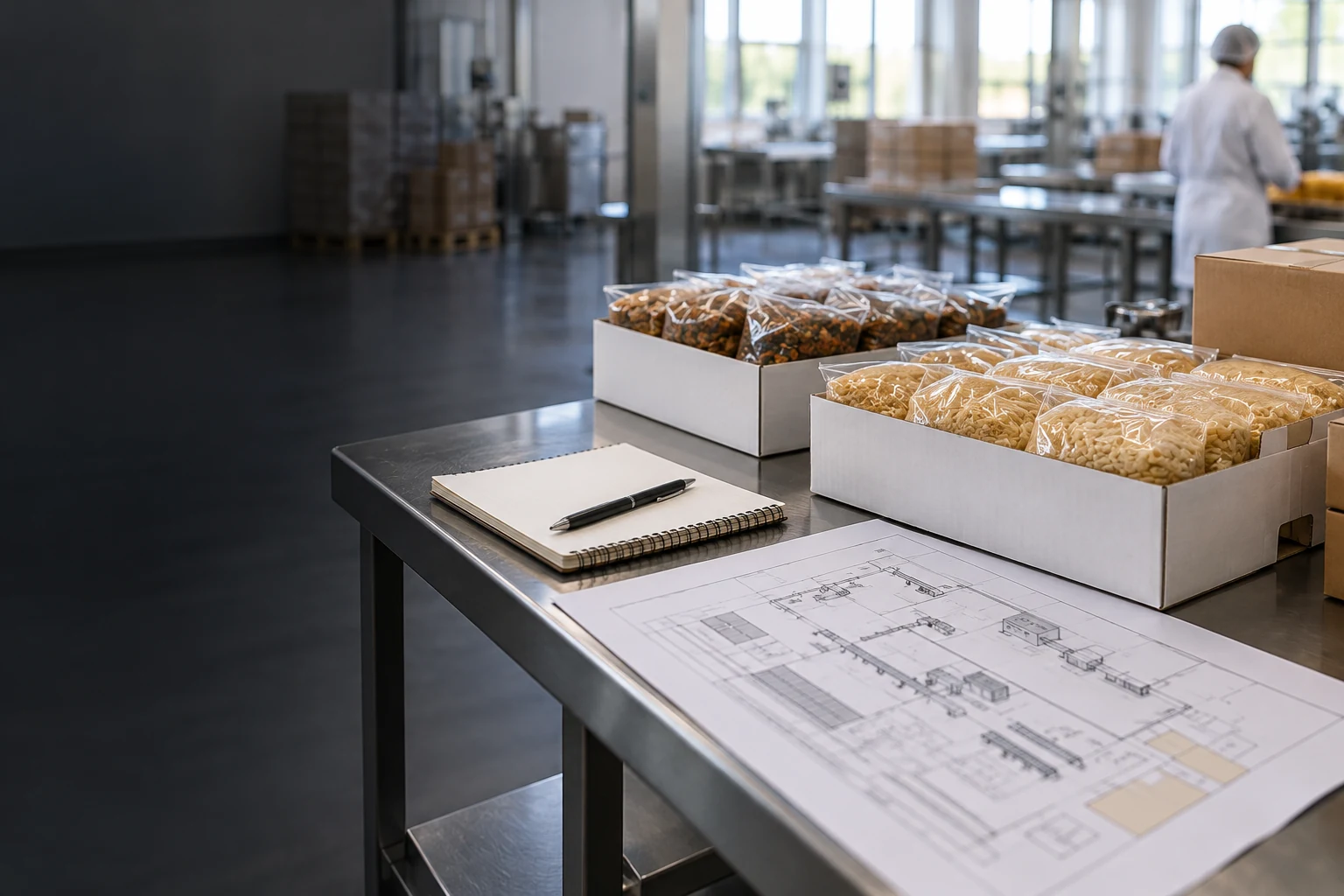
Set food plant performance acceptance by product, pack, operating time and saleable output, distinguishing phased release from full-system acceptance.