Application
High-Shear Mixing & Emulsification
Specify emulsion / dispersion duty, viscosity, shear exposure and qualified product-quality acceptance.
Explore mixing, thermal processing, transfer, cleaning, utilities, controls and packaging interfaces across food and beverage product sectors.
Start with the operating and investment decision
An application is an engineering duty that can occur in several industries. DPS can coordinate the duty with equipment, utilities, controls and project execution. Use this library to define what is happening physically, what limits accepted output, what qualified acceptance requires and how the change affects cash. Then use the relevant industry and project-scenario guide for context.
The application map organizes existing DPS equipment and integration scope. Some technical topics require project-specific discovery and evidence. A process heading does not establish that DPS manufactures every package, validates food processes or owns a specialist OEM technology.
Use these seven groups to identify the operating mechanism and define a measurable duty. The multi-SKU CIP guide includes circuit, resource-cost and cash-flow tools. Preservation, hygienic design and other application discussions require the actual product, package and qualified acceptance basis.
Application
Specify emulsion / dispersion duty, viscosity, shear exposure and qualified product-quality acceptance.
Application
Define ingredient addition, wetting / hydration, dust interfaces, mixing time and representative recipe trials.
Application
Balance complete batch loading, heating, mixing, cooling, discharge and cleaning in the available window.
Application
Coordinate product / package, qualified preservation basis and specialist aseptic package interfaces.
Application
Compare qualified retort / aseptic routes for the actual food, particles, package and release basis.
Application
Define residence, temperature control, tank schedule, cleaning and product-release ownership.
Application
Integrate the specialist process package with utilities, controls, storage and qualified site requirements.
Application
Establish product conditions, gas / liquid interfaces, packaging and specialist equipment acceptance.
Application
Match passages, pump duty and routing to viscosity / particles while protecting the accepted product.
Application
Use real batches, buffer constraints, transfers, filler rates and product-approved holding conditions.
Application
Confirm qualified package formats, changeover, OEM interfaces, downstream capacity and campaign demand.
Application
Map installed circuits, qualified sequence, return / utility duty and measured time / resource economics.
Application
Translate product / site findings into flow, cleanability, zoning and verified changeover requirements.
Application
Define recipe authority, records, exceptions, lot interfaces and actual traceability responsibilities.
Application
Agree operating states, I/O, OEM handshakes, alarms, backup, tests and operator handover.
Application
Map point-of-use conditions, peak demand, recovery, distribution and qualified pressure-system scope.
Application
Measure supply / return, realistic concurrent demand, recovery, controls and cold-side acceptance.
Application
Define point-of-use pressure / quality, peak demand, leakage, source and distribution requirements.
Application
Coordinate source quality / flow, process use, returns, drainage, hygiene and site construction interfaces.
Swipe horizontally to compare all columns ↔
| Requirement | Information to prepare | Why it changes the decision |
|---|---|---|
| Mechanism | What material is mixed, heated, cooled, moved, cleaned or packaged? | Define the actual operating range and interfaces. |
| Physical constraint | Which measured state prevents the required good output? | Separate symptoms, source conditions and downstream limits. |
| Qualification | Which product, cleaning, equipment and site requirements apply? | Assign qualified owner / supplier responsibility and evidence. |
| Economics | What saleable output or actual cash purchase changes? | Use incremental contribution and independently verified baseline savings. |
Swipe horizontally to compare all columns ↔
| Operating trigger | Desired improvement | Financial basis | Read next |
|---|---|---|---|
| Cleaning and transition time | Useful productive time plus verified resource reduction | Approved circuit / sequence and real demand. | Multi-SKU CIP Systems ↗ |
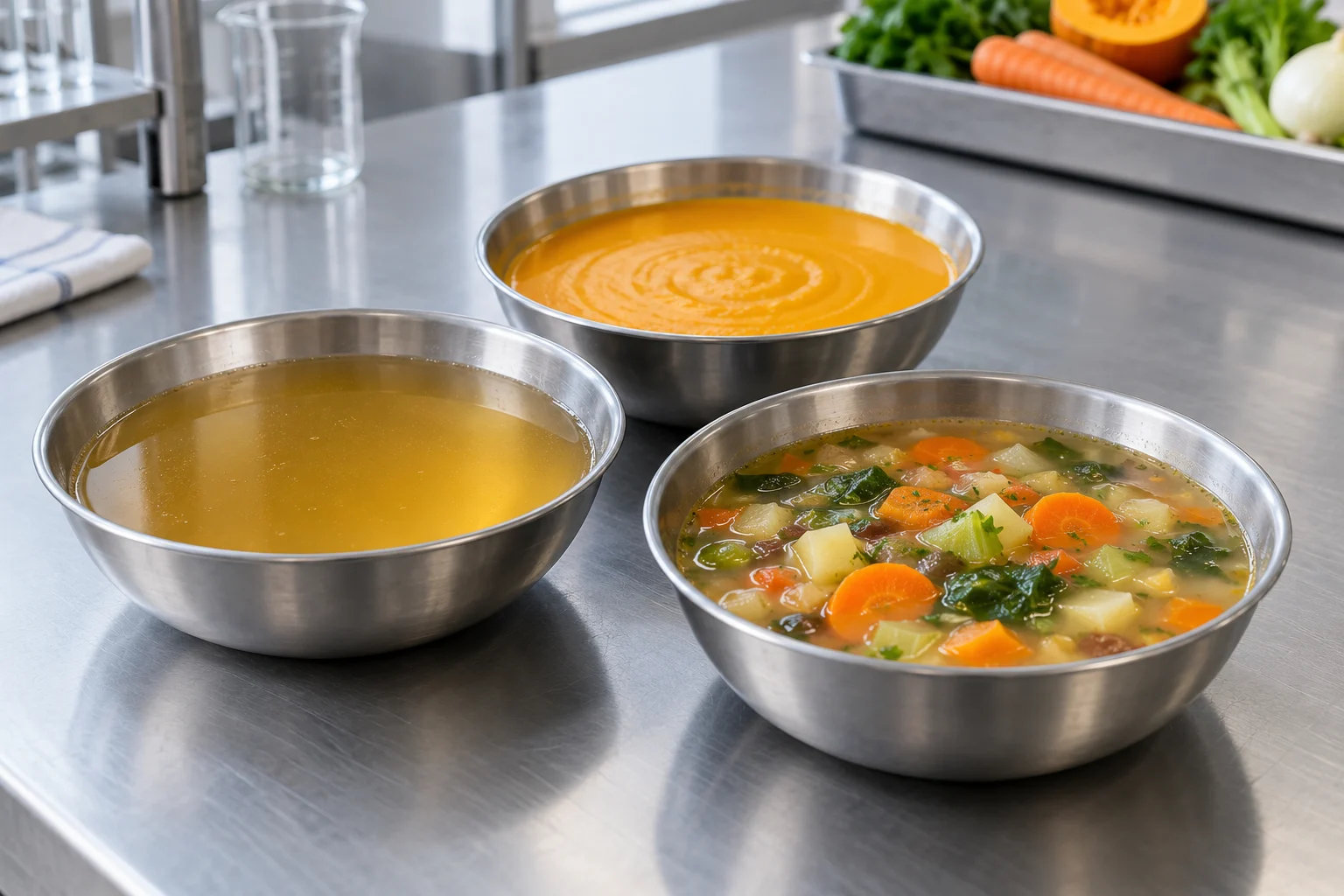
| Batch cooking / cooling | More complete good batches in the window | Full cycle, quality and downstream availability. | Soups, Broths & Stocks ↗ |
| Hydration / recipe consistency | Accepted output and actual purchase balance | Representative recipe trials and supplier / process ownership. | Protein & Sports Nutrition RTD ↗ |
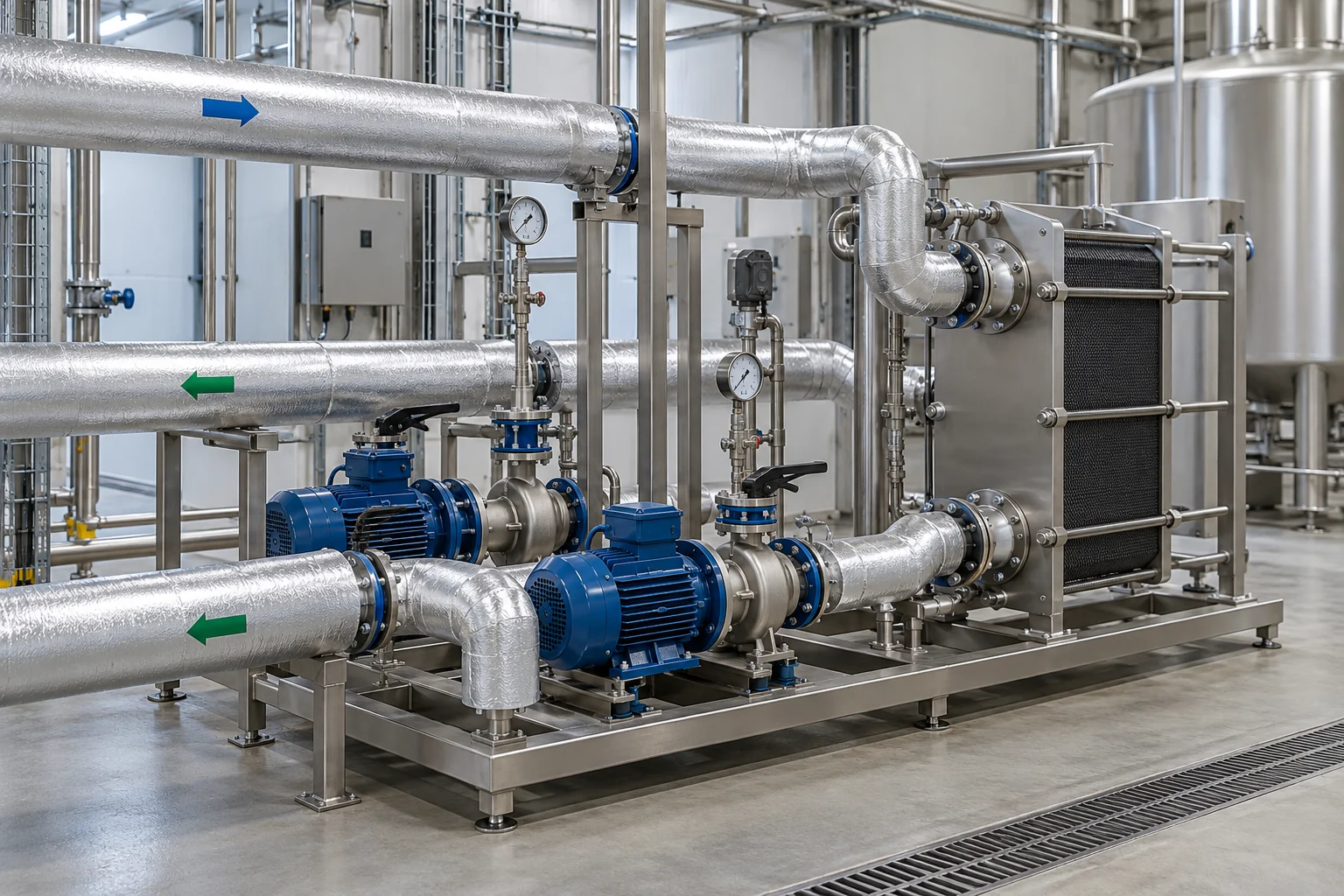
| Cooling, air, water or energy | Required conditions with a right-sized investment | Source / distribution / sequence measurements. | Utility Capacity Constraints ↗ |
Define its input, output, duty, operating sequence and qualified acceptance.
Map the complete production schedule and package handshakes.
Use the same product, quality, package, output and all-in cost boundary.
Illustrative case / USD / pre-tax / five years
The CIP example turns a qualified 18-minute change across two transitions per day into useful released time. Its resource table separates water / chemistry / disposal from energy and payroll so those benefits can be audited without overlap. All numbers are editable screening assumptions.
Includes contingency, startup and working capital
Incremental operating cash before tax
Includes year-one ramp assumption
At 10% annual discount
Net annual benefit ÷ initial cash
Net cumulative gain ÷ initial cash
| Measure | Calculated amount / condition |
|---|---|
| Defined capital scope + site | $390,000 |
| Contingency | $58,500 |
| Startup / shutdown and working capital | $30,000 |
| Total initial cash | $478,500 |
| Good incremental sold kg per year | 90,000 |
| Steady net annual operating benefit | $185,200 |
| First-year net benefit after ramp | $126,040 |
| Five-year NPV at 10% | $169,772 |
Initial cash includes defined capital and site work, contingency, separate startup / transition cost and working capital. Annual benefit is contribution plus independent baseline savings less added fixed cost. Year one scales gross benefits by the stated ramp while paying added fixed cost in full. The model excludes tax, debt, depreciation and asset resale; working-capital recovery defaults to zero.
Swipe horizontally to compare all columns ↔
| Decision lens | Useful comparison | What needs care |
|---|---|---|
| Industry guide | Explains how a particular product family shapes the entire line. | Use when recipe, package or product behavior dominates the enquiry. |
| Application guide | Explains the mechanism, engineering duty and technical interfaces. | Use when the process problem is already recognizable. |
| Project scenario guide | Explains investment alternatives, responsibilities and execution. | Use when the main decision is to expand, move, retrofit or restore performance. |
Swipe horizontally to compare all columns ↔
| Discipline | How it supports the decision | DPS scope |
|---|---|---|
| Process engineering | Define the product / process basis, measured constraint and package interfaces. | Read process engineering ↗ |
| Capital planning | Compare feasible alternatives, scope, timing, cash need and uncertainty. | Read capital planning ↗ |
| Owner representation & project management | Coordinate decisions, supplier boundaries, schedule, cost and change. | Read owner representation & project management ↗ |
| General contracting / installation | Plan field interfaces, trades, outages and integrated installation. | Read general contracting / installation ↗ |
| Configured equipment | Review tanks, cookers, CIP or tumblers / marinators where their duty fits. | Read configured equipment ↗ |
| Automation & controls | Agree recipes, states, interlocks, package handshakes and handover. | Read automation & controls ↗ |
Select only equipment appropriate to the actual duty. Specialist process packages and qualified product / food-safety release are assigned explicitly; service links are not a promise that all disciplines or approvals apply identically to every project.
Prepare the information below, export the assumptions you have modeled, and discuss the unknowns with DPS. An unmeasured input is a question to resolve, not a reason to invent precision.
Checklist and model data stay in this browser until you choose to share them.
The DPS equipment and service guides provide the underlying scope. The application library reorganizes those duties across product sectors without inventing unverified equipment or validation capabilities.
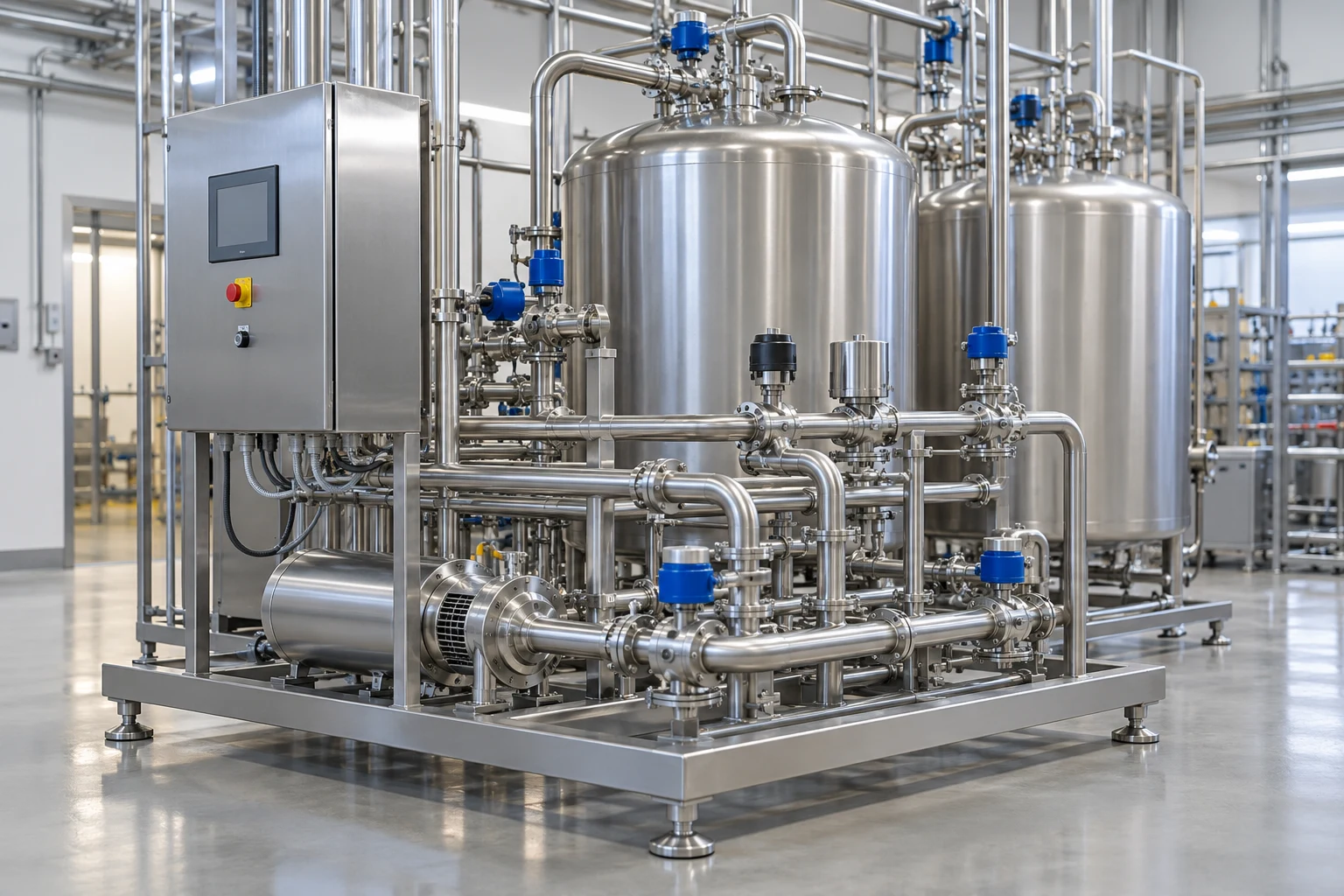
Illustrative budgets and returns are not market price ranges, supplier quotes or achieved DPS customer outcomes. Images are generated engineering concepts, identified in their captions. Confirm site, supplier, product and commercial assumptions for the actual investment.

Follow the food plant design process from owner requirements and concept options to coordinated drawings, bid packages and controlled design reviews.
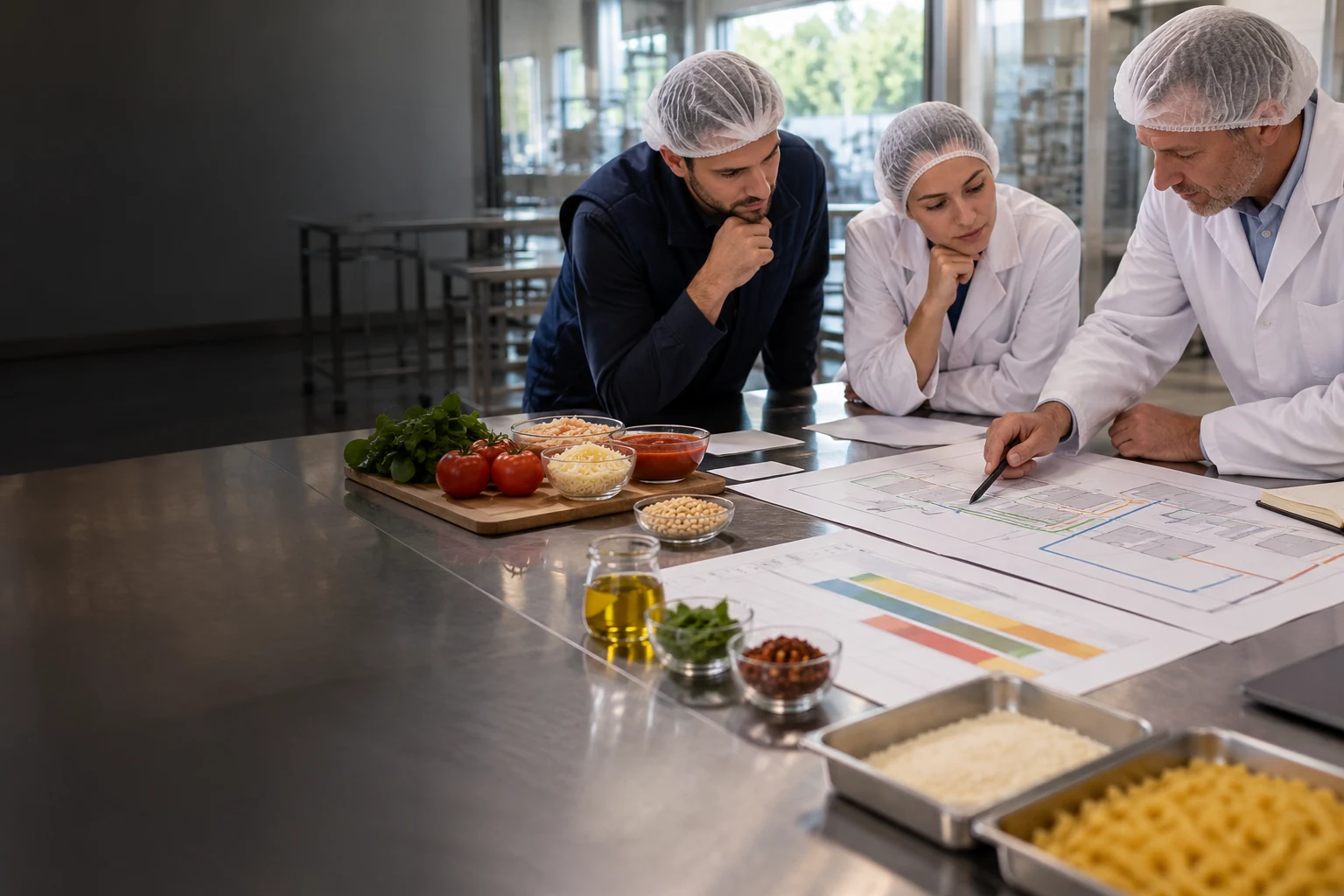
Define a food plant utility design basis using operating events, simultaneous peaks, supply conditions, future capacity and clear package interfaces.

Plan food processing and packaging as one path. Compare rates, batch presentation, buffers, interfaces and staged capacity before selecting equipment.