
In This Article
What CIP Infrastructure Requirements Belong in Process Equipment RFQs?
Specify the cleaning object, product and residue basis, supply and return interfaces, required operating window and sequence responsibilities before selecting process equipment. The equipment supplier and cleaning-system team need a common circuit definition so the purchased machine can be integrated into the intended cleaning arrangement.
A generic “CIP capable” statement does not identify the connected route, required conditions at the object, return duty or acceptance responsibility. Request the supplier information that establishes those interfaces, then reconcile it with plant utilities, controls and the required production-release sequence.
A process machine can be described as suitable for cleaning in place while the owner still has no complete supply route, assigned return or agreed sequence with the plant. Solving those questions after purchase can change piping, controls and utility scope. CIP infrastructure planning should therefore begin in the process-equipment RFQ, before nozzle arrangements and package responsibilities become fixed.
1. Define the Cleaning Object Instead of Specifying a Generic Station
Start with the process-equipment tag and the surfaces or routes included in the proposed cleaning object. State whether the connected transfer line belongs to that object or a separate circuit. Identify the intended product family and the relevant processing condition so the responsible technical team can establish the cleaning basis.
Tetra Pak’s Dairy Processing Handbook connects cleaning arrangements with the equipment and residue characteristics and describes controlled procedure variables. The procurement application is to request object-specific information; it is not to copy a dairy example into a universal cleaning prescription for every food product.
For a hypothetical vessel feeding a transfer line, name both endpoints and identify the equipment excluded from the proposed circuit. The receiving machine may have its own requirements. A circuit drawing that stops at an unnamed room boundary leaves the owner without a defined destination for supply or return work.
Create one RFQ attachment linking the object drawing, product basis, intended method, required production window and supplier information requested. Where the cleaning method itself is not settled, identify that as a design decision before purchase. The owner should not infer a complete cleaning arrangement from a catalog claim while the actual product, circuit and plant interface remain unresolved.
For a connected line, mark which branches belong to each object. An omitted branch can remain outside both supplier drawings even though the intended operation depends on its production and cleaning assignments.
2. Ask the Equipment Supplier for the Interface Data That Changes the Plant
Request the supplier’s proposed cleaning connections, relevant internal flow paths, required conditions and documented limitations for the stated application. Identify which items depend on the final configuration. The project team needs that information to determine the connected infrastructure, not simply a yes-or-no answer to whether the machine is cleanable in place.
Include product drainage and remaining hold-up in the discussion. Ask how product leaves the equipment before the established cleaning sequence and where the displaced material goes. Separate product handling from the later cleaning return. An unspecified destination can create operating and infrastructure work that neither equipment nor station quotation contains.
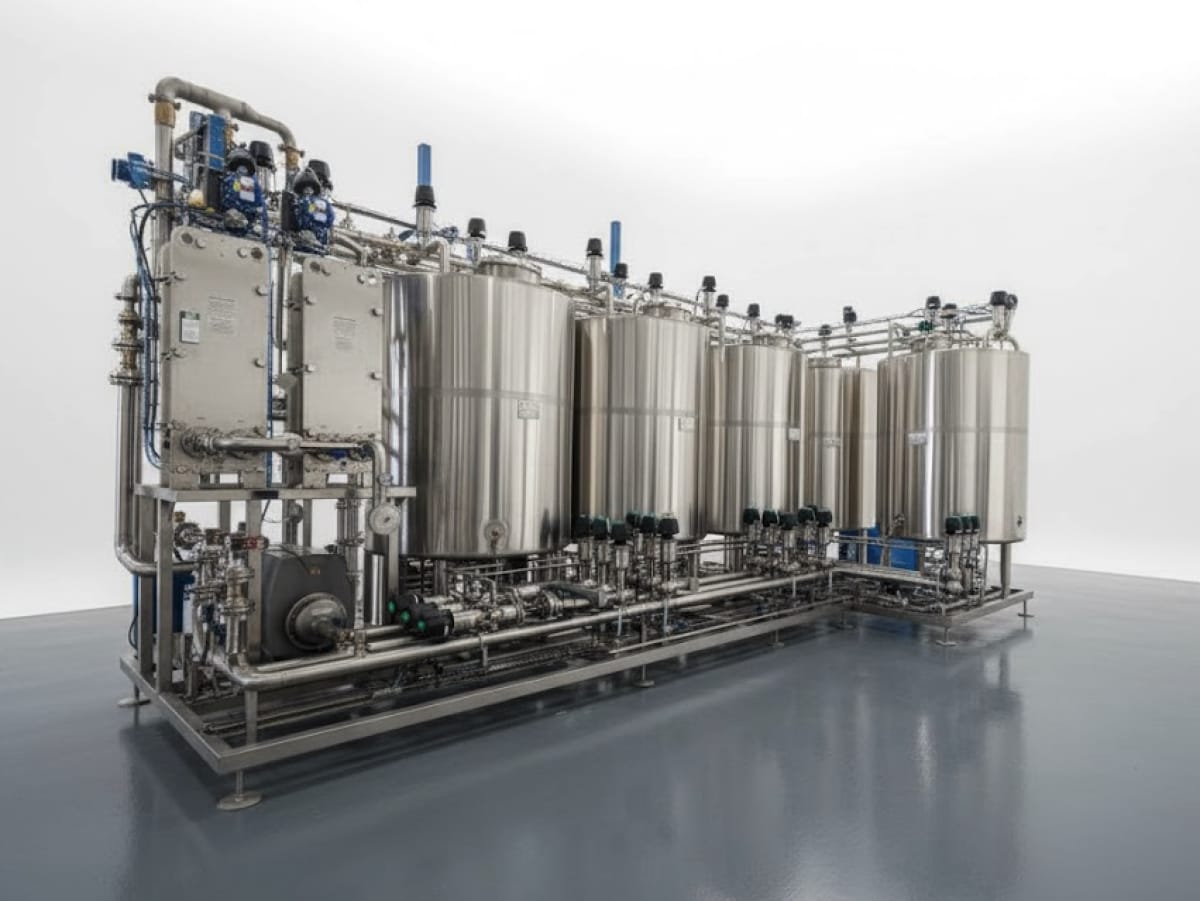
DPS’s CIP offering describes custom systems integrated with process circuits, vessels, piping, controls and existing equipment interfaces. This connected view supports a supplier-data review before selecting the station and final distribution arrangement. It does not establish one standard configuration for every purchased process machine.
Ask the process supplier to identify its boundary on the same drawing used by the cleaning-system team. If a package includes internal cleaning functions, state what it expects from the plant and what returns to it. Record the current drawing revision and outstanding data. That makes an interface change visible before it becomes a field modification after fabrication.
Request the information on the final offered configuration. Data for a similar machine may help an early review, but changes to internals or connections need review against the actual object being purchased.
3. Use Geometry to Show Why One Flow Does Not Describe Every Passage
Consider an invented flow of two liters per second through round passages with internal diameters of forty and eighty millimeters. Convert flow to 0.002 cubic meters per second and use velocity equals flow divided by cross-sectional area, with area equal to π times diameter squared divided by four.
The calculated average velocities are approximately 1.592 meters per second in the forty-millimeter passage and 0.398 in the eighty-millimeter passage. Doubling diameter makes area four times larger, so the same flow gives one quarter of the average velocity. These are geometry results, not recommended cleaning velocities or proof that either passage is adequately cleaned.
The practical RFQ question is what conditions the actual object and connected route require, and where those conditions must be established. A flow figure at the station cannot, by itself, describe every internal passage, branch or receiving configuration. The supplier’s object information and the integrated design must resolve the actual duty.
Do not use this simple model to size a pump or prescribe a cleaning setting. It excludes pressure losses, equipment internals, spray arrangements, branches and the established procedure. Its value is to expose a common procurement mistake: treating one circulation-flow number as an interchangeable specification for every equipment item without checking the object and its complete circuit.
Use internal rather than nominal diameter in this geometry calculation. Record the source of the dimension beside the input so a later equipment or piping change prompts review instead of preserving an unrelated velocity result.
4. Specify Supply and Return as a Complete Circuit
Trace the supply connection to the object and the returning route to its assigned destination. Identify which package owns each section and what information is required to establish its duty. A supply nozzle on the equipment drawing does not assign the return path, handling or control response outside the machine.
Discuss the proposed return arrangement with the object and cleaning-system suppliers. The integrated design must account for the relevant physical and operating conditions, including the route and destination. Do not assume that a product discharge connection automatically provides the intended cleaning return under the actual installation conditions.
Compare a self-contained cleaning function with a plant-connected function only after identifying the different responsibilities. An internal package can still need plant utilities and drain or return interfaces. A plant-served object can still include local components that must cooperate with the station. Neither label resolves the complete boundary on its own.
Use the table as an RFQ allocation exercise rather than a universal design template. Ask each bidder to state the supplied portion and the required plant information. The owner should be able to trace supply, object and return without crossing an unassigned interface. If the trace stops at “by others,” name the responsible package before comparing final equipment proposals.
Show the return destination by tag, not only by room. The receiving function and its operating sequence can matter to the circuit even when the physical return route appears short on the layout.
| RFQ Issue | Equipment-Only Statement | Defined Circuit Requirement |
|---|---|---|
| Object boundary | Machine described as CIP capable | Included paths, connected routes and exclusions identified |
| Supply | Connection shown without complete duty | Supplier requirements and plant endpoint reconciled |
| Return | Return responsibility unstated | Route, destination and relevant operating basis assigned |
| Sequence | Automatic package function named | Object/plant request, readiness and completion ownership stated |
| Acceptance | Package check assumed sufficient | Package and connected-site responsibilities distinguished |
5. Connect the Cleaning Duty to the Actual Production Window
State when each object becomes available for cleaning and when it must be ready for its next assigned operation. Two objects with similar requirements can need different resource arrangements if their windows overlap. The schedule should show the required duties and shared support rather than assume each machine can clean whenever it is idle.
Ask the equipment supplier which information is needed to establish the proposed duty under the stated application. The responsible team determines the actual procedure and verification; the project uses that established basis to evaluate utility demand, connected resources and scheduling. Do not insert arbitrary cleaning times simply to make a production calendar fit.
DPS process engineering includes process documentation, equipment information, layout and simultaneous utility analysis. For equipment selection, these deliverables should connect the object register to the infrastructure actually supporting the proposed sequence.
For example, if a vessel and packaging package require overlapping cleaning duty before the next campaign, identify whether they have independently usable resources and adequate shared support. A second connection does not automatically create a second available cleaning resource. Include the resource assumption in the RFQ discussion before the equipment layout or control boundary makes the intended schedule difficult to achieve.
Write the assumed overlap into both supplier discussions. If one proposal expects exclusive access to a shared resource while the calendar assumes concurrent duties, the discrepancy should change the option before purchase.

6. Prepare Future Equipment Connections Before They Become Field Surprises
DPS describes an Albertsons CIP and compressed-air upgrade using prefabrication and staged connections, with three planned interruptions each under four hours and no reported unplanned interruption. The execution depended on prepared interfaces and production coordination.
For an owner buying process equipment, the application is to identify the later connection work before purchase. A new object may need a changed route, additional resource or control handoff with an existing system. Those requirements belong in the procurement and installation scope even when the equipment itself can be delivered earlier.
Define a connection record from the RFQ drawing: installed endpoint, receiving system, preparation possible beforehand and work that requires the relevant operating state. Assign the necessary check before the affected circuit returns to its defined duty. A future branch shown on a drawing is not automatically a ready connection unless its design and operating responsibility are established.
In a greenfield plant, apply the same interface discipline to construction stages. The equipment supplier, distribution installer and controls team may complete work at different times. Record which complete path is available for the intended checks and operation. The published case offers a staged-preparation lesson; it does not establish a universal interruption allowance or prove that any new equipment can connect without planned downtime.
Identify the drawing revision used to prepare a future connection. A changed equipment endpoint can invalidate an otherwise carefully prefabricated assembly, making information release as important as preparing the physical parts.
7. Define Request, Readiness and Release Across the Object Boundary
The process equipment and cleaning system need compatible meanings for circuit selection, readiness, active duty and completion. Identify who requests the operation and which party controls the object’s assignment. A machine stopped for production is not necessarily available for cleaning.
DPS automation and controls describes process review, narratives, recipes, batch sequences and integration. For CIP infrastructure planning, the useful output is a narrative connecting the object’s physical duty with the required plant actions and relevant unavailable states.
Ask suppliers to review a competing request: product transfer is still assigned while a cleaning request arrives. The actual design establishes the appropriate response; the requirement should name ownership and the evidence needed to resolve the assignment. Similar signal names in two controllers do not establish that their meanings or actions agree.
Separate sequence completion from the responsible release decision where the operation requires that distinction. The project team establishes what evidence and checks are needed for the actual product and installation. Procurement must assign the required information and connected demonstration so the owner is not left with a station that announces completion while the receiving equipment’s agreed release conditions remain outside every supplier’s scope.
Ask who handles an incomplete sequence after an interruption. The answer should connect operator information, equipment state and the permitted next action rather than rely on an unspecified manual reset instruction.
| Unresolved Item | Required Response | Owner Consequence |
|---|---|---|
| Internal and connected object boundary | Supplier marks included paths and required plant interfaces | Reconcile circuit scope before fixing equipment configuration |
| Product discharge and hold-up | Defined handling/destination basis for the application | Assign product and later cleaning interfaces separately |
| Competing production/cleaning request | Agreed assignment and response ownership | Include narrative and relevant acceptance scenario |
| Existing circuit connection | Prepared endpoint and staged installation requirements | Include actual field work before committing the purchase |
8. Select Equipment with Its Cleaning Interfaces Already Assigned
Compare the equipment alternatives against the same product basis, circuit boundary, required window and infrastructure endpoint. A machine with a lower purchase total may require different plant connections or support. A more extensive package may include functions already allowed elsewhere. Normalize those differences before deciding which option meets the intended operating system.
Bring the equipment RFQs, current process drawings, product information and available infrastructure data into a DPS review. Ask for the object requirements, supply and return duties, controls boundary and installation interfaces to be reconciled before final equipment selection. The aim is a coordinated procurement attachment, not a generic cleaning-system brochure.
Keep unresolved procedure requirements visible with the responsible technical owner and their decision date. Equipment should not be selected using a cleaning assumption that the actual application has not established. Equally, distinguish an open document detail from an interface uncertainty that could change the required configuration or supporting plant scope.
Carry the agreed attachments into installation and acceptance preparation. If the supplier revises the internal route, connection arrangement or sequence, review the affected circuit rather than accept the change as a nominally equivalent machine substitution. This preserves the connection between the equipment purchase and the infrastructure the owner has planned to serve it, reducing the likelihood that cleaning integration becomes a separate redesign after delivery.
For a late substitution, ask the cleaning-system reviewer to sign off the affected interface. Matching production throughput does not establish that the replacement has the same cleaning route, return requirements or controls response.
FAQ
Is a CIP-capable statement enough for equipment selection?
No. Define the included object, connected routes, supplier requirements, supply/return responsibilities and sequence boundary for the actual application.
Should one cleaning flow be specified for all equipment?
Not without an object-specific basis. Different passages and configurations can produce different conditions. The geometry example illustrates this distinction without prescribing cleaning requirements.
Who should define the cleaning procedure?
Assign the relevant technical, supplier and food safety responsibilities for the actual product and installation. Procurement should obtain the established requirements rather than invent settings.
What return information belongs in the RFQ?
Identify the supplier boundary, proposed route and destination, relevant operating basis and required plant information. Reconcile those duties with the connected-system design.
How should a new machine connect to existing CIP?
Define the object duty, resource and utility implications, physical endpoint, control handoff and staged connection work before purchase. An existing spare connection alone does not establish suitability.
What should be checked before approving the final order?
Reconcile the product basis, object drawing, supply/return duties, operating window, controls and acceptance responsibilities. Assign unresolved items that could change the configuration or infrastructure scope.
Sources and Calculation Notes
Checked October 27, 2026. DPS case statements are attributed company reports, not independently audited performance. The numerical illustration is hypothetical; concept photographs are not project documentation.
- DPS — CIP Systems — Custom system and receiving-equipment interface scope.
- DPS — Process Engineering and Design — Equipment documents, layout and simultaneous utility review.
- DPS — Automation and Controls — Narratives and connected sequencing.
- DPS — CIP and Air Upgrade — Prepared staged-connections example; planned interruptions retained.
- Tetra Pak — Cleaning of Dairy Equipment — Object and residue-dependent cleaning considerations; no universal procedure or numeric settings adopted.