
In This Article
Explore This Topic
Site Infrastructure
Cleaning & Utility Integration
Production Demand & Capacity
QUICK ANSWER · UTILITY DESIGN BASIS
What Should a Food Plant Utility Planning Package Define?
Define each utility’s required conditions, normal and peak demand, event duration, operating sequence, connection boundaries, future cases and evidence status before freezing the engineering scope. Separate calculated process duty from installed supply capacity and provider availability. The package should allow process, utility, controls and facility teams to work from the same assumptions and identify which values still need supplier confirmation or measurement.
A total of equipment nameplates is not a complete utility design basis. Neither is an annual consumption estimate. The design must understand when loads occur and the conditions required at the point of use.
A new food plant may have a detailed equipment list while its utility scope remains surprisingly vague. Different suppliers provide different units, a cleaning demand sits outside the process estimate, and the facility team applies an unexplained growth allowance to a total that already contains future loads.
This guide explains the food plant utility planning deliverable that prevents those assumptions from drifting apart. It focuses on the demand and capacity basis used for engineering, rather than ranking utility equipment or presenting a universal sizing factor.
1. Define the Purpose and Boundary of the Utility Basis
State whether the package supports site screening, conceptual capital approval, detailed design or a later verification activity. The required information and confidence differ by stage. A preliminary basis can be useful if its assumptions and limitations remain visible.
Identify the utilities and areas covered. Include shared systems and the interfaces with production, packaging, cleaning, building services and owner-managed equipment as appropriate. Record the boundaries of excluded work so those loads do not disappear from the overall project.
The basis should answer which operating cases the systems must support and what evidence establishes each demand. It should also identify who approves the production schedule and who confirms supply conditions. Those are different responsibilities, even when one engineering team coordinates the work.
Give the package an issue status and revision process. A load schedule that is accurate on the day it is created can become misleading if later equipment or campaign changes never reach the utility designer.
2. Establish Consistent Units and Reference Conditions
Use a controlled set of units and define the reference conditions behind supplier values. Volume flow, mass flow, thermal duty, electrical demand and annual energy are different quantities. They cannot be added or substituted merely because they describe the same utility system.
For compressed gases, identify the basis associated with a quoted flow. For heating and cooling, define the supply and return conditions used in the duty. For water, state whether a value is instantaneous flow, an event volume or a daily total. Ask the responsible specialists to reconcile incompatible supplier information.
Keep the original source value and the documented conversion when data is translated into the project standard. This gives the reviewer a way to check the calculation and avoids losing important qualifications during spreadsheet entry.
Do not infer missing conditions from a familiar unit label. A number copied from a brochure may refer to a different product, operating mode or service condition. Mark it as unresolved until the relevant supplier or engineering review establishes the intended basis.
3. Use the Production Calendar to Define Utility Events
Build the load schedule around actual activities: preparation, processing, packaging, cleaning, startup and planned transitions. Identify which activities run continuously, which occur by batch and which happen only between campaigns.
Use the same product mix and operating calendar as the plant capacity model. If the production plan changes from long campaigns to frequent short runs, the utility profile may change even if annual saleable output stays similar. The schedule should expose that relationship.
Assign ownership of operating-sequence assumptions. A designer may propose that two events occur at different times, but the operation must be able to maintain that sequence. If the sequence is essential to capacity, it needs appropriate procedures, controls or other provisions defined in the project.
DPS’s process-engineering and utility-load coordination can help bring these activities into one planning basis. Ask the initial scope to identify important simultaneous cases and the missing information needed to develop them.
4. Connected Load vs Normal Demand vs Peak Demand
Different demand measures answer different questions. Record their definitions rather than placing several numbers in a column labeled “capacity.” The team must understand what is being compared when it reviews equipment data, the supply concept and the site connection.
| Measure | Meaning in the Project | Do Not Confuse With |
|---|---|---|
| Connected requirement | Defined sum of individual users under their stated conditions | A proven simultaneous operating peak |
| Normal demand | Demand for a defined routine operating case | An annual average or every possible event |
| Peak demand | Maximum demand in a reviewed concurrent scenario | Installed capacity without further engineering |
| Event consumption | Total quantity used during a defined event | The instantaneous rate during that event |
| Annual consumption | Quantity over the operating year | Connection or distribution capacity |
These definitions should be project-specific and consistent across the documents. An unexplained diversity factor cannot compensate for an operating schedule that nobody has reviewed.
5. Request Supplier Data with the Conditions Attached
Ask each equipment supplier for utility information covering the relevant operating modes. A normal production value alone may omit startup, product transition or cleaning requirements. Identify minimum conditions at the connection as well as the expected quantity.
Record the product, duty and equipment configuration associated with the information. A utility figure from another model or a different recipe may inform screening but should not silently become confirmed design data.
Request the time profile or event description where intermittent demand matters. A short event can have a different effect on the system from the same volume used slowly. The utility engineer should decide what detail is needed for the selected concept.
Use a data-status field to distinguish preliminary, proposal and approved information under the project’s document rules. When confirmed supplier values replace assumptions, show the difference and review the affected capacity, distribution and budget decisions.
6. Define Conditions at the Point of Use
The process needs service at its connection, not merely a favorable rating at the supply machine. Pressure, temperature, quality and flow conditions may change across distribution and control elements. The basis should identify the boundary at which each requirement applies.
Separate user requirements from supply assumptions. A process package may require particular conditions while the site supply has different characteristics. The on-site system must bridge that difference through a defined arrangement developed by the responsible specialists.
Identify who owns the connecting line, final isolation, instrumentation and control interface. If each party assumes the other will provide the last connection, a complete-looking equipment list can still leave an installation gap.
Maintain the required conditions through the design reviews. A concept that balances total flow may still be unsuitable if a critical user cannot receive the required conditions during the relevant event. Capacity arithmetic and distribution design are related but separate parts of the engineering.
7. Include Cleaning as an Operating Mode with Its Own Profile
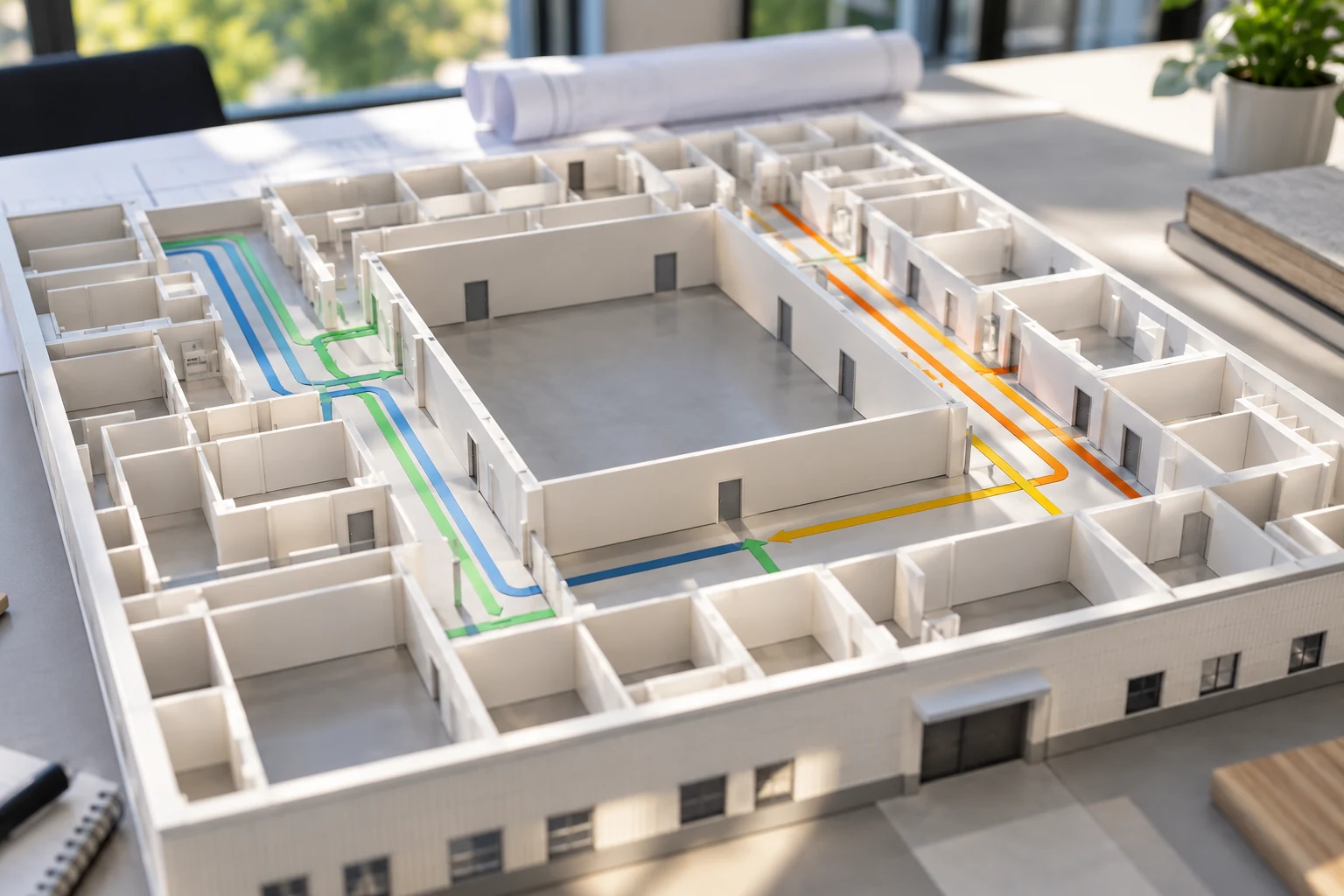
Define the cleaning concept and the circuits or activities expected to occur together. Identify which parts of the assumption are approved and which require further quality or supplier input. Do not insert a generic cleaning allowance without explaining what it represents.
Cleaning can create utility demands with different timing and conditions from normal production. Review the sequence, duration, supply and return assumptions with the responsible disciplines. The planning basis should expose possible overlap with other operations.
Keep cleaning approval separate from utility availability. A system capable of delivering a recorded flow or temperature does not by itself establish that a cleaning procedure is appropriate for the product and equipment. The relevant quality and technical review remains necessary.
If the design relies on staggered cleaning, state the operating rule and its consequences. The owner needs to know whether that rule limits campaign flexibility or changes the launch schedule. A theoretical stagger that operations cannot maintain should not be used to reduce the design case silently.
8. Review Startup and Transition Cases Separately
Startup can involve activities that do not occur in the normal running case. Identify the process sequence and the utility demands that may overlap when the plant begins a shift or returns from a planned interruption. Use supplier and engineering input rather than assuming the normal demand applies unchanged.
Consider transitions between product families or operating modes. The profile can depend on emptying, heating, cooling, cleaning and refilling activities. Record which events are part of normal planning and which are abnormal conditions requiring a separate review.
The basis should say whether simultaneous startup of multiple users is an allowed case. If the concept depends on a controlled sequence, identify the control and operating requirements needed to maintain it. Do not claim a lower peak simply because a spreadsheet schedules events conveniently.
Carry the important startup assumptions into commissioning and operational-readiness planning. They provide a useful reference for later checks, although the actual verification methods and acceptance responsibilities must be defined in the project scope.
9. Calculate an Illustrative Time-Based Water Profile
Three invented users demonstrate the difference between connected flow, peak flow and average consumption. User A draws forty gallons per minute for minutes zero through twenty. User B draws thirty from minute ten through thirty. User C draws sixty from minute thirty through forty.
The defined sequence never runs all three together. Its maximum concurrent flow is seventy gallons per minute during minutes ten through twenty. The total event volume is 2,000 gallons: 40 × 20 plus 30 × 20 plus 60 × 10. Over forty minutes, the average is fifty gallons per minute.
| Time Interval | Active Users | Combined Flow | Interval Volume |
|---|---|---|---|
| 0–10 minutes | A | 40 gal/min | 400 gal |
| 10–20 minutes | A + B | 70 gal/min | 700 gal |
| 20–30 minutes | B | 30 gal/min | 300 gal |
| 30–40 minutes | C | 60 gal/min | 600 gal |
| Total | Defined 40-minute event | 50 gal/min average | 2,000 gal |
The simple example ignores pressure, quality, transients, storage and other engineering considerations. It illustrates the demand basis only and does not establish the required pump, tank, pipe or service size.
10. Visualize Why Three Capacity Numbers Can All Be Different
The connected sum in the teaching example is 130 gallons per minute. The reviewed simultaneous peak is seventy and the event average is fifty. Each is a valid description of a different quantity under the stated assumptions. Substituting one for another without explanation changes the question being answered.
Illustrative demand measures · gal/min
Connected sum · 130
Defined concurrent peak · 70
Forty-minute event average · 50
Bars use 130 gal/min as the scale. Original example; no industry diversity factor is implied.
DOE’s compressed-air sourcebook discusses demand profiles and the interaction between supply and demand. The broader lesson is to preserve time and conditions in the analysis. The engineering method and required information still depend on the actual utility and process.
11. Keep a Load Register with Evidence and Ownership
Each user should have a stable identifier, operating modes, demand values, units, reference conditions and data source. Add the equipment or process reference and the date or issue status. The register should make missing information visible rather than replacing it with an unexplained default.
| Field | Question Answered | Common Error Avoided |
|---|---|---|
| User and boundary | Which package and connection? | Duplicate or missing consumers |
| Mode and duration | When does the demand occur? | Confusing an event with continuous use |
| Units and conditions | What does the value describe? | Incompatible quantities or reference bases |
| Evidence status | Measured, assumed or supplier-confirmed? | False certainty |
| Owner and next action | Who resolves the remaining question? | Unassigned data gaps |
Use controlled references to detailed calculations. A reviewer should be able to follow a total back to the individual users and the operating scenario that makes them concurrent.
12. Use Measurement to Improve Assumptions Where It Is Relevant
For an existing operation or a genuinely comparable reference, appropriately planned measurements can help characterize demand and variability. Define what is being measured, where, over which operating events and with what limitations. A convenient meter location may not describe the user boundary needed for the new design.
Do not treat one favorable operating period as representative of every product and campaign. Link measurements to the production log and event schedule. Explain the differences between the reference operation and the planned facility.
ADF’s published packaging expansion case describes reviewing several utilities and identifying bottlenecks. It is a competitor example of the need for operating information, not a DPS case or evidence that the same solution applies to a new plant.
Where measurement is unavailable, record the alternative evidence and the investigation needed. The owner can then decide whether to proceed with a transparent allowance or improve the basis before committing to a consequential supply or infrastructure choice.
13. Separate Process Duty from Installed Supply Capacity
A calculated user demand is not automatically the final installed capacity. Distribution effects, operating control, storage, reliability requirements and other design considerations may influence the selected arrangement. The responsible utility engineer should document that progression.
Ask for a capacity reconciliation showing the defined demand cases, the allowances or provisions added and the reason for each. This makes it possible to see whether a future load or uncertainty allowance has been applied more than once.
Avoid the opposite error of treating every connected user as simultaneous without reviewing the schedule. That may produce unnecessary capital, but removing capacity requires an operating basis that can be maintained. The decision should be evidence-based rather than driven by a preferred equipment size.
The design basis is where that reasoning remains visible. It should describe what the system must support and the constraints on operation, while the detailed selection and distribution design develop the means of meeting those requirements.
14. Define Standby and Continuity Requirements Explicitly
Standby equipment is a provision for a defined operating or reliability objective, not another routine consumer to add to every demand total. State the event the arrangement is intended to address and the level of operation expected during that event.
The owner should explain the business consequence of an interruption, while the relevant specialists assess the appropriate technical response. Storage, controlled shutdown, alternate supply and equipment redundancy can serve different purposes. They should not be treated as interchangeable labels.
Keep normal operating cases separate from degraded or backup cases. A facility may plan to stop some activities during an interruption rather than maintain every process at full output. If so, that operating rule must be explicit and compatible with the process and quality requirements.
Show the associated scope and cost separately. This allows management to evaluate continuity provisions against the consequences they manage, rather than accepting an unexplained allowance that expands every utility package.
15. Distinguish Future Demand from a General Growth Allowance
Describe later phases using their own products, capacity and operating schedule. Identify the additional utility users and the cases in which they overlap with the initial operation. A named future line is more informative than an arbitrary percentage added to every load.
Separate spatial provisions from installed capacity. Reserving a route or utility-room area may preserve an expansion option without buying the complete future system immediately. Conversely, some infrastructure choices may need early development because they are difficult to change later.
Record what the owner has actually approved. A possible future business opportunity should not silently become a firm installed requirement, and an approved expansion strategy should not disappear from provider inquiries. The basis should keep the commercial status visible.
DPS’s phased capital planning can help connect these decisions with the broader investment strategy. Ask the study to show which provisions belong in the first phase and which decisions can remain contingent on a defined growth milestone.
16. Include Quality and Sanitary Requirements at the Utility Interface
Utility suitability includes the conditions required for its intended application. Water used in ingredients or food-contact activities may raise different questions from a closed utility circuit. Identify the uses and ask the qualified specialists to establish the applicable requirements.
21 CFR 117.37 addresses sanitary facilities and controls for applicable food operations. The design-basis implication is to keep water supply and plumbing requirements in the coordinated scope, rather than assuming that available volume alone establishes suitability.
Record treatment, separation, monitoring or other provisions only as required by the actual project review. Do not add a generic package merely because it appears in another facility. Equally, do not remove a requirement because a provider describes the incoming supply as suitable for general use.
Make the approval roles clear. The utility designer, process specialist, quality team and provider may each contribute different evidence. Their conclusions need to be reconciled at the defined connection boundary.
17. Coordinate Distribution Routes and Service Access
The load schedule should be developed alongside the facility concept. Major routes, connection locations, access and future installation paths can affect the practical utility arrangement. Leave space for the support functions instead of treating them as lines that can always be drawn later.
At concept stage, identify major corridors and interfaces without pretending detailed routing is complete. Mark constraints that require surveys, supplier information or coordination with structural and other building disciplines.
Check the expansion case at the same time. A future supply package is difficult to add if its access route or connection area becomes occupied by another permanent function.
18. Review Schedule Assumptions with Operations and Controls
When a lower demand case relies on sequencing, the operating and control requirements deserve review. Identify who initiates the events, which conditions permit them to run and what happens if the planned sequence is interrupted.
Do not assume that a written procedure alone provides the same control as an engineered interlock, or that every planning rule needs automatic enforcement. The appropriate arrangement depends on the consequence and the operation. The project team should define it deliberately.
Preserve the assumptions in the relevant narratives and handover material. An operator should not discover after launch that the system cannot support a combination of activities the business routinely expects to perform.

19. Freeze a Coordinated Scope, Not an Isolated Spreadsheet
Before committing major utility packages, review the current equipment list, process basis, operating scenarios, supply assumptions and connection boundaries together. The point is to identify consequential gaps, not to claim that every detailed value is already final.
List unresolved information and its effect on the decision. Some items can be carried into detailed design; others may control the supply concept or infrastructure commitment. The owner should understand which assumptions are being accepted and what would happen if they change.
Use the same issue references in the estimate, provider inquiries and design documents. GAO’s estimating guidance reinforces the value of a technical baseline and documented assumptions. Here, those practices help keep the project’s cost and capacity discussions aligned.
After the gate, apply change control. A new user, product or cleaning sequence should trigger a review of the affected scenarios rather than being added informally to a package whose capacity basis is no longer current.
20. Specify the Utility Planning Deliverable
A useful scope describes the information the owner will receive, not just an instruction to “size utilities.” Require a basis that the project team can review, update and hand to the disciplines responsible for detailed design.
| Deliverable | Purpose | Review Question |
|---|---|---|
| Load register | Identify users, modes and evidence | Can totals be traced to source inputs? |
| Scenario schedule | Define concurrency and duration | Can operations maintain the assumed sequence? |
| Condition and interface register | Define requirements at the connection | Are supply and package boundaries reconciled? |
| Capacity reconciliation | Explain the selected design cases and provisions | Are growth and uncertainty counted once? |
| Open-item and revision log | Control changes and missing evidence | Who resolves the next decision? |
Keep the package readable enough for the owner’s operations and capital teams. Detailed calculations can sit behind a summary, but the assumptions that control the investment should remain visible.
The scope should also identify the engineering activities outside the planning package. A demand schedule does not automatically include every electrical, hydraulic, structural or process review needed for a complete installation. Name the responsible disciplines and the information they need from the utility basis. This avoids a handover in which each party receives a total but nobody has accepted the work required to develop it into a coordinated design. The owner can then commission the next activities deliberately and budget their interfaces without assuming that a broad planning label contains them all.
21. Use the Basis to Commission the Next Engineering Step
Bring DPS the product and capacity plan, equipment information, operating schedule, provider responses and candidate layout. Ask for a defined scope connecting process demand, utility interfaces and the facility concept, with the remaining investigations clearly assigned.
The resulting basis should support the next decision: a provider inquiry, an infrastructure comparison, detailed engineering or a capital approval. It should not imply that a preliminary load total selects equipment or establishes process compliance.
When the operating concept becomes firmer, update the basis and carry it into procurement and verification planning. The useful outcome is a utility scope whose capacity and conditions can be explained from the business requirements through to the individual users.
22. Food Plant Utility Planning FAQ
Is connected load the same as peak demand?
No. Connected load is a defined sum of individual requirements; peak demand is the reviewed concurrent demand for an operating scenario. The relationship depends on timing and conditions. Do not reduce the connected sum with an unexplained factor or assume every user always runs together.
Can annual consumption be used to size a utility connection?
Not by itself. Annual quantity does not show short-duration demand, concurrency or conditions at the point of use. Develop a time-based operating basis and use the appropriate engineering review to establish the connection and distribution requirements.
Does the water example imply a seventy-gallon-per-minute supply?
No. It only calculates the peak in an invented event schedule. Pressure, quality, storage, transients, reliability and distribution were not designed. The example does not establish a pump, tank, pipe or service size.
How should cleaning be included?
Describe the activities, duration, conditions and allowed overlap with production or other cleaning events. Identify the approved quality assumptions and missing supplier data. If the capacity basis relies on staggering, define the operating and control provisions needed to maintain that sequence.
Should every utility include the same growth percentage?
No universal percentage is appropriate. Define future users and operating scenarios, then evaluate the provisions needed. Separate reserved space and connection routes from installed capacity. Avoid adding a generic allowance on top of future loads already included in the schedule.
How does standby equipment enter the basis?
Define the event it addresses and the operation expected during that event. Standby provision is not automatically another routine demand. Keep backup and degraded-operation cases separate from normal operation and document the appropriate technical and business rationale.
What should happen when supplier data changes?
Update the controlled register, identify the difference from the previous assumption and review affected scenarios, distribution, estimate and provider inquiries. Keep the data status visible so preliminary information is not used as if it were a final project-specific value.
What can DPS help coordinate?
DPS can connect process requirements, utility-load planning, facility layout and phased capital decisions. Agree the deliverables and responsibilities for the project. The planning basis should explain the next engineering decision and the evidence still required.
Sources and Calculation Notes
Research checked October 27, 2026. Numerical illustrations and decision examples were prepared for this article; they are not supplier quotations, market benchmarks or DPS project results. Project-specific requirements and responsibilities belong in the agreed scope.
- U.S. DOE — Improving Compressed Air System Performance, Third Edition. Load profiles, supply and demand, peak loads and storage concepts.
- eCFR — 21 CFR 117.37. Sanitary facilities, water supply and plumbing requirements where applicable.
- U.S. GAO — Cost Estimating and Assessment Guide. Scope, technical baseline, assumptions, risk and estimate updates.
- ADF — Packaging Line Expansion. Published competitor example of utility capacity review; not a DPS case.
- DPS — Capital Planning and Feasibility. Conceptual layouts, equipment and utility requirements, installed-cost planning and phased investment evaluation.