- Client
- Albertsons
- Location
- Operating Food Facility
- Project Type
- Dairy & Food Processing
The Assignment
Renew the Utilities Behind Production
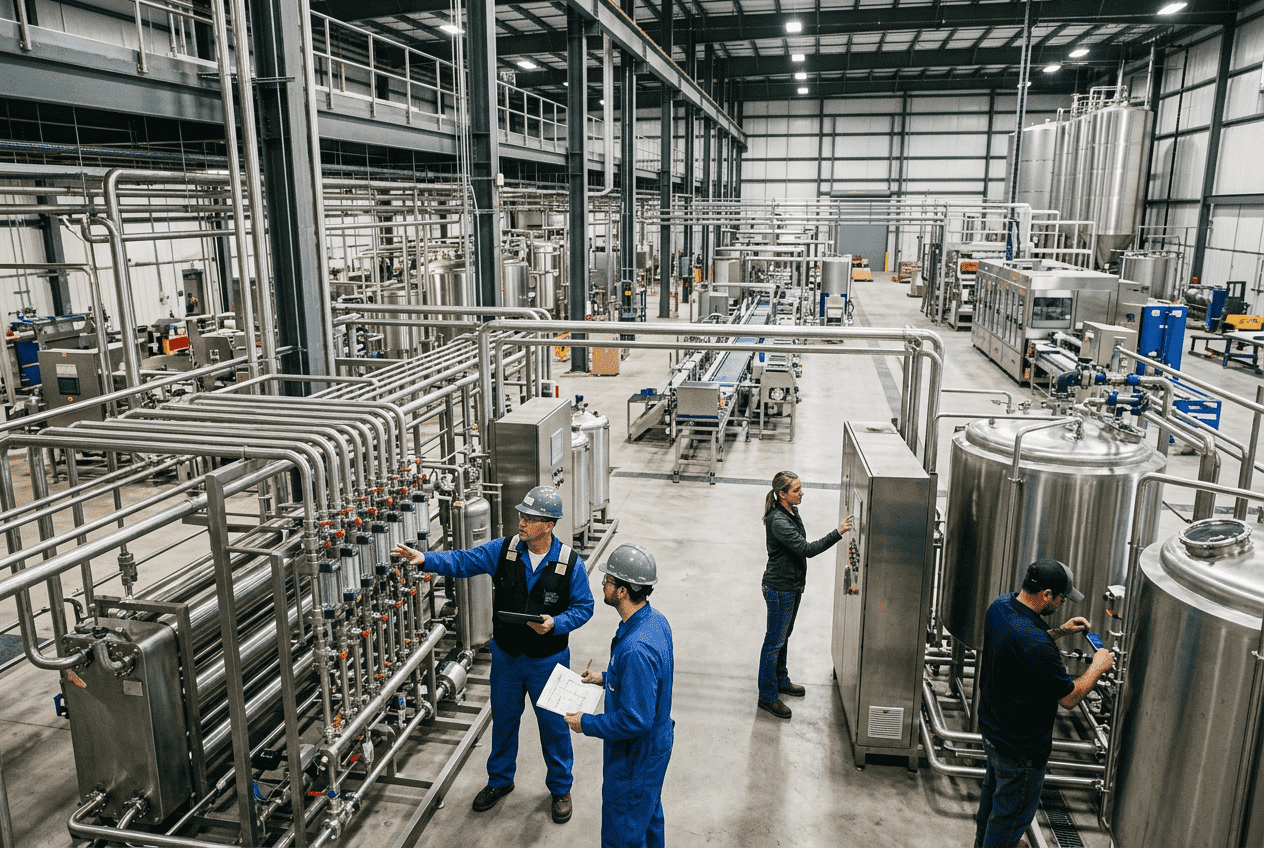
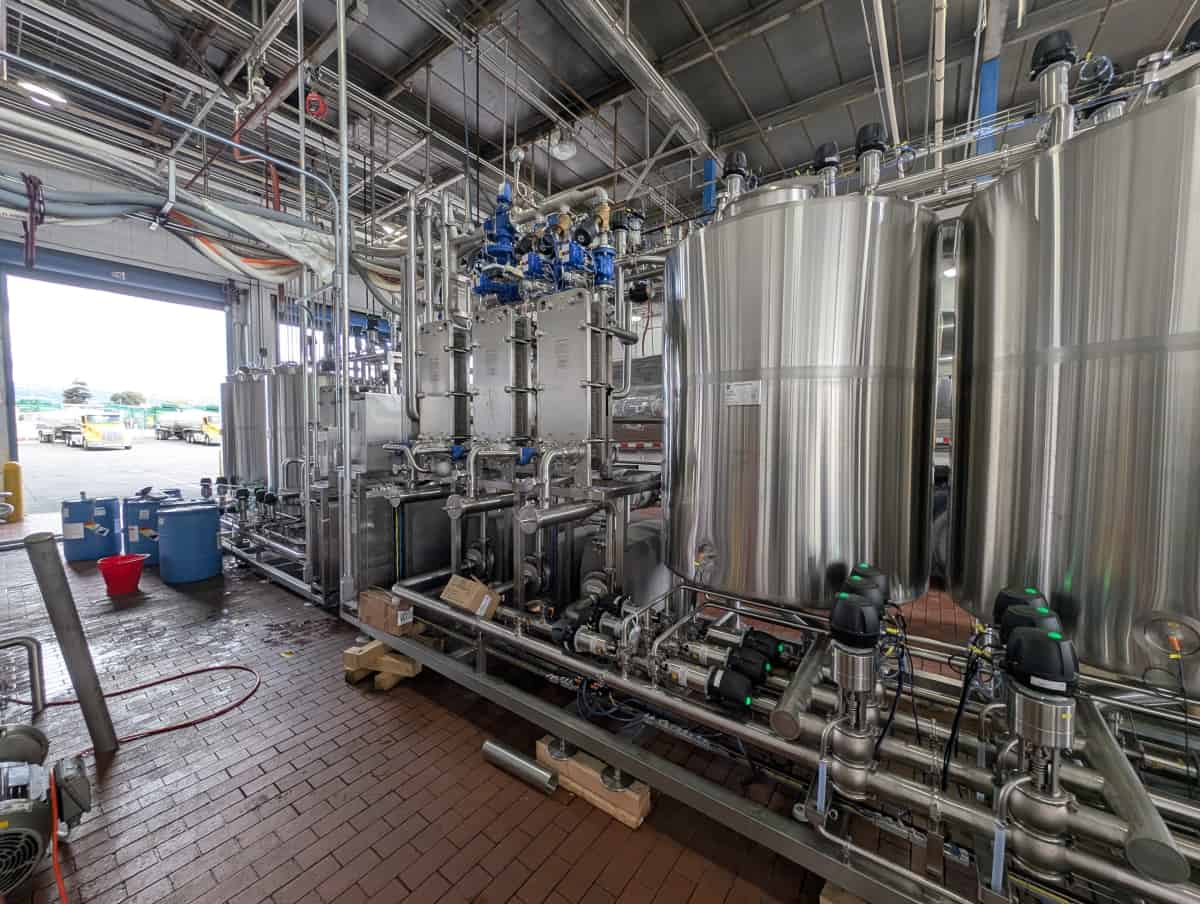
Albertsons needed to replace aging Clean-In-Place assets and modernize the pneumatic infrastructure described as the Air Farm at an operating food facility. The work affected utilities used by active dairy and food production, so engineering and installation had to fit the existing service connections and the plant’s production schedule.
DPS organized the replacement through three planned outages. The scope connected piping and valve-matrix engineering, prefabricated manifolds and skids, rigging, air-system connections, pressure checks, controls, and integrated dry runs. Preparation before the live cutovers was central to the delivery approach.
The Conditions Shaping the Work
- Only three planned production interruptions were available for the installation tie-ins.
- Each outage had a maximum four-hour limit, with the completed windows reported as less than four hours each.
- Dairy and food production activity had to continue around the staged utility replacement.
- The new CIP connections and valve arrangements had to meet the plant’s hygiene and clean-room requirements.
The Engineering Challenge
Make Each Tie-In Window Count
Only three interruption windows were available, and each had a maximum four-hour limit. The plant needed sufficient time within each window for physical connections, checks, and the return of the affected services. Hygiene requirements and clean-room valve arrangements also shaped the work at the production interfaces.
CIP piping, pneumatic conduits, supports, manifolds, and controls had to fit the existing plant. DPS therefore planned the installation steps, backup arrangements, and utility changeovers before the outages. Material availability and the preparation of connection points were linked to the limited time available for the live work.
The DPS Response
DPS engineered, prefabricated, and staged the piping manifolds off site before the live work. The team planned the process steps, backup arrangements, and utility changeovers in advance, linking material readiness, rigging, connections, checks, and handback with the available outage windows and the facility’s active product-supply requirements.
DPS Project Scope
- CIP asset replacement and compressed-air infrastructure integration
- Piping and valve-matrix planning and three-dimensional modelling
- Offsite prefabrication of manifolds, skids, and supports
- Material staging, rigging, and connection sequencing
- Pneumatic pressure checks, controls connections, and dry runs
- Planned-outage coordination and production handback
Explore the Engineering Scope
Multi-SKU CIP Systems
Connect the cleaning circuit, recipe sequence, supply and return conditions, quality release and resource cost to a reviewable CIP investment.
Compressed Air Systems
Evaluate compressors, receivers, drying, distribution, quality and real equipment demand as one operating system.
Installation & System Integration
Coordinate process piping, equipment setting, utilities, power, instrumentation, controls, CIP, commissioning, and turnover for food and beverage facilities.
The Delivery Plan
Prepare Off Site. Connect in Sequence.
Detailed pre-planning and three-dimensional modelling established piping and valve matrices around the plant ports. Manifolds, CIP assemblies, skid frames, and air-system components were prefabricated and staged before installation. The work moved fabrication and preparation away from the limited outage periods and reduced the structural changes and adjustments needed at the live interfaces.
The rigging sequence and connection work were prepared alongside the assemblies. Minute-by-minute execution checklists tracked the steps needed to isolate, connect, check, and return the utilities to service. These controls connected individual field activities with the handback requirement for each outage.
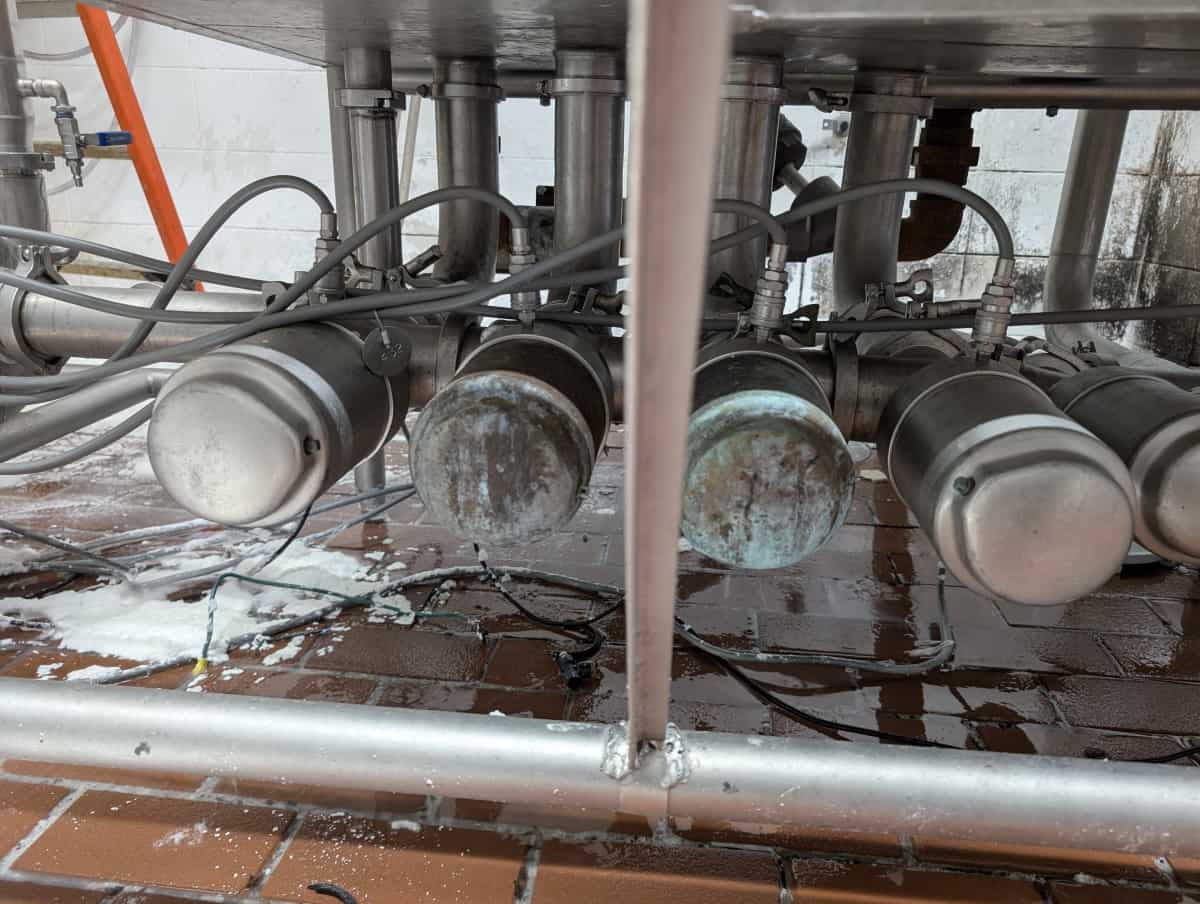
The first window addressed primary CIP lines and process-piping validation. The second integrated Air Farm manifolds with pneumatic pressure checks. The third completed the remaining integration loop, validation activities, and dry runs. After the staged cutovers, the upgraded services were returned to commercial operation.
Design · Build · Manage
Design
Use detailed pre-planning and three-dimensional modelling to develop piping and valve matrices around the existing plant ports. Prepare the arrangements off site to reduce structural modifications and adjustment work during the live outage windows.
Build
Prefabricate manifolds, skid frames, and air conduits, then prepare the rigging sequence and connection points before the planned cutovers. Stage the work so installation, pneumatic checks, and utility connections can follow the prepared sequence.
Manage
Track the tie-ins with minute-by-minute execution checklists, including the process steps, backup arrangements, utility changes, and handback checks. The project account reports that all three tie-ins finished on budget and ahead of time while customer supply continued.
The Execution Sequence
Pre-Outage
Engineering & Prefabrication
CIP skids and piping assemblies were prepared off site, materials procured, and field resources mobilized before the live utility work.
Outage 1 · <4 Hours
Primary CIP Tie-In
The first cutover connected primary CIP lines and completed the initial process-piping validation checks.
Outage 2 · <4 Hours
Air Farm Integration
Pneumatic manifolds were integrated, with air-line pressure checks included in the planned sequence.
Outage 3 · <4 Hours
Final Integration & Dry Runs
The remaining integration loop, system-validation activities, and dry-run cycles were completed within the final reported outage limit.
Post-Outage
Full Integration & Handback
The upgraded utilities returned to commercial service. The project account reports maintained customer supply and no unplanned production loss.
The Completion Milestone
Completion means all three planned utility tie-ins, the remaining system checks, and dry runs had been carried out and the upgraded CIP and pneumatic services returned to commercial operation, with no unplanned production interruption reported.
The Project Outcome
Three Planned Outages, Coordinated Handback
DPS reports three planned outages, each completed in less than four hours, with no unplanned production interruption. The account also states that the tie-ins were delivered on budget and ahead of their scheduled time, with the piping integration described as fully successful.
The reported continuity result concerns customer supply and the controlled return of utilities after the planned work. The scheduled production interruptions were part of the installation programme. The project demonstrates the combination of interface planning, offsite preparation, backup arrangements, staged materials, and detailed field coordination used for this utility replacement.
- Planned Outages
- 3
- The original installation sequence divides the live utility work into three planned production interruptions.
- Each Reported Outage
- <4 Hours
- Each planned tie-in window is reported to have been completed in less than four hours.
- Unplanned Production Interruptions
- None Reported
- The source reports no unplanned production loss across the three planned outages; the scheduled interruptions still took place.
- Reported Budget Result
- On Budget
- The original delivery account states that the three tie-ins were completed within the project budget.
- Reported Schedule Result
- Completed Early
- The source describes the planned tie-in work as completed ahead of its scheduled time.
- The original Impact Highlights describe piping integration as fully successful across the installation sequence.
- The case reports maintained commercial supply and utility operation following each planned handback; this is separate from the three scheduled production interruptions.
The Client Perspective
An Excerpt From the Original Published Project Account
DPS executed this critical upgrade with incredible precision. We experienced zero unplanned downtime across three separate outages.
Next Case Study
Ice Cream Plant Upgrade
Albertsons
See how DPS coordinated air, dairy equipment, CIP, and refrigeration work within a planned Sunday sanitation outage at an Albertsons Phoenix ice cream plant.
Explore This Project