- Client
- Golden West Food Group
- Location
- Los Angeles to Fort Worth
- Project Type
- Co-Packing & Contract Manufacturing
The Assignment
A New Home for Co-Packing
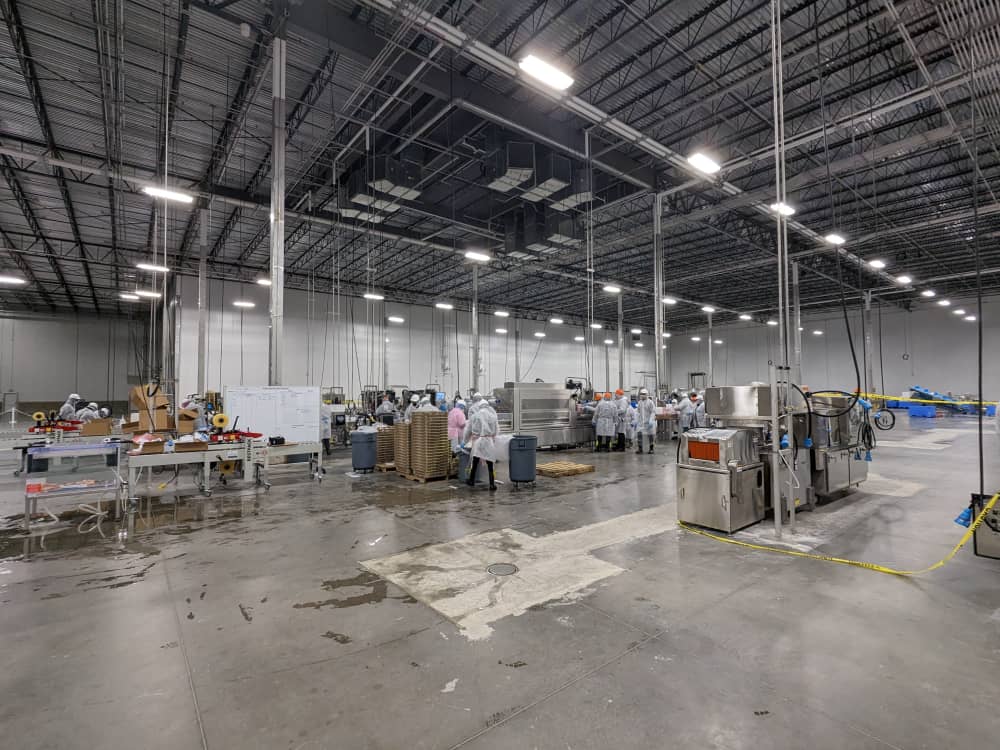
Golden West Food Group needed to relocate an active value-added food processing and co-packing operation from Los Angeles to a new Fort Worth facility. The assignment combined the receiving-site buildout with complete equipment dismantling, rigging, cross-country logistics, installation, and process checks. Customer distribution across the United States and Canada formed part of the commercial context for the move.
DPS coordinated building permissions, technical planning, utility layouts, machinery sequencing, mechanical alignment, and validation as one programme. The objective was to bring the transferred operation into service while protecting the client’s retail commitments and customer supply through the transition.
The Conditions Shaping the Work
- A compressed programme of approximately ten weeks from permit approval through testing and the facility occupancy milestone.
- Utility systems, sanitary plumbing, and electrical work had to progress concurrently with the facility buildout.
- Retail and customer deliveries had to be protected while machinery was dismantled, transported, and reinstalled.
- Sanitary zoning and the USDA, SQF, and BRC criteria identified in the project brief had to be addressed during design and validation.
The Engineering Challenge
Relocate Production. Protect Customer Supply.
The compressed schedule put construction and relocation activities on overlapping paths. Facility modifications, sanitary plumbing, electrical work, and utility installation had to progress while cooking and packing equipment was being prepared for transport. The receiving site needed the correct infrastructure and equipment positions before mechanical connections and system checks could proceed.
Supply continuity made the sequence an operating issue as well as a construction issue. DPS had to connect the readiness of the Fort Worth facility with the condition and arrival of the relocated assets. Sanitary zoning, USDA requirements, and the SQF and BRC criteria referenced in the project brief also had to be considered during design and validation.
The DPS Response
DPS coordinated the building permissions, utility-system layout, and receiving-site buildout with the machinery relocation sequence from Los Angeles. The scope covered dismantling and transport, on-site equipment positioning and mechanical alignment, service connections, controls checks, and process validation, with the facility and logistics work managed as one delivery programme.
DPS Project Scope
- Building permissions and facility buildout coordination
- Cross-country machinery dismantling, transport, and relocation
- Sanitary drainage, process water, steam, and compressed air
- Mechanical alignment, equipment positioning, and electrical interfaces
- Controls dry runs, temperature checks, and CIP validation
- Commissioning and Temporary Certificate of Occupancy coordination
Explore the Engineering Scope
Food Co-Manufacturing
Define compatible customer products, qualified processes, campaign economics, sanitation and specialist equipment before expanding a food contract-manufacturing operation.
Installation & System Integration
Coordinate process piping, equipment setting, utilities, power, instrumentation, controls, CIP, commissioning, and turnover for food and beverage facilities.
Plant & Equipment Relocation
Compare asset reuse, destination readiness, uncovered downtime and restart costs before committing to a food factory move.
The Delivery Plan
From Site Preparation to Startup
Process engineering, utility planning, and regulatory coordination developed alongside the client’s commercial objectives. The design considered both the accelerated delivery path and future scalability. Site work included civil and structural changes, sanitary drains, process water, steam, and compressed air, with civil, mechanical, electrical, and process contractors working within the combined buildout and transport programme.
Cooking and packing assets were dismantled in Los Angeles and moved to Fort Worth, where they were positioned, levelled, and mechanically aligned. Service connections and controls terminations prepared the equipment for integrated checks. The reported validation sequence included underfloor pipe-insulation checks, SCADA dry runs, temperature mapping, and CIP validation.
Real-time project controls, daily stand-ups, and proactive risk mitigation linked the field activities to the critical path. The account describes a double-shifted execution approach. Decisions had to address the immediate installation sequence while retaining the operating requirements of the completed facility.
Design · Build · Manage
Design
Develop detailed process engineering, utility planning, and the regulatory strategy in parallel with the client’s commercial objectives. Align the technical design with the compressed delivery path and future scalability of the receiving facility.
Build
Provide one coordination point for civil, mechanical, electrical, and process contractors while organizing the cross-country machinery move. Connect the facility buildout with dismantling, transport, equipment positioning, mechanical alignment, and installation.
Manage
Use real-time project controls, daily stand-ups, and proactive risk mitigation to track the critical path. Coordinate the double-shifted execution sequence so decisions address immediate schedule needs and the long-term operation of the facility.
The Execution Sequence
Week 0 · February 1, 2025
Permit & Mobilization
The original account records the building permit on February 1, followed by mobilization of the design-build teams and material-staging areas inside the Fort Worth facility.
Weeks 1–4
Site & Utilities Setup
Civil and structural modifications, sanitary drainage, process-water distribution, steam, and compressed-air lines progressed in parallel.
Weeks 4–7
Machine Relocation
Cooking and packing assets were dismantled in Los Angeles, transported to Fort Worth, then positioned and levelled for installation at the receiving site.
Weeks 7–9
Validation & Integrated Checks
The reported checks included underfloor pipe insulation, controls terminations, SCADA dry runs, temperature mapping, and Clean-In-Place validation.
Week 10 · April 8, 2025
TCO & Initial Production
The project account dates the Temporary Certificate of Occupancy to April 8 and reports initial production runs without material waste or customer delivery delay.
The original page labels the programme as ten weeks. February 1 to April 8, 2025 spans 66 elapsed days, so the original week labels are retained as reported programme milestones rather than exact consecutive seven-day periods.
The Completion Milestone
Completion in the original account means the Fort Worth facility received its Temporary Certificate of Occupancy and entered initial production on April 8, 2025, with customer deliveries reported to have been maintained during the move.
The Project Outcome
Fort Worth Ready for Production
DPS reports a total facility investment of $18 million and an approximately ten-week permit-to-TCO programme. The capital figure covers the facility programme, including mechanical integration. Permit and mobilization are dated February 1, with TCO and initial production on April 8, 2025.
The original case reports no customer supply gaps, full customer retention, and initial production without material waste or delivery delay. These are project-specific commercial and startup results. Equipment was dismantled and reinstalled during the move; maintained customer supply does not establish that every production asset ran continuously.
The published results also include a first-pass USDA approval milestone and a comparison claiming six to eight months saved against a standard delivery path. The account does not identify a separate SQF or BRC certificate or define the baseline for that programme comparison.
- Reported Total Facility Investment
- $18M
- The original project account identifies this as total facility capital, including mechanical integration; it is not the DPS contract value.
- Reported Permit-to-TCO Programme
- 10 Weeks
- The source describes an approximately ten-week, double-shifted delivery path from permit and mobilization to Temporary Certificate of Occupancy.
- Project Period
- February–April 2025
- Permit and mobilization are dated February 1; the reported TCO and initial production milestone is April 8, 2025.
- Reported Customer Supply Gaps
- 0
- The project account reports no commercial distribution or store-level delivery gaps during this relocation; machinery still underwent planned dismantling and reinstallation.
- Reported USDA Milestone
- First-Pass Approval
- This is an approval milestone stated in the original project account. The source also references SQF and BRC criteria without identifying separate certificate details.
- Reported Customer Retention
- 100%
- The retention figure is a project-specific claim in the original Impact Highlights, alongside the account of maintained customer deliveries.
- Reported Programme Comparison
- 6–8 Months Saved
- The original Impact Highlights compare delivery with a standard path; the reference programme and calculation basis are not specified.
- The account reports initial production runs without material waste or customer delivery delay at the TCO milestone.
- Customer distribution and retention were reported to have been preserved through the move. These concern commercial continuity while the equipment was dismantled, transported, and reinstalled.
The Client Perspective
An Excerpt From the Original Published Project Account
DPS didn’t just build a facility — they engineered a solution that kept every customer supplied
Next Case Study
Ground Beef Line Execution
Confidential Client
See how DPS coordinated a ground beef line project in an operating Los Angeles facility, with phased installation and early lower-rate production.
Explore This Project