Ground and Portioned Products
Define input form, temperature, accepted composition / particle or portion envelope, specialist package states and packaging. Final good product and giveaway differ from raw feeder throughput.
Plan grinding / handling, marination, cold utilities, controls and packaging interfaces around accepted product and a controlled live-plant cutover.
Discuss Your Project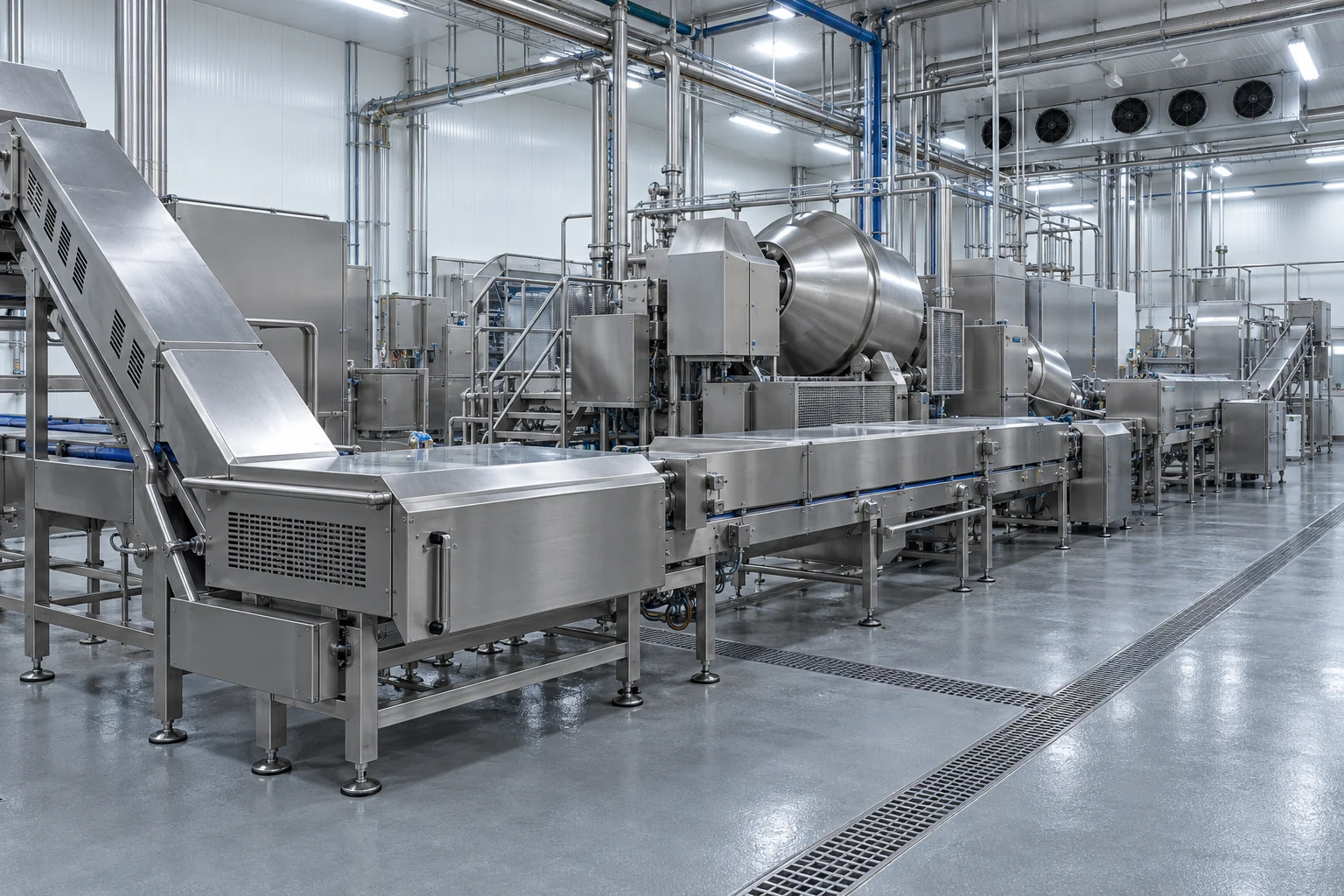
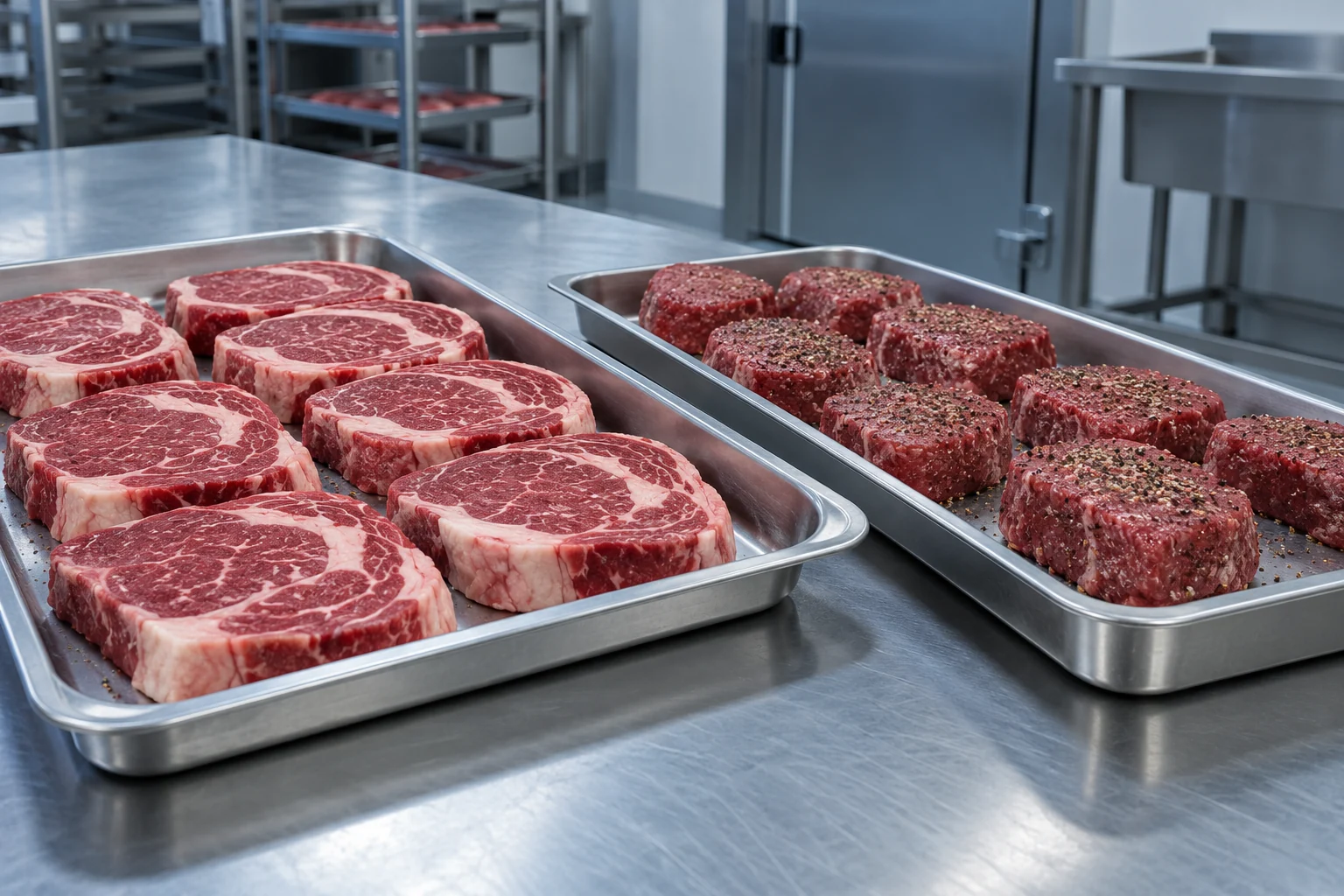
Define input form, temperature, accepted composition / particle or portion envelope, specialist package states and packaging. Final good product and giveaway differ from raw feeder throughput.
Specify product form, recipe, mechanical handling, accepted uptake / retention and downstream quality. Added water or marinade mass is not automatically incremental legal saleable value.
Thermal / cooling and raw / cooked boundaries introduce qualified process, zoning and release requirements. They cannot be inferred from an uncooked handling-line specification.
Use synchronized input, specialist package, utility and packaging states across representative products.
Coordinate preparation, chilling, tumbler / specialist injector duty, product handling and acceptance.
Survey retained equipment, control handshakes, access and production isolation before the outage.
Review each system by its operating duty and the interfaces to be agreed before procurement.
Agreed product / marinade and mechanical duty.
Cold, air, power and water interfaces.
Recipe / multi-OEM state coordination.
Specialist grinding, forming, cooking and packaging.
Swipe horizontally to compare all columns ↔
| System | Operating duty | Relevant DPS guide | Confirm before purchase |
|---|---|---|---|
| Tumbler / marinator duty | Agreed product / marinade and mechanical duty. | DPS tumblers & marinators ↗ | Accepted retention, quality, chilling and cleaning. |
| Process utilities and distribution | Cold, air, power and water interfaces. | Utility infrastructure planning ↗ | Production and cleaning peak conditions. |
| Recipe / sequence controls | Recipe / multi-OEM state coordination. | Automation & controls ↗ | Identity, interlocks, backups and test ownership. |
| Specialist equipment interfaces | Specialist grinding, forming, cooking and packaging. | Installation & integration ↗ | Complete-line good output and supplier responsibilities. |
A meat line tender should define final product, quantity, temperature, supplier states and accepted quality. Ask who owns cold-side recovery, recipe / marinade preparation, cleaning, packaging and startup. Compare a targeted interface correction with larger specialist machines on good output and total installation scope.
Swipe horizontally to compare all columns ↔
| Buying question | Evidence to prepare | Engineering decision |
|---|---|---|
| Is upstream speed the constraint? | Whole-line states and accepted packaged mass. | Identify the actual bottleneck. |
| Is material gain saleable? | Qualified composition, retention, drip and final quality. | Use appropriate input / output economics. |
| Who accepts the integrated line? | OEM / owner responsibility and product trial plan. | Define complete-train handover evidence. |
Start with the business outcome
A meat processor can own adequate specialist machines yet lose output at transfer, cold-service, recipe or packaging interfaces. DPS can coordinate the agreed process, utilities, controls, installation and project-execution boundary; its published ground-beef context supports an integration discussion. Returns need accepted saleable meat, consistent input / product balances and actual paid costs, not a blanket machine-speed or marinade-uptake promise.
Slaughter, cutting / deboning, grinding / forming, cooking, chilling / freezing, inspection and packaging specialist technology require explicit OEM / qualified team responsibility as applicable. DPS configured tumbler / marinator scope is discussed by duty; no universal yield or complete meat-line manufacturing claim is made.
Define input form, temperature, composition or portion requirements, marination where relevant, and raw or cooked process and package responsibilities.
Check specialist line states, delivered cold services, recipe additions and product quality through the agreed handling and packaging train.
Confirm retained-asset interfaces, OEM and trade readiness, input-output balance and accepted packaged product through the controlled live-plant cutover.
Related Project
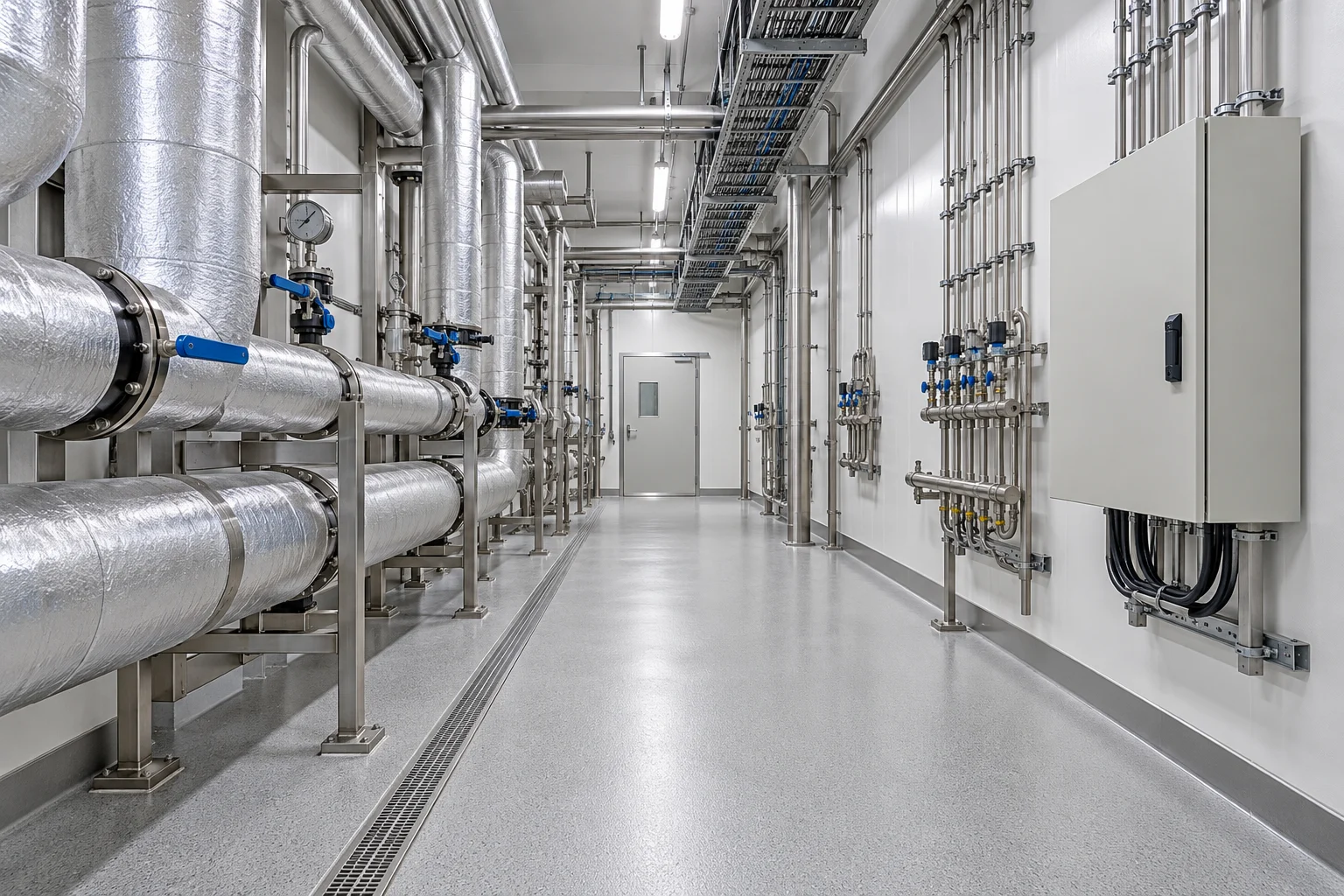
A ground beef capacity project inside an operating Los Angeles plant required engineering, equipment procurement, room relocation, utilities, and fire-system coordination. DPS organized phased installation and an early lower-rate production milestone while the wider line integration continued.
View ProjectReview the scope, cost assumptions and operating case for your project. The examples and calculators below support early planning and are not DPS quotations.
Measure the actual product / state loss, cold-duty and ingredient balance. Compare targeted routing, controls or utility correction with replacing specialist equipment.
Fix product state, specialist OEMs, hygienic flow, cold services, packaging, staffing, utilities and commercial demand.
Swipe horizontally to compare all columns ↔
| Observed condition | Measure before design | DPS / team decision | Economic basis |
|---|---|---|---|
| Blocked / starved packages | Matched good-output and state logs. | Correct the verified limiting interface. | Extra accepted sold kg after demand / downstream checks. |
| Cold-side interruptions | Delivered conditions during production peaks. | Compare source, distribution and sequence. | Baseline energy plus independent useful output. |
| Ingredient / marination variance | Full input / output and quality balance. | Trial recipe, transfer and specialist package duty. | Actual avoided baseline purchases, without mass / price shortcuts. |
| Installation restart risk | Asset / interface and readiness records. | Coordinate trades and multiple OEM tests. | One-time transition cost, separate from annual benefit. |
Swipe horizontally to compare all columns ↔
| Decision | Targeted Work | Broader Scope |
|---|---|---|
| Line Constraint | Correct the verified handling, package or cold-side interface. | Add the specialist stage that limits accepted packaged product. |
| Product Range | Trial retained equipment against the agreed product envelope. | Include separate process, zoning and release scope for different raw or cooked duties. |
| Live-Plant Cutover | Plan retained assets, isolation and targeted installation. | Coordinate broader OEM and trade works with explicit restart evidence. |
Compare proposals with the same product duty, supplier boundaries and acceptance basis. The amount below is a transparent planning example, not a market price range, supplier estimate or DPS quotation.
| Cost bucket | Assumed amount |
|---|---|
| Product / process and interface engineering | $54,000 |
| Defined configured / OEM component allowance | $189,000 |
| Mechanical / electrical field installation | $104,000 |
| Instrumentation and control integration | $54,000 |
| Commissioning and acceptance support | $32,000 |
| Training, documentation and closeout | $17,000 |
| Defined project scope | $450,000 |
| Separate site / facility additions | $75,000 |
| Capital contingency (15%) | $78,750 |
| Separate one-time startup / shutdown cost | $50,000 |
| Incremental working capital | $40,000 |
| Total initial cash | $693,750 |
The defined scope assumes applicable freight, procurement charges and taxes are included in the owner’s estimate. Add missing civil, land / shell, OEM, environmental, validation and permitting costs explicitly. Site and field conditions, duty, production access and quoted supplier scope determine actual price. Financing is excluded.
Hypothetical owner-budget case: 250 days × 0.4 useful recovered hour/day × 1,500 good kg/h × 60% realization gives 90,000 incremental sold kg/year after the 110,000 kg demand ceiling. Net price $8.2/kg less incremental variable cost $6.4/kg gives $1.8/kg contribution. The baseline inputs assume $18,000 energy, $15,000 water / chemistry and $10,000 maintenance reductions per year. Avoided payroll is 500 hours × $40 × 50% cash realization. Verified baseline purchase reduction contributes $0; its basis is unchanged accepted baseline output. Deduct $20,000 added annual fixed cost. Result: $195,000 steady net benefit; initial cash $693,750 includes the separate site, contingency, startup and working-capital inputs. These are original illustrative assumptions, not a quotation, price benchmark or achieved DPS result.
Calculated from these assumptions: steady annual net benefit $195,000; year-one net cash $119,750; cash payback 3.94 years; five-year NPV at 10% is −$22,956. Change the assumptions below to test a different case.
Replace the illustrative inputs with your own measured or quoted values. The five-year pre-tax model uses good kilograms, demand-capped contribution and separately verified baseline savings; it is not a project quotation.
All defaults are illustrative. The default case is an operating-plant improvement, not a greenfield quote. For a new operation, set baseline savings to zero and enter every additional operating and capital cost.
Includes contingency, startup and working capital
Incremental operating cash before tax
Includes year-one ramp assumption
At 10% annual discount
Net annual benefit ÷ initial cash
Net cumulative gain ÷ initial cash
Modeled incremental sales: 90,000 kg/year at $1.80/kg contribution. The base case does not recover the required discounted return within five years. Year-one net cash: $119,750.
Realization needed for the target operating payback
43.6%
Minimum capacity realization for a 5-year operating cash payback; terminal recovery excluded. Demand and unit margin must also hold.
CSV export is local. No inputs are submitted.
Swipe the chart to compare all five years ↔
Swipe horizontally to compare all columns ↔
| Year | Net cash | Cumulative cash | Discounted cash |
|---|---|---|---|
| Initial | −$693,750 | −$693,750 | −$693,750 |
| Year 1 | $119,750 | −$574,000 | $108,864 |
| Year 2 | $195,000 | −$379,000 | $161,157 |
| Year 3 | $195,000 | −$184,000 | $146,506 |
| Year 4 | $195,000 | $11,000 | $133,188 |
| Year 5 | $195,000 | $206,000 | $121,080 |
Swipe horizontally to compare all columns ↔
| Case | Annual benefit | NPV | Cash payback |
|---|---|---|---|
| Downside | $130,200 | −$368,730 | Beyond 5 years |
| Base | $195,000 | −$22,956 | 3.94 years |
| Upside | $237,930 | $126,123 | 3.30 years |
Downside: installed and site costs +20%, realization ×0.75 and unit contribution reduced by 20% of its absolute value. Upside: realization ×1.15, capped at 100%, and unit contribution improved by 10% of its absolute value. The demand ceiling still applies.
The default reproduces the main retrofit energy input of $18,000/year before added maintenance. The narrow worksheet is not a product-process calculation and does not automatically transfer values into the ROI model. Additional annual service is included in the main added-fixed-cost allowance; deduct it once.
Prepare the information below, export the assumptions you have modeled, and discuss the unknowns with DPS. An unmeasured input is a question to resolve, not a reason to invent precision.
Checklist and model data stay in this browser until you choose to share them.
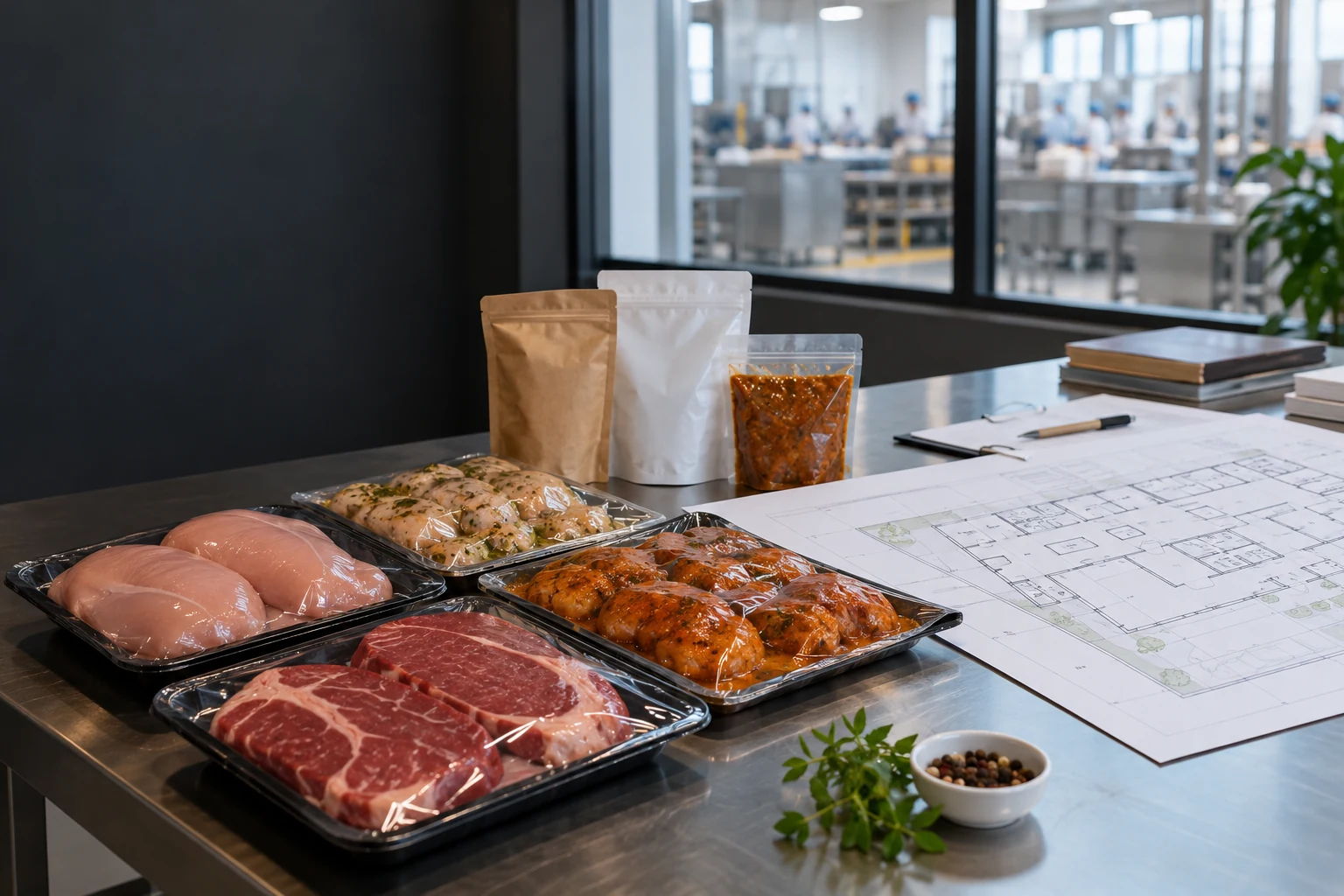
Separate primary and value-added protein processing; connect the product plan with marination equipment, chilled handling and staged delivery.
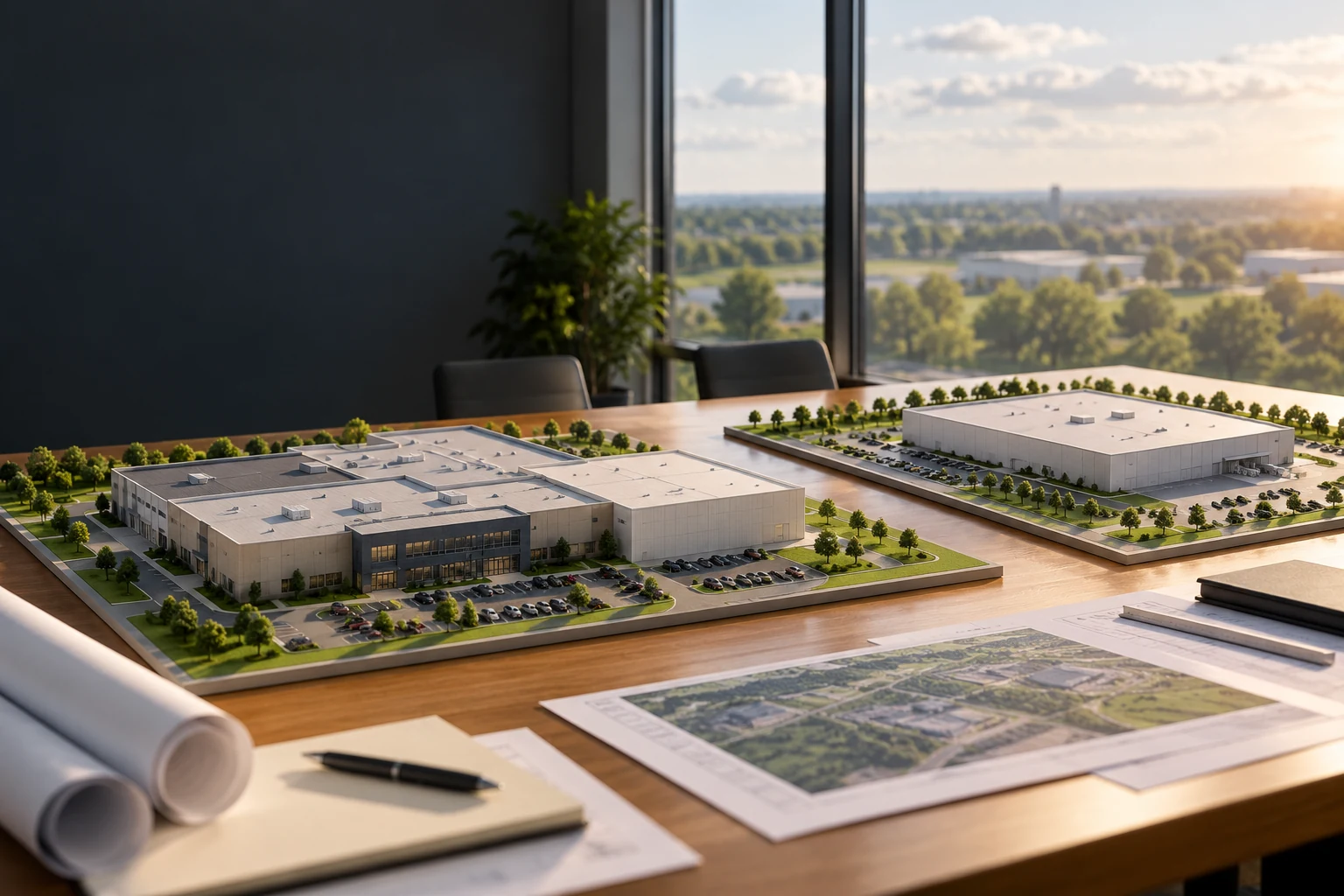
Compare expanding an existing food plant with a new facility using site fit, infrastructure, production disruption, delivered capacity and investment timing.
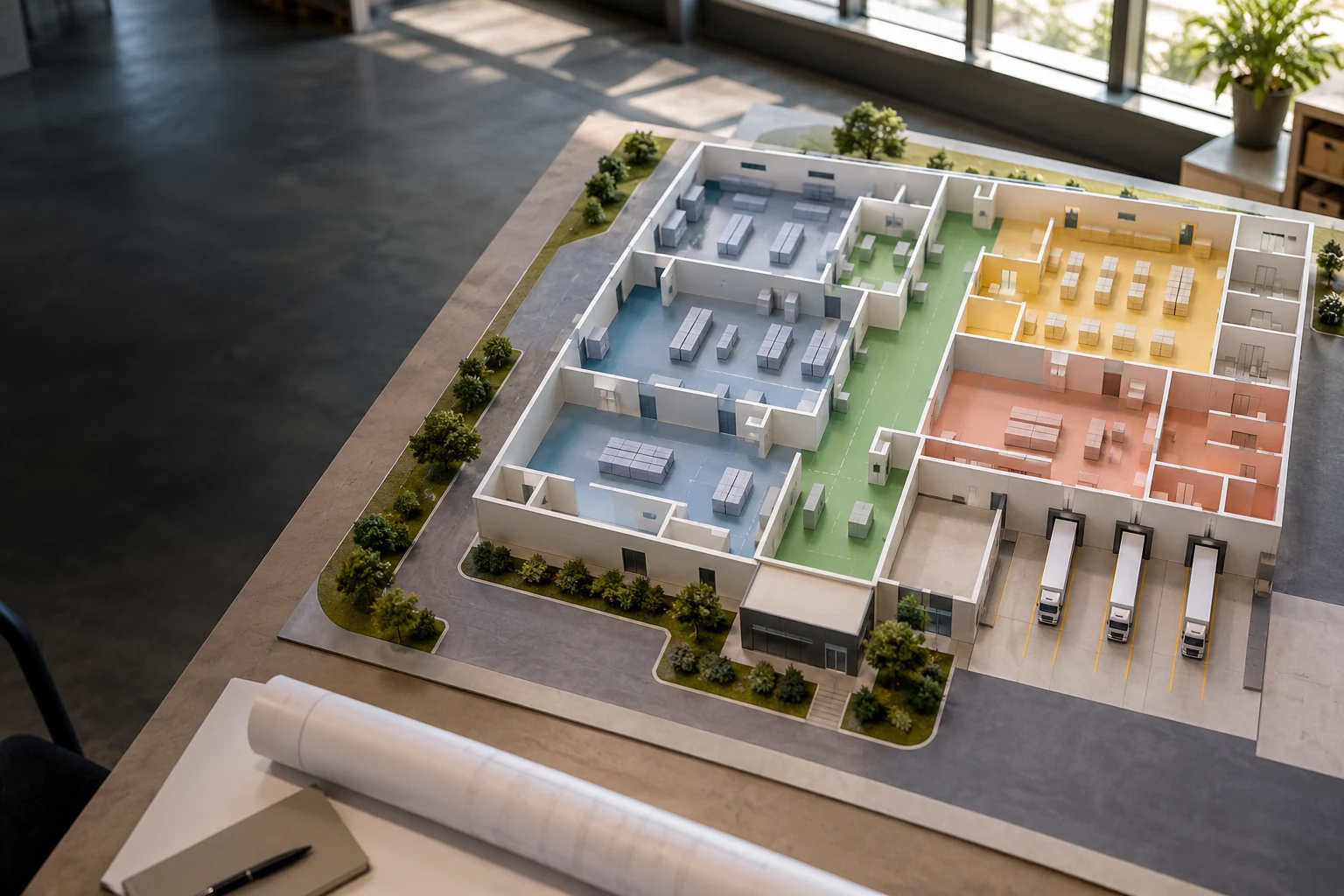
Plan a food processing plant layout around product, people, packaging and waste flows, then test space, access, storage and future expansion.
Bring your product requirements, operating priorities and site constraints to an initial scope discussion with DPS.