DPS Process Equipment
Match the Marination Cycle to the Product
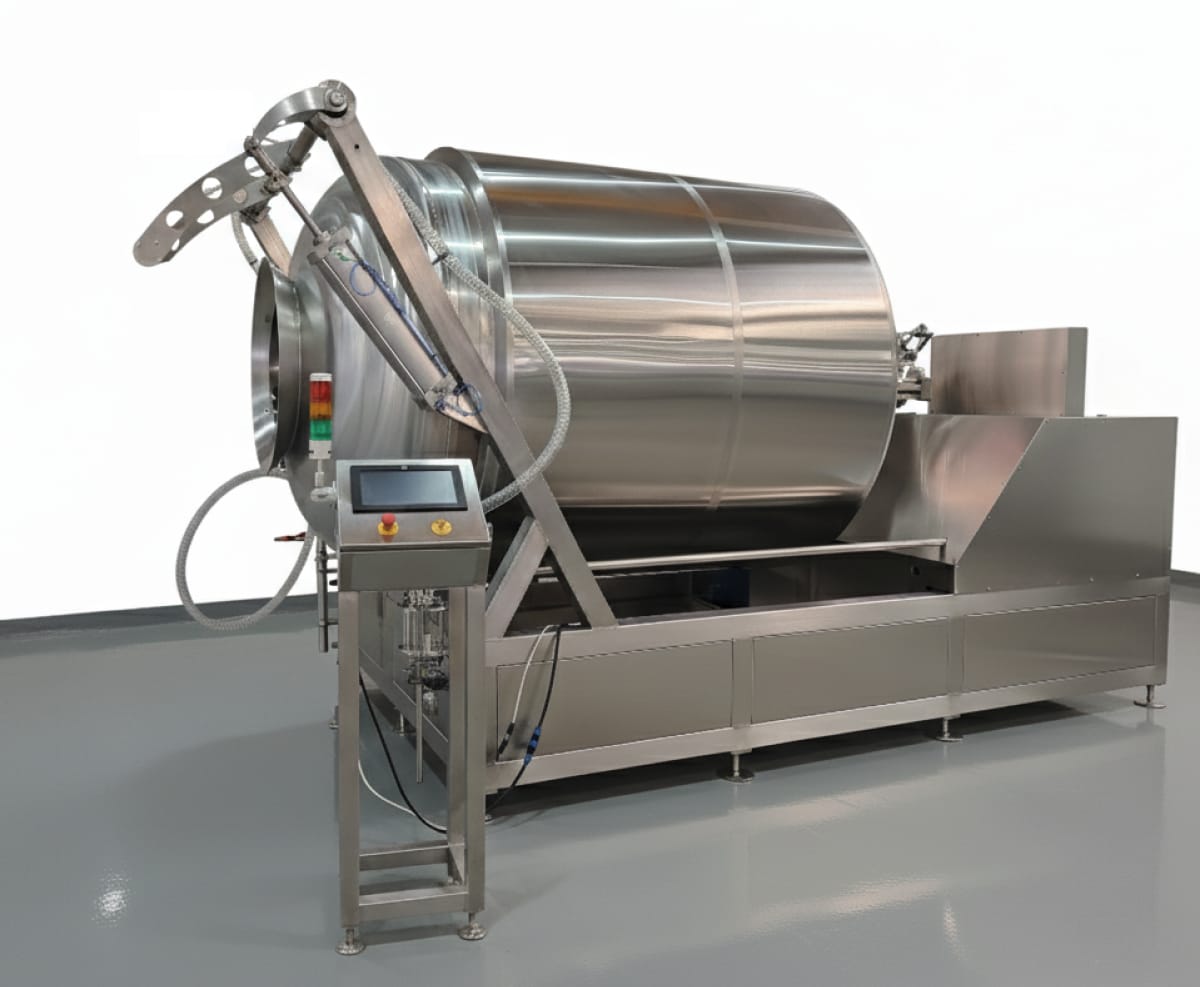
Tumblers & Marinators
Design · Build · Manage
Drum geometry, baffles, speed, vacuum, cooling, and cycle timing work together. DPS specifies tumbler packages around the protein, marinade, batch plan, handling route, and facility interfaces.
Tumblers & Marinators
Start With the Batch and the Required Mechanical Action
Tumblers combine rotation, rest periods, and optional vacuum to distribute marinade and condition product. Whole-muscle cuts, pieces, ground or formed products, seafood, and plant-based formulations need different baffles and cycle settings. Batch weight, bulk density, fill level, marinade properties, temperature, and cycles per shift establish the required working duty.
DPS connects the tumbler specification with brine preparation, refrigeration, loading and discharge, downstream portioning or packaging, cleaning, and controls. The package defines materials, drum drive, vacuum equipment, sensors, handling accessories, recipes, records, and maintenance access. Agree product trials, acceptance criteria, supply responsibilities, and commissioning checks before selecting the configuration.
Selected Equipment Program
Choose the Configuration.
Define the Duty.
Start with these program options, then confirm working capacity, the production sequence, and the package boundaries against your application.
- Capacity
- 500, 1,000, 2,000, or 5,000 lb platform options
- Vacuum
- Vacuum-capable or non-vacuum configuration
- Cooling
- Non-jacketed drum or cooling jacket
- Accessories
- None, or pneumatic loading/feeding with a dump cart
- Controls
- Basic or enhanced control options
- Standards
- 316 stainless-steel interior; NSF sanitary requirements defined for the selected package
Design Parameters
Specify What the Process Needs.
The platform loading range is 500–5,000 lb. Define usable batch weight from product bulk density, fill fraction, marinade addition, and the required mechanical action. Effective loading, drum volume, vacuum and cooling duties, materials, applicable standards, and acceptance criteria are established in the project proposal.
| Parameter | Configuration & Engineering Basis |
|---|---|
| Batch Loading Capacity | 500–5,000 lb platform range; establish the effective product-and-marinade batch from density, fill fraction, cycle time, and production schedule |
| Materials of Construction | 304 or 316L stainless steel; specify product-contact polish of Ra ≤32 µin or better and verify the selected finish |
| Drum Drive & Speed | VFD speed references of 2–16 RPM, with forward, reverse, and intermittent-cycle programming selected for the product |
| Vacuum System | Vacuum-capable configurations with a 25–29 inHg reference range; define achievable duty, monitoring, leak detection, and alarms for the selected system |
| Internal Baffle Design | Specify baffle height, angle, count, and profile for whole-muscle, pieces, or ground/formed product and the required mechanical-action intensity |
| Loading & Discharge | Front-loading door with sanitary seal; hydraulic or pneumatic tilt options; optional bottom outlet for brine recovery; coordinate loading and cart interfaces |
| Temperature Management | Optional glycol or chilled-water jacket; size duty for the product-temperature target, including below 40°F where required by the defined cold-chain and food-safety plan |
| Controls & Automation | PLC/HMI cycle control, multiple product recipes, SCADA interfaces, electronic batch records, and data logging within the selected controls scope |
| Sanitary Design | Define applicable 3-A sanitary design principles, drainability, avoidance of retaining ledges, sealed bearings, and tool-free removable baffles for inspection and cleaning; confirm the selected configuration |
| Regulatory Requirements | Assess USDA-FSIS, FDA 21 CFR Part 117, HACCP/HARPC, SQF, and BRC requirements for the product and facility; define monitoring, records, and responsible approval parties |
| CIP/COP Compatibility | Specify spray-nozzle bosses for CIP, drainage, access, and removable-part cleaning; coordinate with DPS-engineered or existing supply and return infrastructure |
| Documentation Package | Define general arrangement drawings, electrical schematics, weld records, material certificates, O&M manual, FAT protocol, and commissioning support |
Applications & Industries
Different Products.
A Defined Process Basis.
Match the equipment to the product, cleaning requirements, and operating sequence. Explore the wider industry context before fixing the specification.
Poultry Processing
Establish batch loading, baffle action, vacuum cycles, and cooling around poultry cuts, brine addition, downstream cooking, and the plant's handling and hygiene requirements.
Meat Processing
Configure whole-muscle or portioned beef and pork marination around mechanical action, product temperature, recipe timing, and the loading and discharge sequence.
Seafood Processing
Assess gentle action, fill level, marinade distribution, cooling, and product integrity for the selected seafood. Establish suitability through the product and process review.
Plant-Based Protein Foods
Evaluate the formulation's texture, density, shear sensitivity, and seasoning distribution before defining baffles, rotation, rest periods, and cleaning requirements.
Prepared Foods & Ingredients
Coordinate marinated components with brine preparation, batch records, temperature control, cart handling, and upstream and downstream production windows.
Before Selecting This Equipment
Meat Processing
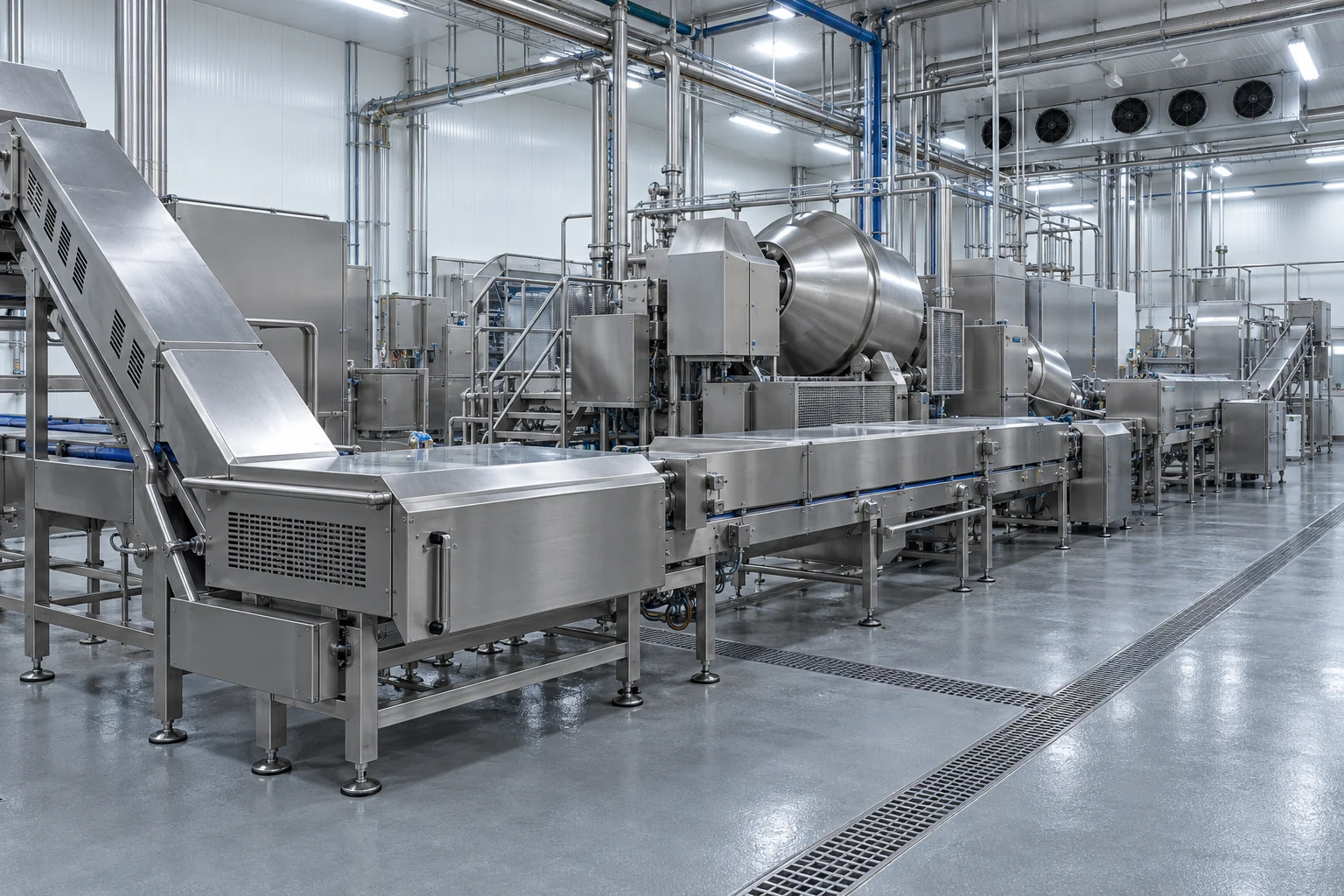
Plan grinding / handling, marination, cold utilities, controls and packaging interfaces around accepted product and a controlled live-plant cutover.
Poultry Processing
Evaluate brine preparation, tumbling, product handling, cold services and packaging as one qualified poultry production system.
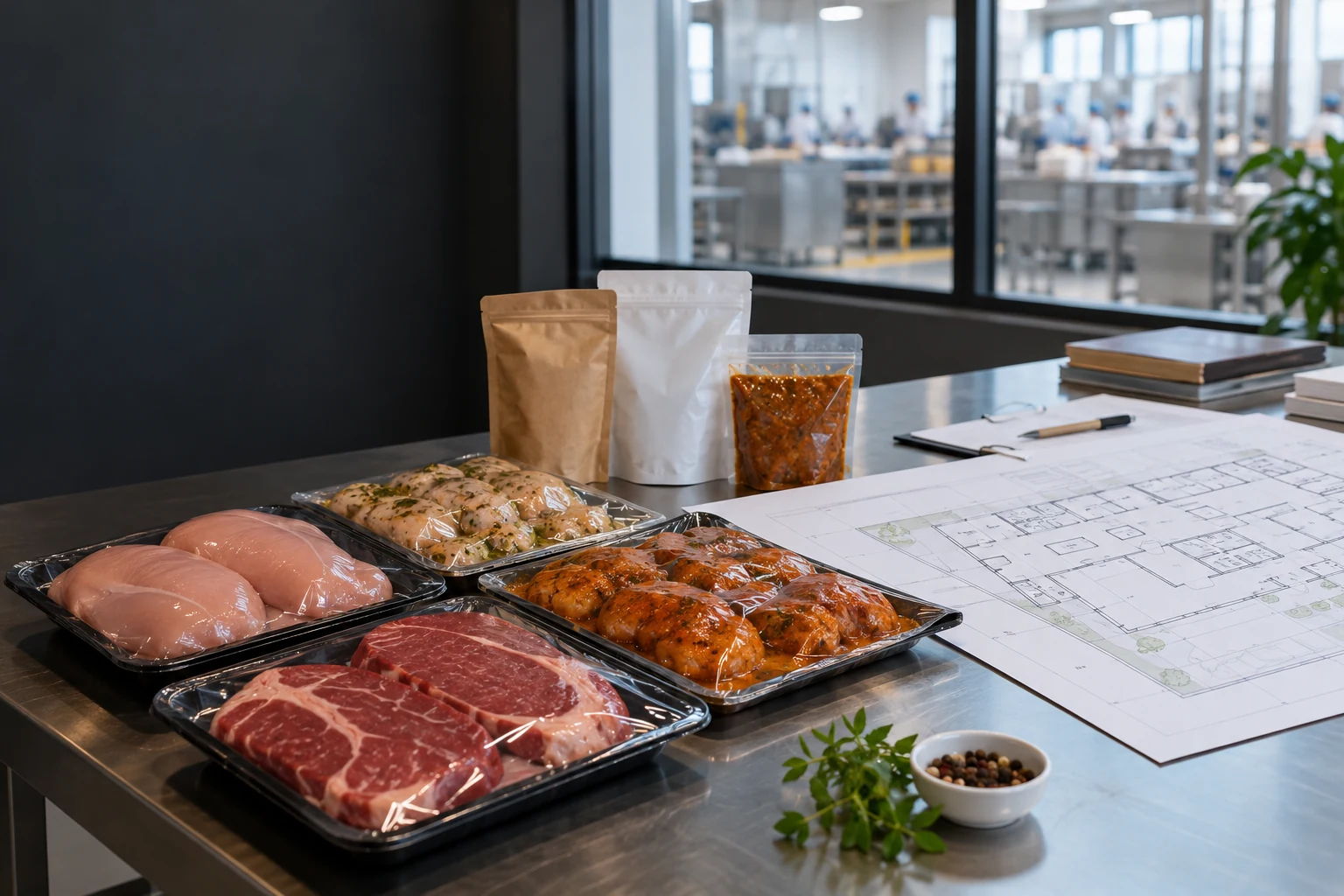
Protein Food Plant Planning: Primary Processing vs Value-Added Production Scope
Separate primary and value-added protein processing; connect the product plan with marination equipment, chilled handling and staged delivery.
- What product, bulk density, batch weight, marinade addition, and trials define the effective load?
- What rotation, rest, vacuum, temperature, and cycle-time conditions must the process demonstrate?
- How will loading, discharge, refrigeration, cleaning, controls, and maintenance connect with the facility?
How Is a Tumbler Delivery Schedule Confirmed?
Detailed tumbler configurations carry a 12–20 week reference, while platform packages use an 18–20 week planning allowance. Confirm the configuration, engineering approval, and signoff basis in the current proposal. Jacket duty, drum and baffle requirements, vacuum, discharge options, SCADA interfaces, recipe development, fabrication workload, and FAT affect the programme. Coordinate the agreed delivery date with production-area readiness, handling access, utilities, and the wider installation schedule.
How Is the Tumbler Sized for a Batch and Production Schedule?
Start with target batch weight, product bulk density, marinade addition, and the number of cycles per shift. A 40–60% fill fraction is a preliminary reference for some products; establish the actual fraction through geometry, product behavior, and trials. Check loading, tumbling, rest, discharge, and cleaning time against downstream cooking and chilling. The 500–5,000 lb platform range is a selection starting point; the proposal defines the effective working load and acceptance basis.
How Is Vacuum Tumbling Performance Evaluated?
Vacuum level, drum action, baffles, marinade properties, temperature, and cycle timing are assessed together. The 25–29 inHg range is a configuration reference whose suitability must be confirmed for the product and equipment. Product trials can compare marinade pickup and distribution, purge or cooking loss, texture, and color against agreed baselines. Define the measurement method and acceptance criteria; equipment selection alone does not establish a particular yield improvement or financial return.
Can the Tumbler Connect to Existing Controls and CIP?
Define the installed PLC, SCADA, or MES architecture and communication requirements, such as EtherNet/IP or Modbus TCP, before selecting the controls. Agree recipes, tags, interlocks, and data records with the facility integrator. Coordinate CIP spray connections, drainage, removable-part cleaning, and access against the existing supply and return system. For a new DPS-engineered CIP package, include the tumbler circuit in the overall cleaning schematic and verification plan.
What Maintenance and Continuing Support Are Needed?
Plan drum-seal and door-gasket inspections, drive-bearing lubrication, vacuum-pump oil and performance checks, and temperature and vacuum sensor calibration according to the selected equipment and O&M instructions. Include recommended spares, preventive-maintenance intervals, and troubleshooting procedures in the agreed handover documents. Continuing facility support can cover the tumbler under a defined service agreement, with access, responsibilities, support availability, and commercial terms established.
Explore the Rest of the Line.
View All Equipment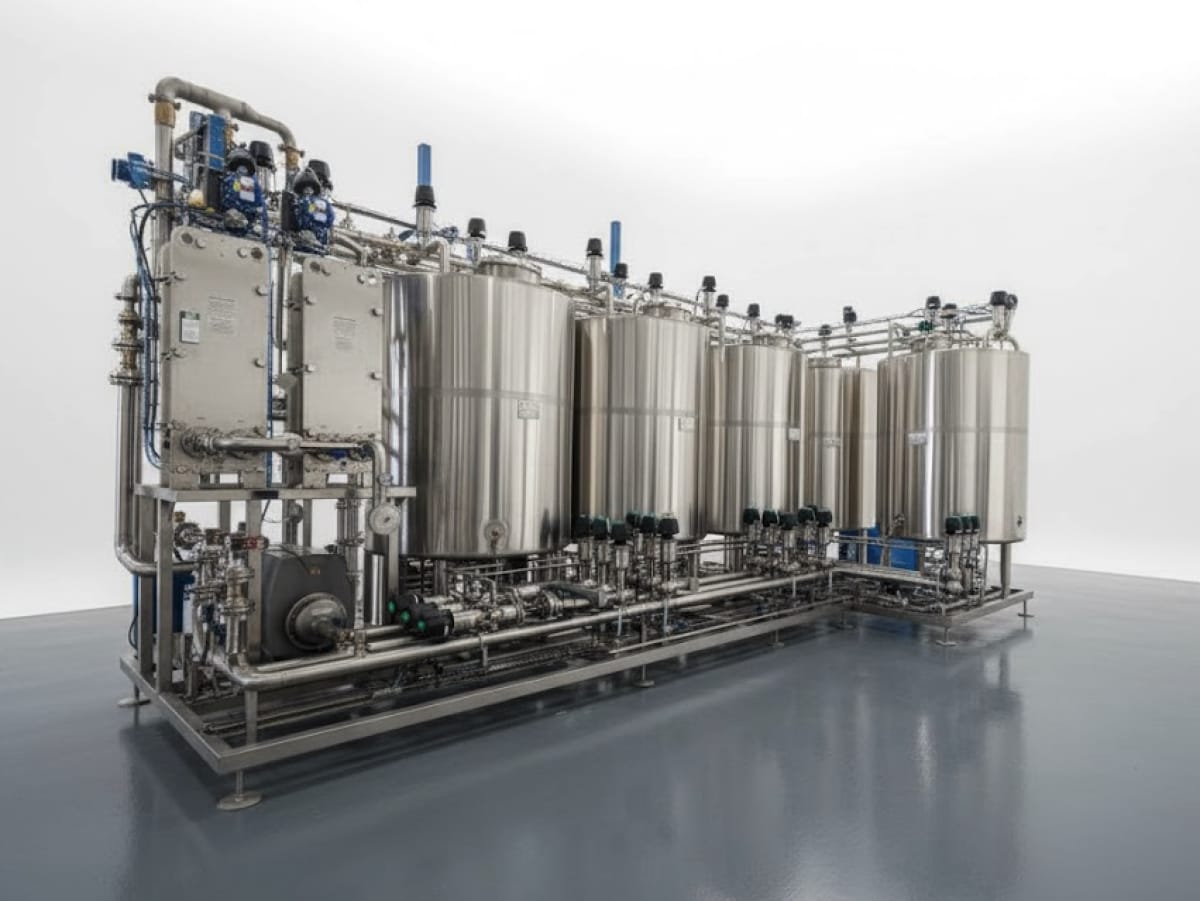
CIP Systems
100–5,000 gal
Connect the cleaning skid with the vessels, piping, utilities, and production schedule it serves. Define the circuits, cleaning conditions, controls, and verification records together.
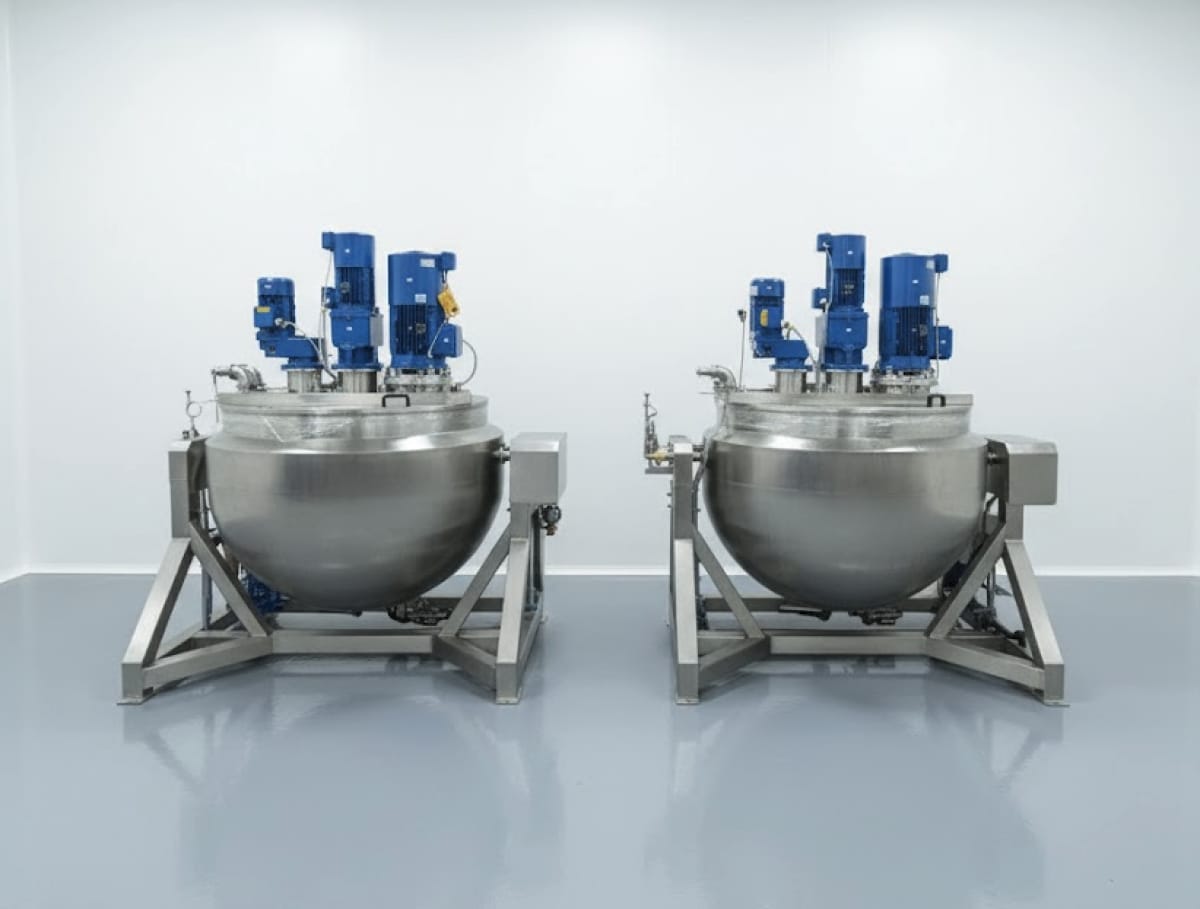
Kettles & Cookers
200–1,000 gal
Match the vessel to the recipe and production cycle. Coordinate working volume, jacket duty, agitation, discharge, utilities, cleaning, and batch records before selecting a kettle.
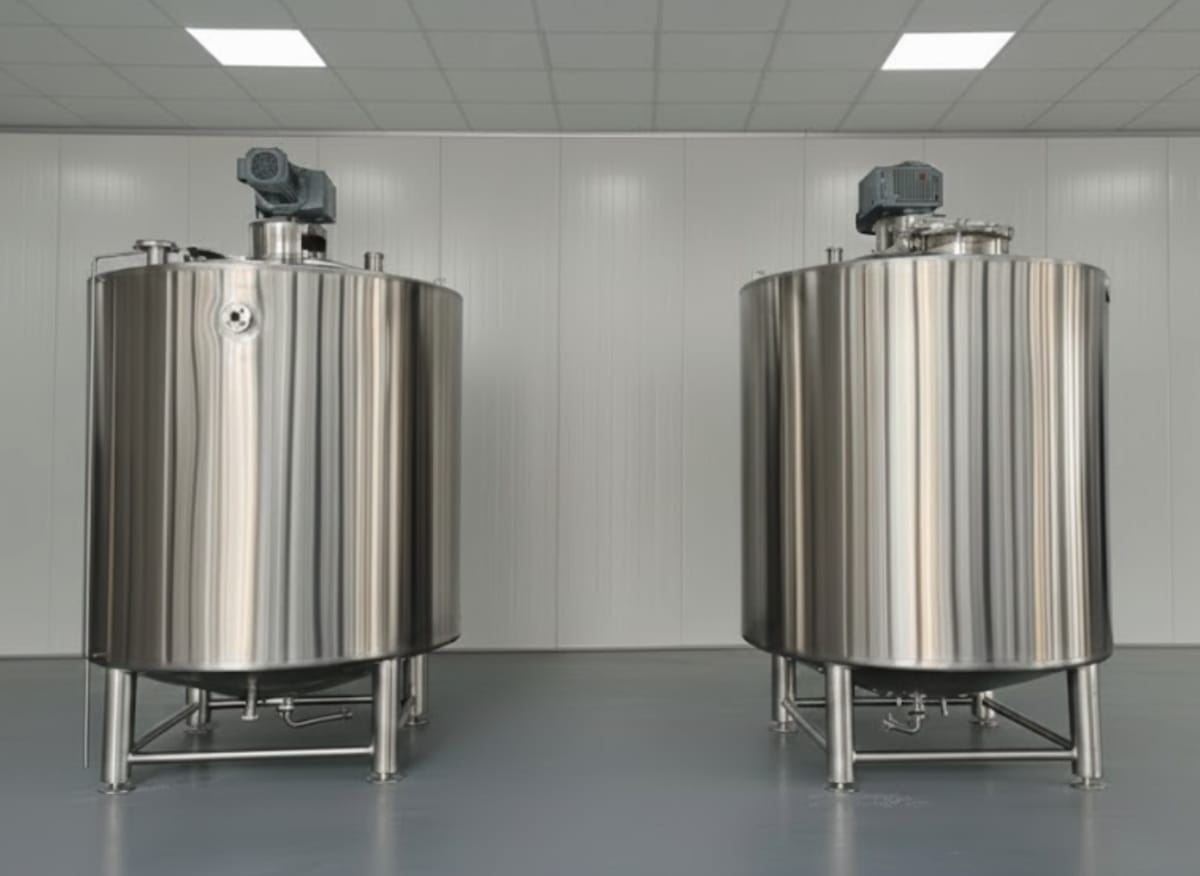
Tanks & Vessels
500–25,000 gal
Define the vessel's role in the process before selecting volume or fittings. Coordinate product duty, tank form, agitation, jackets, nozzles, cleaning, instrumentation, and fabrication records.
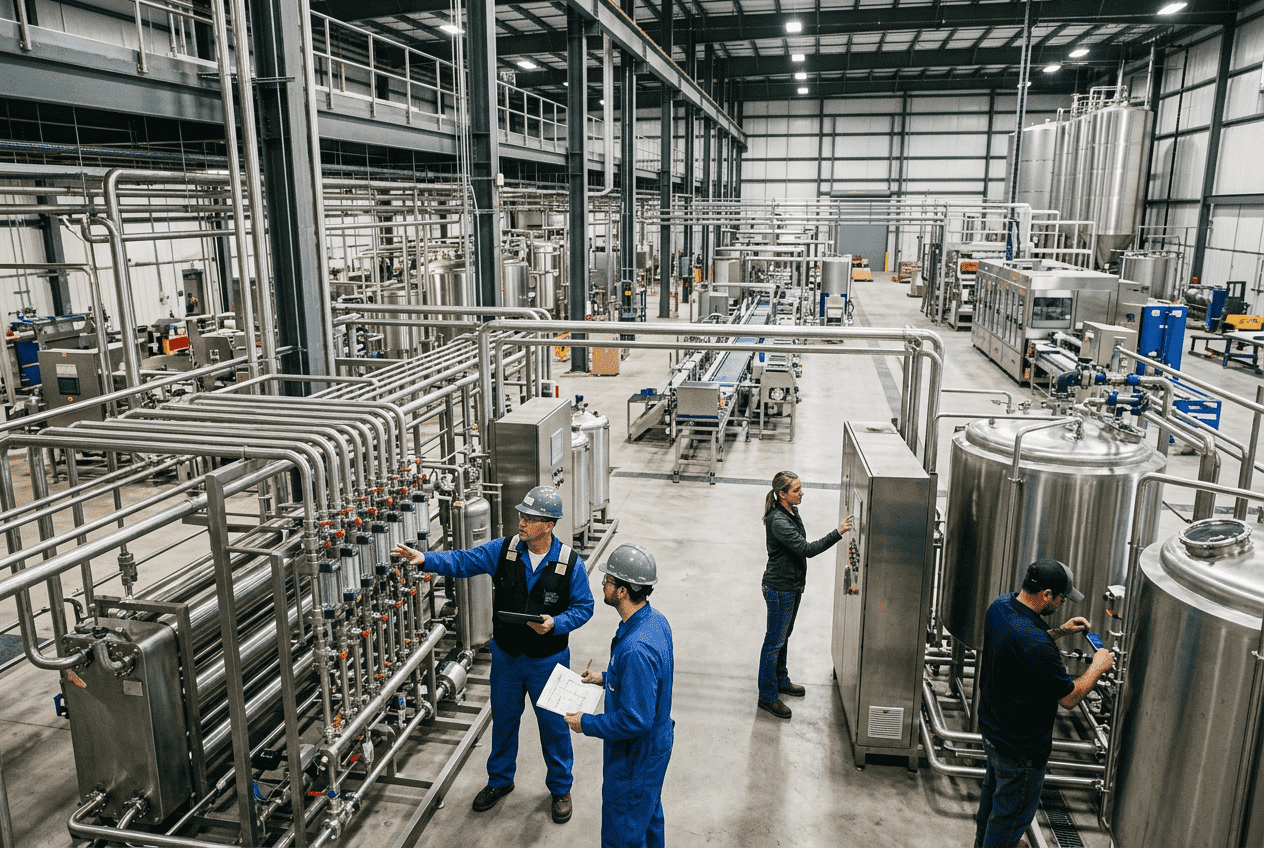
The Next Conversation
Bring the Product and Batch Plan to the Discussion
Share the protein or formulation, loading data, marinade, cycle requirements, cooling conditions, handling route, and controls platform. DPS can help define the tumbler, trial criteria, and facility interfaces.
Discuss Your Project